























How to Store Bulk Herbal Tea: Keep It Fresh for Months

Table of Contents
- Why Bulk Herbal Tea Storage Deserves More Than a Pantry Shelf
- How Long Does Bulk Herbal Tea Stay Fresh? Herbal Tea Shelf Life Explained
- The Best Containers for Loose Leaf Tea in Bulk
- Storing Tea Away From Light and Moisture: The Two Enemies of Freshness
- Temperature, Humidity, and Odors: Controlling the Storage Environment
- Bulk Storage Logistics: Organizing Large Quantities Without Losing Freshness
- Pest Prevention and Climate-Specific Storage for Bulk Herbal Tea
- Frequently Asked Questions
Last Updated: September 21, 2026
Why Bulk Herbal Tea Storage Deserves More Than a Pantry Shelf
Buying loose leaf tea in quantity only pays off if the last scoop tastes as good as the first. At Octavia Tea, we ship bulk herbal tea in one-pound bags, and the questions we get most often are about keeping those larger quantities fresh for months, not weeks. The answer comes down to four variables: air, light, moisture, and heat. Get those right and your herbal infusion will taste nearly as vibrant on day 90 as it did on day one.
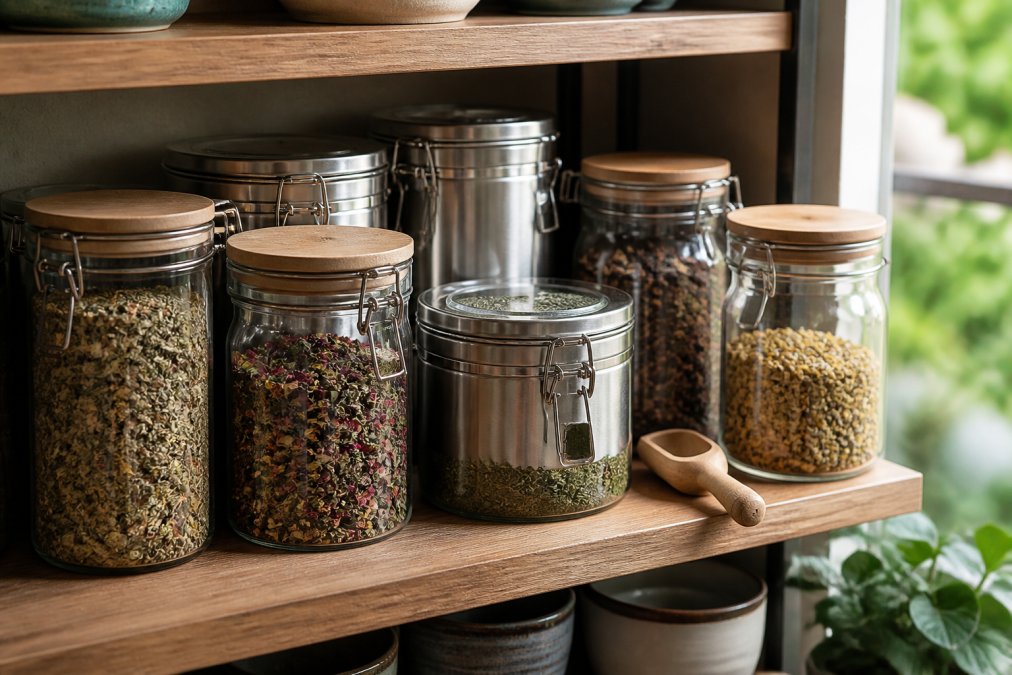
Most people treat tea storage as an afterthought, transferring the bag into a decorative tin above the stove and wondering why their chamomile tastes like cardboard by February. The fix is not complicated, but it requires understanding what degrades dried botanicals.
How Long Does Bulk Herbal Tea Stay Fresh? Herbal Tea Shelf Life Explained
Herbal tea shelf life runs roughly 12 to 24 months when stored in an airtight container away from light, heat, and moisture. Past that window, the tea does not become unsafe to drink, but the volatile oils that carry aroma and flavor fade noticeably.
Three things shorten that timeline:
- Oxygen exposure, which drives oxidation and dulls the leaf
- Light, especially direct sun, which breaks down pigments and aromatic compounds
- Moisture and heat, which accelerate flavor degradation and can invite mold
If you buy in bulk to save money, the storage plan matters as much as the tea itself.
Signs Your Tea Has Turned
Fresh herbal tea smells like what it is: bright lemongrass, sweet lavender, warm spice. Past its prime, the aroma turns flat or dusty, the brew comes out pale and weak, and the flavor tastes vaguely like hay or paper. Clumping, visible dampness, or a musty smell points to moisture getting in.
If you notice any of those, do not try to salvage it by brewing stronger.
The Best Containers for Loose Leaf Tea in Bulk
The best containers for loose leaf tea are airtight, opaque, and made from food-grade materials that do not transfer odor. Glass, stainless steel, and ceramic all work well; clear glass is fine only inside a dark cabinet, since light exposure is one of the fastest ways to ruin a bulk supply.
Materials That Protect Flavor (and Ones That Don't)
Material | Protects Flavor? | Notes |
|---|---|---|
Stainless steel | Yes | Opaque, durable, no odor transfer; best oxygen barrier of the common options |
Ceramic (opaque glaze) | Yes | Blocks light; check the lid seal, since many ceramic crocks ship with cork or wood lids that are not airtight |
Glass (in a dark cabinet) | Yes | Neutral and non-reactive, but light-permeable and heavier per volume |
Food-grade plastic | Sometimes | Can absorb and release odors over time; oxygen slowly permeates many plastic walls |
Mylar with a heat seal | Yes | Excellent oxygen and light barrier; not reusable once cut open unless you reseal |
Decorative tins | Rarely | Often loose-fitting; fine for short-term only |
Original paper bag | No | Not airtight; use only for transport |
Sizing the Container to the Batch: The Headspace Rule
For bulk quantities, container size matters as much as material. Every inch of empty space above the leaf is air that exchanges with the leaf each time you open the lid, so a five-pound supply in a ten-pound bin leaves a large oxygen reservoir.
The Two-Container System: Working Jar and Reserve
The single most effective container strategy for bulk tea is two containers, not one. Decant a one- to two-week working supply into a small airtight jar you open daily, and keep the rest sealed in a larger container you open only when refilling. This limits oxygen exposure to the small working portion instead of the whole batch.
Storing Tea Away From Light and Moisture: The Two Enemies of Freshness
Light and moisture are the two fastest routes to flavor degradation. UV and visible light break down the compounds that give herbal tea its color and aroma, which is why opaque canisters beat clear jars for anything kept more than a few weeks. Moisture creeps in through loose seals, a cold container opened in a warm room, and a wet spoon dipped into dry leaf.
Temperature, Humidity, and Odors: Controlling the Storage Environment
Temperature stability matters more than absolute coolness. A pantry holding a steady 65 to 70°F protects your tea better than a spot that swings from cold to warm daily. In a humid room, even a good container fights a losing battle unless you add a desiccant and keep the lid closed.
What to Measure, and How
You do not need lab equipment, but two inexpensive tools remove the guesswork:
- A small digital thermometer-hygrometer on the shelf next to your containers. Watch the daily high and low, not just the reading when you happen to look.
- A kitchen scale for tracking how much leaf you use per week, which tells you whether your working jar is sized correctly.
Desiccants: What Works and What to Avoid
Silica gel packets are the standard choice. Use food-grade, indicating silica gel that changes color as it saturates, so you know when to replace it. Place the packet in the headspace, never touching the leaf, and check it monthly.
Avoid the following in a tea container:
- Scented desiccants or any packet that has been stored near fragrances
- Loose silica beads that can spill and mix with the leaf
- Rice or salt packets, which are folk remedies that do not meaningfully lower humidity and can introduce their own odor
Odor Control at Bulk Scale
Odor is the variable people forget, and it gets worse as quantity grows. Dried botanicals act like a sponge for whatever is in the air, so store bulk herbal tea away from onions, garlic, cleaning supplies, and strong spices. Give each tea its own container, label clearly, and never reuse a scoop without wiping it dry.
A simple storage environment checklist:
- Steady temperature, away from heat sources
- Relative humidity between roughly 50 and 60 percent, measured with a hygrometer
- Food-grade desiccant in the headspace if humidity runs high
- No strong odors nearby, and aromatic blends separated from mild ones
- Opaque or cabinet-shielded containers
- One container per tea, clearly labeled with the open date
Bulk Storage Logistics: Organizing Large Quantities Without Losing Freshness
Large quantities create a problem small pouches never do: every time you open the main container, you expose the whole supply to air. Split your bulk herbal tea into a working jar and a reserve, so only the working portion is exposed and the reserve stays fresh until you need it.
Pest Prevention and Climate-Specific Storage for Bulk Herbal Tea
Pests and climate are the two bulk-storage challenges most guides skip. Food moths, beetles, and ants are drawn to dried plant material, and a paper bag left open is an invitation. Airtight containers solve most of this, since pests cannot chew through stainless steel or sealed glass. Keep the area clean, wipe up spilled leaf, and inspect containers monthly for fine dust or webbing.
Frequently Asked Questions
What is the best way to store bulk herbal tea for long-term storage?
Transfer your bulk herbal tea into airtight, opaque containers made of food-grade materials like stainless steel or dark ceramic. Store them in a cool, dry place away from light, heat, and strong odors. For very large quantities, keep a smaller working jar in your pantry and store the rest in vacuum-sealed bags or containers with desiccant packets to maintain freshness.
Does bagged herbal tea go bad?
Yes, bagged herbal tea can go bad over time. The paper or mesh bags allow more air exposure than sealed containers, so flavors fade faster. Check the expiration date and look for signs like faded color, weak aroma, or a stale taste. For the best flavor, use bagged herbal tea within six months to a year and store it in an airtight container away from light and moisture.
Should herbal tea be stored in the refrigerator or freezer?
Generally, no. The refrigerator and freezer introduce moisture and odors that can degrade herbal tea quality. Condensation forms each time you remove the container, and tea leaves absorb nearby food smells. A cool, dark pantry with a stable temperature between 60 and 70 degrees Fahrenheit is ideal. Only use the freezer for very long-term storage if you vacuum-seal the tea first.
How do light and moisture affect bulk herbal tea quality?
Light exposure breaks down volatile oils and causes flavor degradation, while moisture leads to mold, clumping, and loss of aroma. Both speed up oxidation and shorten shelf life. Store bulk herbal tea in opaque canisters with a tight seal, keep them away from windows and stovetops, and consider adding food-grade desiccant packets to absorb any residual moisture in humid climates.
Storing bulk herbal tea well comes down to discipline: airtight, opaque, cool, and dry, with a working jar separated from the reserve. Octavia Tea offers over 120 organic loose leaf teas sourced direct from estate gardens, hand-blended with natural flavor essences and pure essential oils, and USDA certified organic. Our bulk one-pound bags and low wholesale minimums make it easy to stock up without sacrificing freshness. Add to Bag and taste what proper storage protects.


Octavia Tea Sign In
Create New Account