























How to Tell If Loose Leaf Tea Is Organic and Pesticide-Free

Table of Contents
- What You'll Need to Check Your Tea
- How to Identify Organic Tea by Its Certifications
- Step 1: Check the Package for the USDA Organic Seal
- Step 2: Spot the Signs of Pesticide Residue in Tea Leaves
- Step 3: Verify Tea Brand Transparency and Third-Party Testing
- Step 4: How to Identify Organic Tea Without Certification
- Common Mistakes to Avoid When Buying Organic Tea
- Frequently Asked Questions
Last Updated: September 23, 2026
What You'll Need to Check Your Tea
You can verify organic tea in about ten minutes with nothing more than the package in your hand. The trick is knowing what to look for and what the labels actually mean.
Here's what to gather before you start:
- The original tea package, including any inner bag or tin
- The lot or batch number, if it's printed
- A phone or laptop to check certification databases
- The brand's website and contact page
- A notebook to compare brands side by side
That's it. No lab kit, no guesswork.
At Octavia Tea, we source over 120 organic loose leaf teas direct from estate gardens, so we've read thousands of labels. Most claims fall apart fast once you know the four checks below. Below, we'll walk through each one, step by step.
How to Identify Organic Tea by Its Certifications
Organic tea is tea grown without synthetic pesticides, herbicides, or fertilizers, and verified by a third-party certifier that inspects the farm and supply chain. The certification is what separates a real organic claim from a marketing word.
In the United States, the main certifier is the USDA National Organic Program. Farms must follow strict growing and handling rules, and certifiers audit them every year.
What the USDA Organic Seal Guarantees
The USDA Organic Seal means the product contains at least 95% certified organic ingredients. It also means the farm passed an annual inspection by an accredited certifier.
For tea, that covers how the leaves were grown, harvested, and processed. It does not cover how the tea tastes, how fresh it is, or whether it was stored well. Those are separate quality questions.
You can read the full rules at USDA National Organic Program.
Reading the Label Beyond the Seal
A seal alone isn't enough. Look for the certifier's name on the back panel. Common certifiers include Oregon Tilth, CCOF, and QAI.
If the package says "made with organic ingredients," that's a weaker claim. It only requires 70% organic content. Skip it if you want full organic tea.
Step 1: Check the Package for the USDA Organic Seal
Start with the seal itself. A genuine USDA Organic Seal is green and white, with the words "USDA ORGANIC" clearly printed.
Counterfeit seals exist. So do vague phrases like "organically grown" or "natural." Those are not the same as certified.
Here's a quick check:
- Is the USDA Organic Seal present?
- Is a certifier name listed on the back?
- Is a certifier code printed (usually a 5-digit number)?
- Does the brand's website confirm the certification?
If any box is unchecked, dig deeper before you buy.
Step 2: Spot the Signs of Pesticide Residue in Tea Leaves
You cannot see pesticide residue with your eyes. That's the honest truth, and it's why certification matters more than appearance.
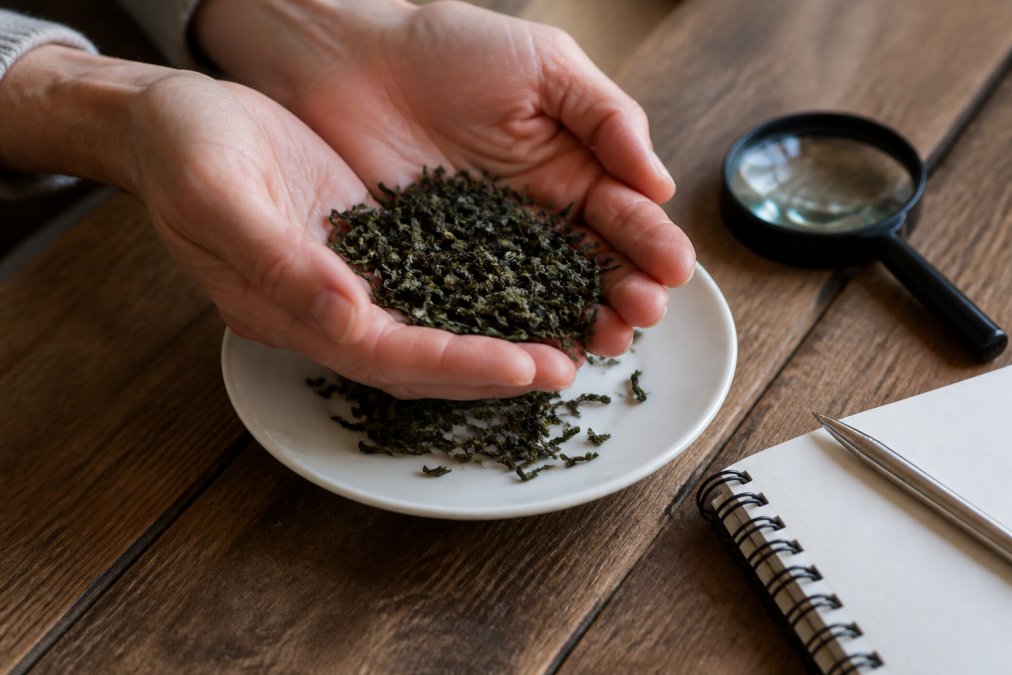
What you can spot are clues that a tea may not be what it claims:
- A suspiciously low price for a "premium organic" label
- No farm name, region, or estate listed anywhere
- A vague origin like "blended from imported teas"
- Packaging that never mentions a certifier
- A brand that won't answer sourcing questions
A common mistake is trusting the word "natural" on a tea tin. Natural has no legal definition for tea. It means nothing.
Step 3: Verify Tea Brand Transparency and Third-Party Testing
Tea brand transparency and third-party testing are the fastest way to separate serious sellers from marketers. A transparent brand tells you where the tea came from and who tested it.
Look for these signals:
- Farm or estate names listed on the product page
- Country and region of origin stated clearly
- Lab test results available on request
- A certifier name and code you can verify
- A contact page with a real person or team
Third-party testing means an outside lab checked the tea for pesticide residue. It's not the same as certification, but it adds a second layer of proof.
If a brand won't share test results or sourcing details, that tells you something. Move on.
Step 4: How to Identify Organic Tea Without Certification
Some small farms grow tea organically but never pay for certification. It happens. Certification is expensive, and small growers sometimes skip it.
You can still spot likely organic tea by looking for:
- Direct farm relationships the brand describes in detail
- Named growers or co-ops on the label
- Specific growing practices (no synthetic inputs, shade-grown, hand-picked)
- A willingness to answer questions about the farm
- Consistent quality across repeat orders
This is how to identify organic tea without certification. It's not proof. It's a strong signal.
If the brand is vague, treat the claim as unverified. Buy a small amount first and see how it performs.
Common Mistakes to Avoid When Buying Organic Tea
The biggest mistake is confusing "natural" with "organic." They are not the same, and only one is regulated.
Other common errors:
- Trusting a seal without checking the certifier
- Assuming a high price means organic
- Skipping the label and buying on packaging design alone
- Ignoring the brand's sourcing story
- Never asking for test results
Here's a simple comparison to keep handy:
Check | What It Proves | Where to Find It |
|---|---|---|
USDA Organic Seal | 95%+ certified organic ingredients | Front of package |
Certifier name and code | Who inspected the farm | Back panel |
Farm or estate name | Traceable sourcing | Product page |
Third-party test | Pesticide residue check | Brand on request |
Transparent contact | Accountability | Website contact page |
A brand that passes all five checks is worth your money. One that fails two or more isn't.
For a deeper look at how organic tea is defined and enforced, see the USDA Organic Certification standards.
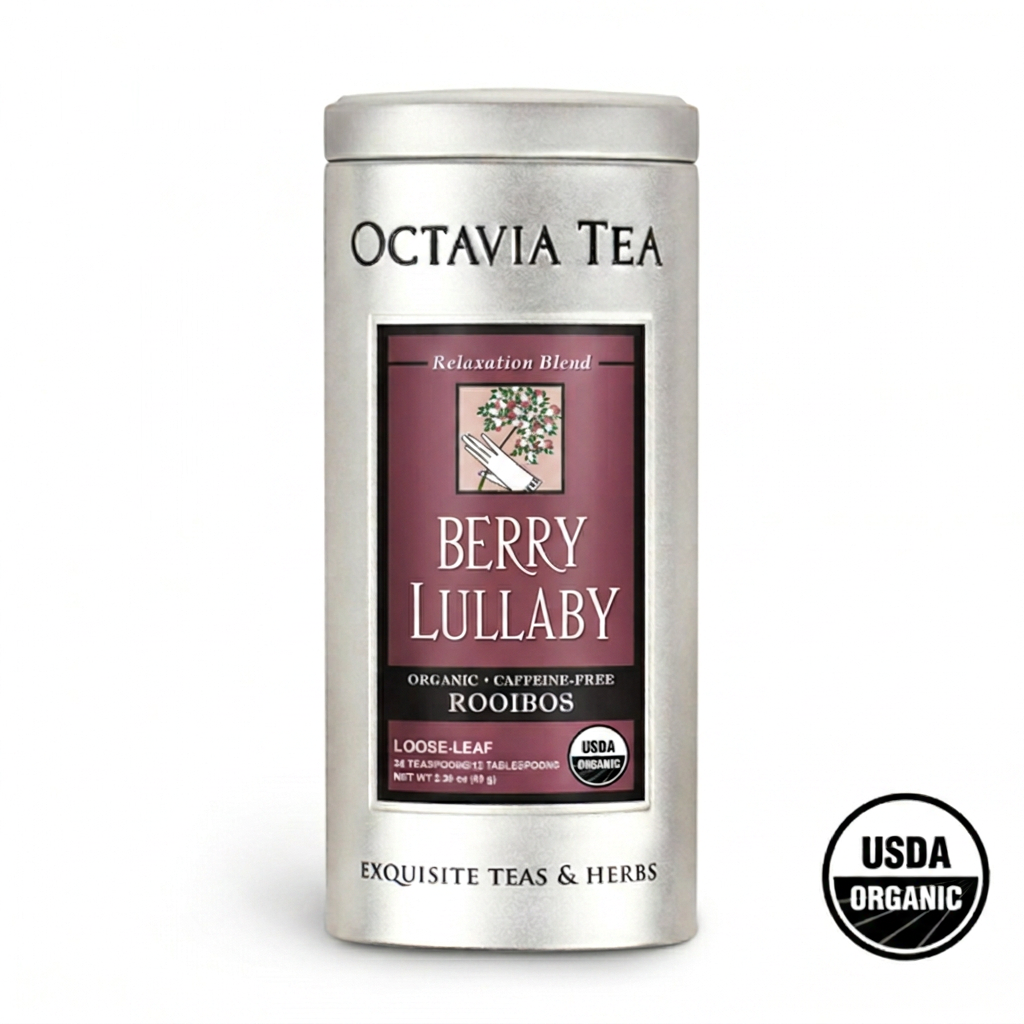
Buying organic tea shouldn't feel like a gamble. Most brands hide behind vague words because they can't back them up. Octavia Tea takes the opposite approach: over 120 organic loose leaf teas, all USDA certified organic, sourced direct from estate gardens and hand-blended with natural flavor essences and pure essential oils. No artificial ingredients, no guesswork. Try a blend like Berry Lullaby, a caffeine-free rooibos with blueberries and chamomile, or Berry Cabernet, a juicy herbal tea built for cold brewing. Get started with Octavia Tea and taste the difference real certification makes.
Frequently Asked Questions
What does the USDA Organic seal actually guarantee for tea?
The USDA Organic seal means the tea was grown without synthetic pesticides, herbicides, or fertilizers, and that at least 95% of its ingredients are certified organic. Farms must follow organic practices for at least three years before harvest and pass annual inspections by a USDA-accredited certifier. The seal also prohibits sewage sludge, irradiation, and genetic engineering. For loose leaf tea, this gives you a verifiable baseline that chemical pesticides were not used in production.
How do I verify a tea company's organic certification?
Ask the company for its certifier name and certificate number, then check the USDA Organic Integrity Database online. The database lists every certified operation in the United States, including the products and dates covered. You can also request a copy of the certificate or a recent third-party test report for pesticide residues. Reputable brands like Octavia Tea will share this information without hesitation because it backs up their organic claims.
Does 'natural' on a tea label mean it is pesticide-free?
No. The word 'natural' on a tea label has no legal definition and does not guarantee anything about pesticide use. A tea can be labeled natural while still being grown with synthetic chemicals, because the term only loosely refers to how ingredients are processed or sourced. To confirm a tea is free from chemical pesticides, look for the USDA Organic seal or ask for third-party test results. Rely on certifications, not marketing words.
Why is loose leaf tea generally considered safer than tea bags?
Loose leaf tea is often made from larger, whole leaves that come from higher-quality harvests, which are more likely to be organic and less processed. Tea bags can contain dust and fannings from lower-grade leaves, and some bag materials have raised concerns about microplastics. Choosing certified organic loose leaf tea from a transparent brand reduces your exposure to pesticide residue and lets you see exactly what you are steeping.


Octavia Tea Sign In
Create New Account