























Loose Leaf Tea vs Tea Bags: Health Benefits

Table of Contents
- Loose Leaf Tea vs Tea Bags: What Actually Changes in Your Cup
- Loose Leaf Tea vs Tea Bags: What the Evidence Shows
- Tea Bag Materials and Microplastic Exposure
- How to Brew Loose Leaf Tea for Better Extraction
- Tea Freshness and Storage: Why Packaging Decides Quality
- Serving Size and Strength
- Cost per Cup, Waste, and Everyday Convenience
- Conclusion: Which Choice Fits Your Daily Tea Ritual
- Frequently Asked Questions
Last Updated: October 14, 2026
People ask us about this all the time, so here's our take. When we say 'tea bags' in this post, we mean the store-bought, pre-filled kind. We know why people use them: they're easy. That's why we also sell tea pockets you fill yourself, so you get the convenience of a bag with whole leaf inside. Friends don't let friends drink fannings, but the real reason this matters isn't health claims (we'll be honest about those below). It's flavor, control, and knowing what your tea is steeping in.
Loose Leaf Tea vs Tea Bags: What Actually Changes in Your Cup
The difference between loose leaf tea and tea bags starts with what's inside: loose leaf team usually holds larger pieces of leaf, while most tea bags smaller broken leaf (fannings) and dust]. That difference shapes flavor, aroma, and how fast the leaf gives up its compounds.
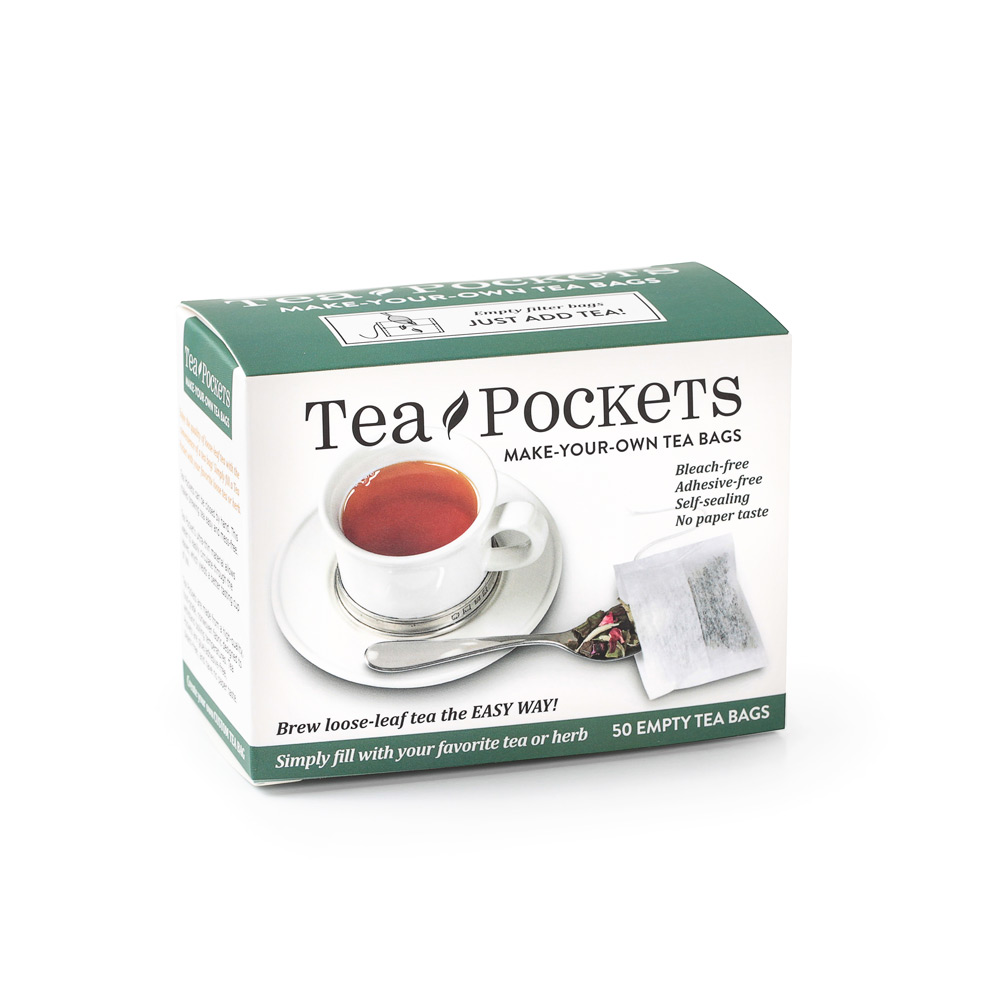
Fill Your Own Tea Bags
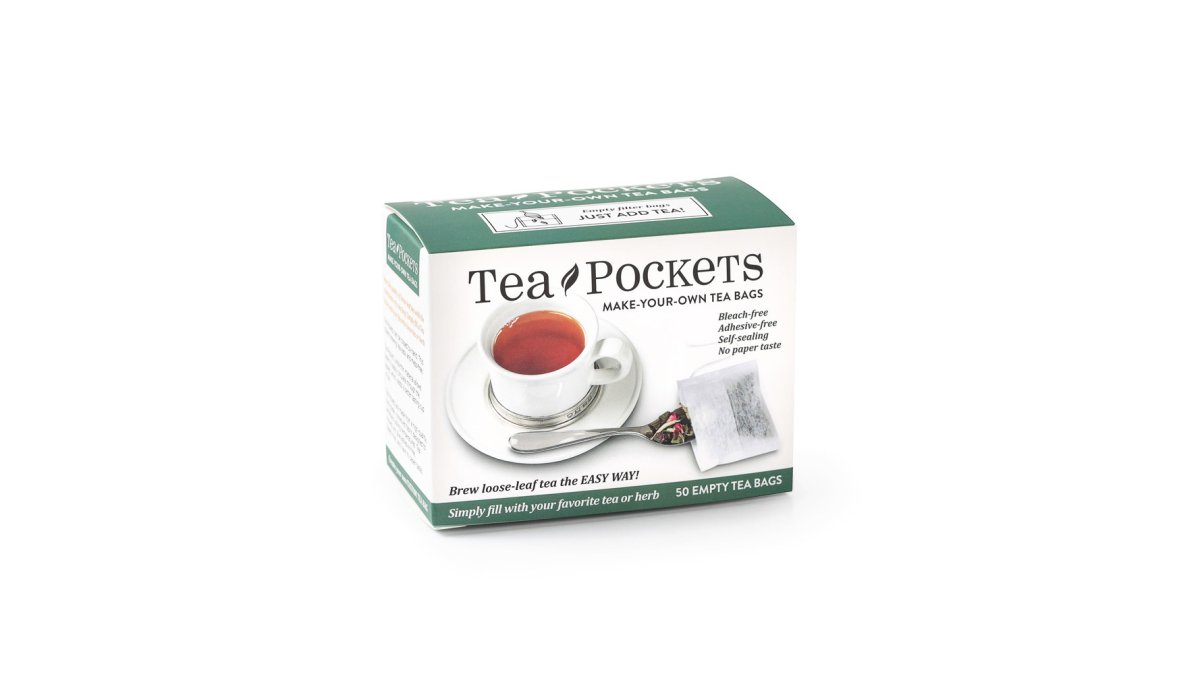
Fill Your Own Tea Bags
At Octavia Tea, we source whole-leaf teas directly from estate gardens, so we see this gap in the difference of dust vs whole leaf every day. We want you to understand and have the best tea knowledge you can so you can brew your best most enjoyable cups.
Leaf Size, Tea Grade, and Surface Area
Leaf size determines how much of the leaf touches water, and that contact drives extraction. Whole leaves unfurl slowly, releasing flavor in layers. Small particles release everything at once, which is why bagged tea often turns bitter if you look away for a minute.
Tea grade describes leaf size and wholeness, not quality by itself. A broken grade can still be fresh and well-made. The practical point: smaller pieces equal faster, flatter extraction.
Flavor, Aroma, and Mouthfeel
Whole leaves carry essential oils that survive processing intact. Those oils create the aroma you notice before the first sip. Fannings lose much of that aroma during sorting and packing.
Mouthfeel follows the same logic. Loose leaf tea tends to feel rounder and fuller on the palate, while bagged tea can read thin or sharp.
Loose Leaf Tea vs Tea Bags: What the Evidence Shows
A common claim is that whole leaves hold more catechins, so loose tea must be healthier.
Start with the mechanism. The polyphenols, catechins, and flavonoids in tea sit inside the leaf's cell structure. Hot water has to reach those cells before anything can dissolve into your cup.
But extraction in a lab beaker is not the same as health outcomes in a human body. Studies that measure catechin content in brewed tea typically control temperature, time, and leaf-to-water ratio. Real drinkers don't.
What the evidence does support, stated carefully:
- Compound presence is not in dispute. Both formats deliver polyphenols into hot water. The disagreement is about how much, and how consistently.
- Brewing conditions often matter more than format. Water temperature, steeping time, and how much leaf you use can shift extracted catechin levels more than the bag-versus-loose choice does.
- Long-term health outcome differences are not well established. No body of research shows that people who drink loose leaf tea live healthier lives than people who drink bagged tea, once you account for overall diet and lifestyle.
A practical way to think about it: if your goal is maximizing what you extract from a given leaf, give the leaf room, use water hot enough for its type, and steep long enough that the flavor fully develops.
Tea Bag Materials and Microplastic Exposure
Tea bag material is the one variable in this comparison that has nothing to do with the tea itself, and it's the one that gets the least attention. Here's what's actually going on.
Commercial tea bags fall into three broad material families:
- Paper and paper blends. The traditional flat or folded bag. Most are sealed with heat, though some use a food-grade adhesive. Paper itself is plant fiber and breaks down, but the seal and any bleaching or finishing treatment are separate questions from the paper.
- Plastic mesh. Woven nylon or PET, usually shaped into a pyramid or a soft pouch so whole leaves have room to expand. These are the bags most often studied for particle shedding because the mesh is, structurally, a plastic.
- Plant-based and biodegradable mesh. Made from materials like polylactic acid or other plant-derived polymers. These are marketed as compostable, but "plant-based" describes the feedstock, not necessarily the behavior of the material in hot water. The two are not the same claim.
Now the mechanism behind the concern. When a plastic mesh bag sits in near-boiling water for several minutes, the polymer is exposed to heat and mechanical agitation. Research attention has focused on whether microscopic plastic particles, and in some cases the compounds used to make the plastic, migrate into the water.
The practical response is material literacy, not alarm:
- Read the material line, not the marketing. "Silky," "mesh," and "pyramid" usually mean a plastic polymer. "Paper," "filter," and "plant fiber" usually don't. If the box doesn't say, the manufacturer's website often will.
- Prefer unbleached, adhesive-free paper when you can find it. Fewer processing steps means fewer things to wonder about.
- Consider the mesh bags a convenience trade-off, not a health claim. They brew whole leaves beautifully. If particle shedding concerns you, that's a reason to choose paper or brew loose, not a reason to panic about the tea inside.
- Brewing loose sidesteps the question entirely. A stainless infuser or a paper filter puts your leaves in contact with water and nothing else.
FDA guidance on food contact substances outlines how materials that touch food and drink are regulated, which is a useful starting point when you're trying to decode packaging claims.
How to Brew Loose Leaf Tea for Better Extraction
Good loose leaf tea is mostly about three variables: water temperature, steeping time, and room for the leaves to expand. Get those right and the gap between loose and bagged becomes obvious in the cup.
Water Temperature and Steeping Time by Tea Type
Tea Type | Water Temperature | Steeping Time | Notes |
|---|---|---|---|
Black tea | Near boiling | 3-5 minutes | Handles heat well |
Green tea | Below boiling | 2-3 minutes | Overheating turns it bitter |
White tea | Below boiling | 3-4 minutes | Delicate, forgiving |
Near boiling | 5-7 minutes | Needs longer to extract |
Tools That Make Loose Leaf Tea as Easy as a Tea Bag
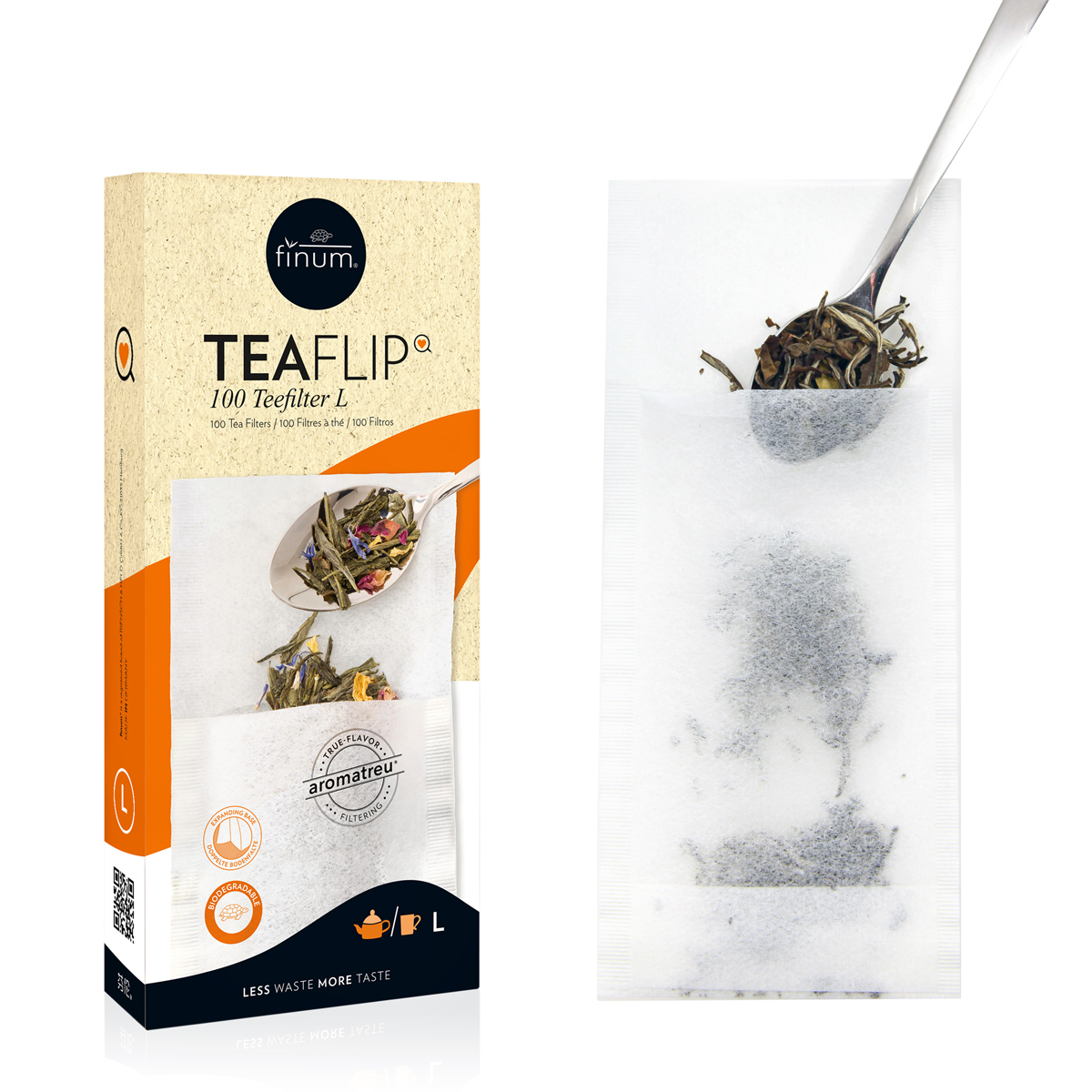
Convenience is the real reason people stay with bags, and it's solvable. Our Tea Infusers ($17.99) drop straight into a mug. If you want the bag experience without the bag, Finum Tea Filters (large) ($7.50) are glue-free, chlorine bleach-free, and biodegradable, with an expanding base that gives leaves room to unfold. For travel, Tea Pockets (original) ($7.95) are self-sealing with a string for easy removal.

Tea Freshness and Storage: Why Packaging Decides Quality
Freshness matters as much as format. Whole leaves keep their oils longer than fannings, but only if you store them away from light, heat, and air.
Buy in amounts you'll finish within a few months, keep the tin sealed, and skip the display jar on a sunny shelf. Bagged tea in individually wrapped envelopes holds up well, which is one genuine point in its favor. Loose leaf wins on ceiling, bags win on shelf-life forgiveness.
Serving Size and Strength
Serving size is the difference. A tea bag is a fixed dose, usually sized for one cup. Loose leaf lets you dial the amount up or down, so you control strength instead of accepting whatever the bag gives you. If caffeine sensitivity is your concern, this control is genuinely useful.
Cost per Cup, Waste, and Everyday Convenience
Here's where loose leaf tea usually wins the argument. Reusable infuser serves cup after cup, while bags are consumed and repurchased indefinitely. Weighed against the tea itself, loose leaf often lands cheaper per cup once you're past the entry cost.
Waste tells a similar story. Paper filters and biodegradable options break down, and a reusable infuser produces almost nothing to throw away. Bagged tea generates a wrapper, a string, a tag, and a bag every single time.
Factor | Loose Leaf Tea | Tea Bags |
|---|---|---|
Flavor depth | Full, layered | Flatter, faster |
Leaf quality | Whole leaves | Fannings and dust |
Control | Full (amount, time, temp) | Fixed dose |
Convenience | Needs a filter or infuser | Open and steep |
Waste per cup | Minimal with reusable gear | Wrapper, string, tag, bag |
Best for | Daily rituals, enthusiasts | Speed, travel, offices |
Conclusion: Which Choice Fits Your Daily Tea Ritual
Loose leaf usually wins on flavor and control, and with reusable gear it wins on waste. Bags win on speed and shelf-life forgiveness.
If you're ready to make the switch, our Fill Your Own Tea Bags ($7.95) give you the bag format with your own whole-leaf tea inside. Octavia Tea offers over 120 organic loose leaf teas sourced directly from estate gardens, hand-blended with natural flavor essences and pure essential oils, and USDA certified organic.
Frequently Asked Questions
Which is better for health, tea bags or loose leaf tea?
It depends on the leaf inside and how you brew it, not on the format alone. Whole-leaf loose leaf usually has larger pieces, and those release flavor and compounds more gradually across a longer steep. Bagged tea made from small leaf particles and dust can extract quickly, so a short steep may taste strong while a longer one turns bitter. The bigger levers are water temperature, steeping time, and freshness. Store tea away from light, heat, and moisture, and follow the steeping guidance for the specific tea type.
Does loose leaf tea have more antioxidants than tea bags?
Not automatically. Both come from the same plant, and antioxidants such as polyphenols, catechins, and flavonoids depend first on the tea type, the leaf grade, and how fresh the tea is. Leaf size affects how fast compounds move into water. Whole leaves typically need more time and space to expand, while small particles in a bag give up their compounds quickly. A controlled comparison means using the same tea type, the same water temperature, and matched steeping times before drawing any conclusion.
How do I brew loose leaf tea without a lot of equipment?
Start with one simple tool. A basket infuser or a large paper filter fits most mugs and lets leaves expand, which is the main advantage over a cramped bag. Fill-your-own tea bags give you the portability of a bag with the leaf quality of loose tea. Use water just off the boil for black tea, slightly cooler for green tea, and steep for the time recommended for that tea. Remove the leaves when the steep is done to avoid bitterness.
Do tea bags release microplastics into my tea?
Plastic mesh bags (nylon or PET) have been shown to release particles in lab tests with hot water, and some paper bags are sealed with plastic-based material. The health effects aren't well understood. If this concerns you, look for bags described as plastic-free or bleach-free, or use a stainless infuser, a paper filter, or fill-your-own bags made from cotton fibers or abaca pulp and cellulose. Check the product listing for the material before buying.
Is loose leaf tea worth the higher cost per bag?
Compare cost per cup rather than cost per package. Loose leaf tea is often sold by weight, and whole leaves can be re-steeped, so a single portion may yield two or three cups depending on the tea type. Fill-your-own bags and reusable infusers add a small one-time cost, then work with any loose tea you buy. If you drink tea daily, that math often favors loose leaf.


Octavia Tea Sign In
Create New Account