























Healthiest Tea to Drink Daily: A 2026 Guide

Table of Contents
- How to Choose the Healthiest Tea for Your Daily Routine
- Green Tea Benefits: Why It Leads Most Daily-Drink Rankings
- Black Tea Nutrition Facts: What You Actually Get Per Cup
- Herbal Teas by Need: Chamomile, Peppermint, Hibiscus, and More
- Tea and Blood Pressure: What the Evidence Suggests
- Tea to Avoid Drinking Every Day: Cautions and Interactions
- Building a Daily Tea Ritual: Prep, Serving Size, and Quality
- Conclusion: The Daily Cup That Fits You
- Frequently Asked Questions
Last Updated: October 12, 2026
We love this question, and the honest answer starts with another one: what do you mean by healthy? Tea is a good daily drink mainly because most of it has little or no sugar. Beyond that, the best tea for you depends on what you want from it, how you handle caffeine, and what time of day you're drinking it.
How to Choose the Healthiest Tea for Your Daily Routine
The healthiest tea to drink daily matches your body's needs, caffeine tolerance, and the time of day you drink it. Green tea leads most rankings for everyday drinking because of its catechin content, but "healthiest" is not a single answer.
Match the Tea to Your Goal, Not the Hype
A daily tea habit works best when you pick the goal first: steady morning energy, evening relaxation, digestive comfort after meals, or general antioxidant support. Each goal points to a different leaf.
Here is how we would map it:
- Morning energy plus antioxidants: green tea or matcha
- All-day moderate caffeine: black tea or oolong
- Evening wind-down: chamomile, lemon balm, or lavender
The USDA Dietary Guidelines for Americans treat unsweetened tea as a sensible beverage choice within an overall healthy eating pattern, which is the framing worth keeping in mind.
Green Tea Benefits: Why It Leads Most Daily-Drink Rankings
Green tea benefits come primarily from polyphenols, particularly flavonoids called catechins. The most studied is EGCG, linked to antioxidant activity. Because green tea is minimally oxidized, the leaf keeps a higher concentration of catechins than black or oolong. White tea, even less processed, carries a similar profile; oolong sits in the middle, and fully oxidized black tea has its own mix of compounds.
Caffeine in Green Tea, by the Cup
An 8-ounce cup of brewed green tea generally lands in the range of 25 to 40 milligrams, though the number swings with leaf grade, water temperature, steep time, and whether the leaf is whole or broken.
That range matters if you drink three or four cups across a morning: three cups at the higher end can roughly equal the caffeine in a single cup of coffee.
How Strong Is the Evidence, Really
Green tea has one of the deeper research bases of any beverage, but the evidence is uneven. The clearest human findings cluster around markers, and much of the antioxidant story rests on laboratory and animal work that does not automatically translate to a person drinking two cups a day. Observational studies can show associations without proving tea caused the difference.
Loose Leaf, Catechins, and the Sweetener Question
Loose leaf tea preserves more of the leaf intact, and the leaf is where the catechins live.
The single biggest swing factor in whether a daily green tea is healthful is what you put in it.
For a straightforward everyday green, Emerald Spring is a clean, grassy Mao Jian that works as a daily cup.
Black Tea Nutrition Facts: What You Actually Get Per Cup
Black tea is nutritionally simple. Unsweetened black tea contains negligible calories, no fat, and no protein.
A standard cup typically carries more caffeine than green tea, roughly in the moderate range (40-70mg), a difference that matters more than the antioxidant comparison if you are caffeine-sensitive. Theaflavins have been studied, and black tea remains one of the most consumed beverages worldwide.
Herbal Teas by Need: Chamomile, Peppermint, Hibiscus, and More
Herbal teas are not true teas. They are infusions made from flowers, leaves, roots, or dried fruit rather than the Camellia sinensis plant, each with a distinct set of traditional uses. Matching the herb to the need is where herbal tea earns its place:
Tea | Best For | Caffeine | When to Drink |
|---|---|---|---|
Chamomile | Winding down | None | Evening |
Peppermint | After a meal | None | After meals |
Hibiscus | Tart, fruity flavor, possibly blood pressure | None | Afternoon |
Lemon balm | Stress relief, calm | None | Evening |
Lavender | Relaxation, winding down | None | Before bed |
Caffeine-Free Options for Evening and Sensitive Drinkers
Anyone who avoids caffeine after midday has a full shelf of options. Chamomile is the most familiar and the one most often reached for when sleep quality is the goal. Peppermint is a popular choicse that settles the stomach after a heavy meal. Hibiscus brings a tart, cranberry-like flavor and a deep red color. If you want the ritual of a warm cup without the stimulant, these are where to start.
Tea and Blood Pressure: What the Evidence Suggests
Tea and blood pressure research points in a generally favorable direction, but the strength of the evidence varies by tea type. Several small trials of hibiscus have found modest reductions in blood pressure. Hibiscus has consistent findings among herbal infusions; green and black tea have both been studied for cardiovascular markers.
The NIH National Center for Complementary and Integrative Health maintains summaries of what the evidence does and does not support for common botanicals, and it is a useful starting point before you build a daily habit around any single herb.
Tea to Avoid Drinking Every Day: Cautions and Interactions
No single tea is off-limits for everyone. The cautions come down to a few patterns: heavily sweetened bottled tea, tea taken with certain medications, and any single herb consumed in large quantities without checking interactions. T
How Tea Interferes with Iron Absorption
Black and green tea contain tannins, which bind to iron from plant sources, beans, lentils, spinach, fortified grains, and reduce how much of it you absorb from that meal. Timing matters more than the cup itself: drinking tea between meals rather than with them leaves a gap for iron-rich food to be absorbed first. If you are vegetarian or eat mostly plant-based, build that gap into your routine.
Medications and Herbs That Deserve a Second Look
Some interactions are well enough known to flag before you build a daily habit around a single herb:
- Hibiscus with blood pressure medication. Hibiscus can lower blood pressure in some studies, so the effect can be additive with medication that lowers pressure. If you take a blood pressure drug, talk to your doctor before making hibiscus a daily drink.
- Licorice root. Not a tea by itself that we carry, but it appears in many blends and can affect potassium levels and possibly increase blood pressure with prolonged use.
- St. John's wort and other strong botanicals. Some herbs interact with prescription drugs in ways that are not obvious from the label. If you take a daily medication, check before adding a new herbal blend to your routine.
A useful default: if you take a prescription medication, treat any new daily herbal habit the way you would treat a new supplement and run it past your pharmacist or doctor first.
Pregnancy, Caffeine, and a Reasonable Daily Frame
If you are pregnant or trying to conceive, caffeine is the number to watch. Commonly cited guidance, such as from ACOG, is to stay under about 200 mg of caffeine a day during pregnancy.
For most healthy adults, a moderate daily pattern is a few cups of unsweetened tea spread across the day, with caffeine-containing teas finished by early afternoon if sleep is a concern.
Building a Daily Tea Ritual: Prep, Serving Size, and Quality
Preparation determines how much of the flavor and plant compounds actually reaches your cup. Water temperature, steep time, and leaf quality all change the outcome.
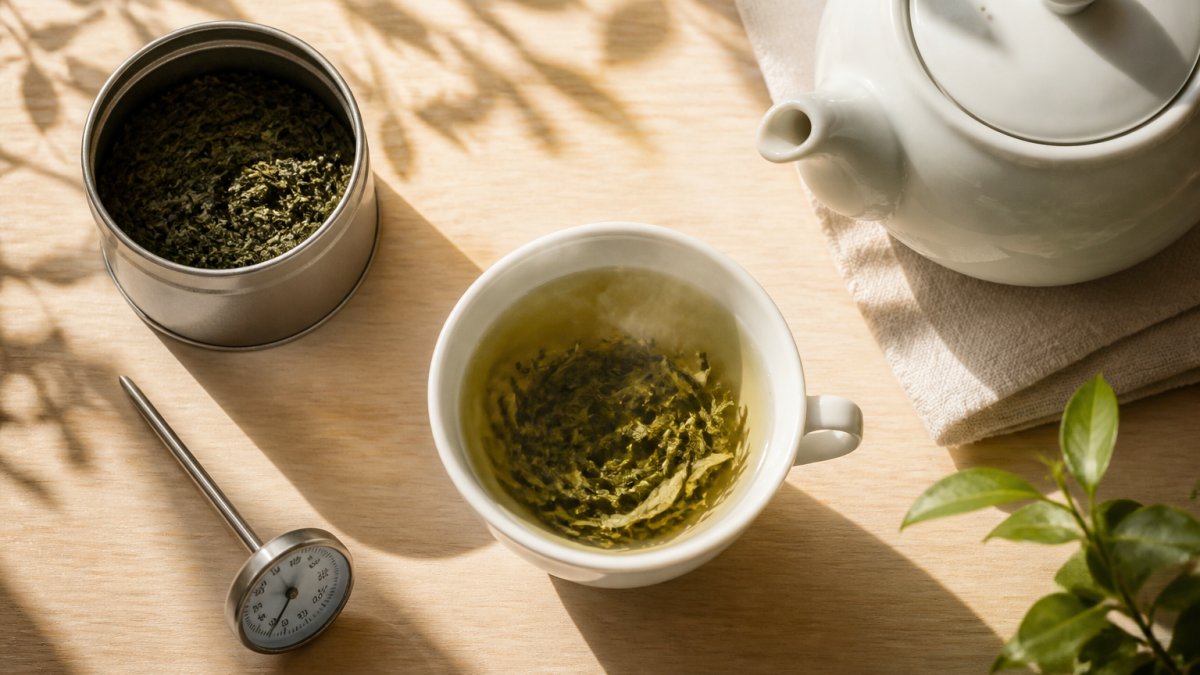
Overhead view of a steaming cup of loose leaf green tea beside a small tin of tea leaves, a thermometer, and a simple teapot on a light wooden table, soft natural morning light
A practical daily routine looks like this:
- Heat water to the temperature your tea type calls for, not to a rolling boil by default.
- Measure roughly one teaspoon of loose leaf per 8oz, adjusted to taste.
- Steep for the time your tea needs, then remove the leaf.
- Drink it unsweetened, or with a little honey.
- Keep total daily intake moderate, and stop caffeine by early afternoon if sleep is a concern.
Why Loose Leaf Changes the Equation
Loose leaf gives you control that tea bags do not: you can adjust leaf quantity and quality which is how you dial in a cup that tastes good to you. Whole leaf also stores better and brews more cups per ounce than bagged fannings.
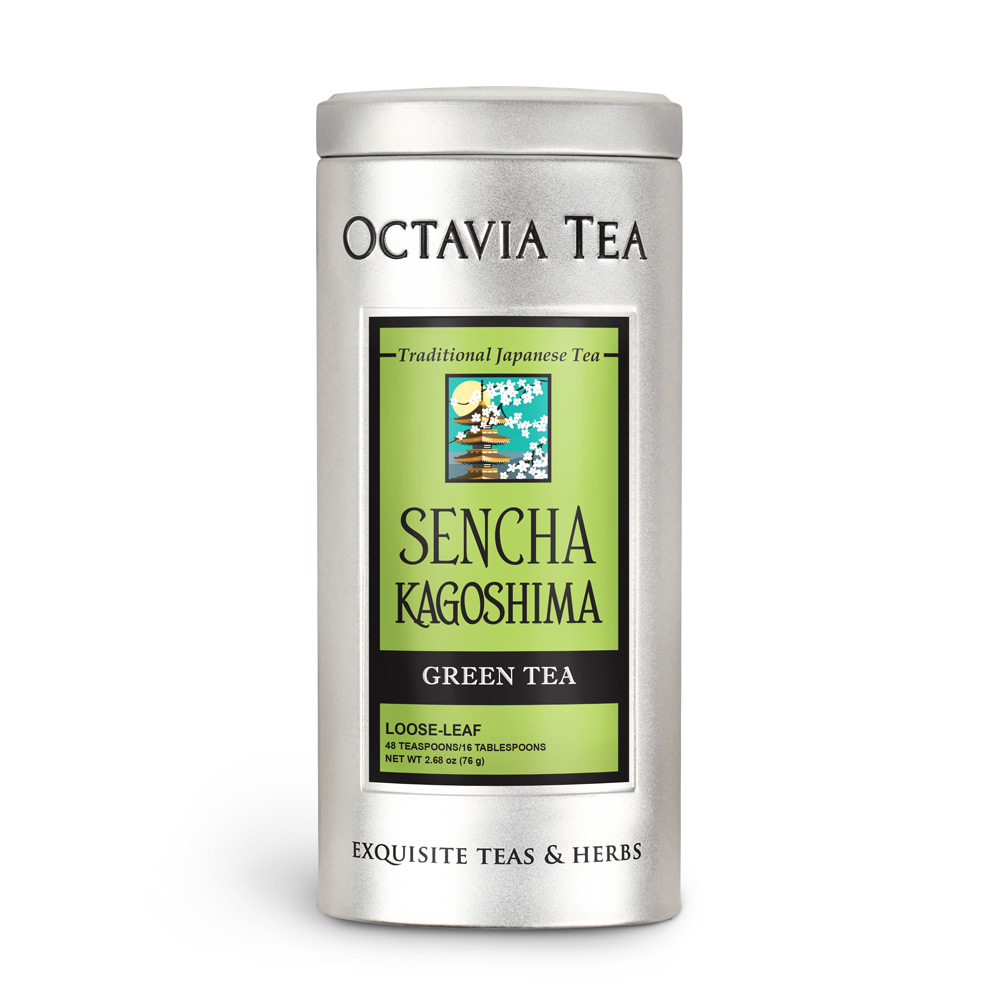
Our Sencha Kagoshima is grown in volcanic soil and steamed with care, and it has a grassy-pine aroma and deep umami. For a gentler, creamier cup, Kukicha Green uses the twigs and stems of the tea plant for a rounded, low-astringency brew. For a gentler, creamier cup, Kukicha Green uses the twigs and stems of the tea plant for a rounded, low-astringency brew.
Conclusion: The Daily Cup That Fits You
Choosing a daily tea is less about finding one universal winner and more about matching the cup to your goal, your caffeine tolerance, and your routine. Green tea is the most studied of the teas. Black tea holds its own. Herbal infusions cover the caffeine-free hours.
Octavia Tea offers over 120 organic loose leaf teas sourced directly from estate gardens, hand-blended with natural flavor essences and pure essential oils and no artificial ingredients.
Frequently Asked Questions
What tea should you not drink every day?
Teas with very high caffeine or strong herbal actives deserve caution as daily staples. Strongly caffeinated blends can disrupt sleep and add up over multiple cups, and certain herbal infusions such as those containing senna or licorice root are not meant for daily long-term use. If you take medication or manage a health condition, check with your doctor before making any tea your everyday drink.
Is green tea healthier than black tea?
Both come from the same plant and both supply polyphenols and flavonoids. Green tea is less oxidized, so it retains more catechins, including EGCG, which is why it often tops daily-drink lists. Black tea offers its own compounds, including theaflavins, and a stronger, maltier cup. The healthiest tea to drink daily is the unsweetened one you will actually enjoy consistently.
Does tea lower blood pressure?
Research on tea and blood pressure is promising but not conclusive. Some studies link regular green or black tea intake with small improvements in blood pressure already within a normal range. Tea is not a treatment for hypertension. If your blood pressure is elevated, work with your doctor and treat tea as one small part of a broader plan.
Which teas are naturally caffeine-free?
True teas, including green, black, white, and oolong, all contain caffeine because they come from the Camellia sinensis plant. Herbal infusions are naturally caffeine-free: chamomile, peppermint, hibiscus, lemon balm, and lavender are common examples. If you want an evening cup that will not interfere with sleep quality, a caffeine-free herbal infusion is the practical choice.
How much tea is safe to drink daily?
For most healthy adults, moderate intake of unsweetened tea, roughly a few cups a day, fits comfortably within general guidance. Watch total caffeine across everything you drink, and remember that matcha delivers more caffeine per serving because you consume the whole leaf. If you are pregnant, nursing, or taking medication, ask your doctor for a limit that fits your situation.
Can you drink herbal tea every day?
Yes, most single-ingredient herbal infusions such as chamomile, peppermint, or often hibiscus are fine as daily drinks. The exception is herbal blends built around strong actives, including laxative herbs or concentrated licorice root, which are better used occasionally. Rotating two or three herbal teas across the week gives you variety and lowers the chance of overdoing any one plant.


Octavia Tea Sign In
Create New Account