























Best Floral Tea Blends to Serve with Pastries

Last Updated: November 21, 2026
Quick Summary
The best floral tea blends for pastries match the tea's body to the pastry's weight. Jasmine Green suits custards and fruit tarts, Rose Oolong suits buttery croissants, and Calming Chamomile suits fruit scones. Use caffeine-free herbal blends for evening service.
- Match the tea's body to the pastry's weight before adjusting for sweetness and aroma.
- Jasmine Green stays light enough for custards, almond cakes, and fruit tarts.
- Rose Oolong has a smooth body that suits buttery croissants and pain au chocolat.
- Calming Chamomile's honeyed sweetness suits fruit scones and apple turnovers.
- Lead with caffeine-free herbal blends for evening service and green or black bases for brunch.
Table of Contents
- Why Floral Tea Blends Work With Pastries
- Jasmine Green and Jasmine Pearl with Desserts
- Rose Oolong and Earl Grey Lavender with Croissants
- Calming Chamomile and Moonlight Garden for Scones and Fruit Pastries
- Black Lavender and Lavender Lemongrass for Richer Bakes
- Comparing Floral Tea Blends Side by Side
- Choosing Your Next Tea Tin for a Pastry Table
- Frequently Asked Questions
At Octavia Tea, we pour floral blends with pastries more than almost anything else, and the pairing works better than most people expect. The right floral cup lifts a buttery croissant, softens a lemon tart, and gives a plain scone something to play against. This guide covers the blends in our own range that we would reach for first, why each one suits certain pastries, and how to choose for your table.
Why Floral Tea Blends Work With Pastries
The pairing was the problem, not the tea, when a pot of jasmine green sat beside a tray of chocolate croissants. Once I started thinking about pastries and floral teas in terms of weight, sweetness, and aroma rather than just "floral goes with sweet," the same teas that flopped started disappearing from the pot.
Pastries are rich, sweet, and often buttery. A floral tea works because its aroma cuts through that richness without fighting it. Rose and lavender bring a clean, perfumed edge, while jasmine adds a gentle sweetness. But the reason a pairing succeeds or fails usually comes down to four things happening at once in your mouth.
Sweetness versus aroma. A very sweet pastry, a glazed danish, a sticky bun, a macaron, coats the palate and mutes delicate floral notes. A tea with a strong, lifted aroma (jasmine pearl, Earl Grey Lavender) can push back through that coating. A subtle rose oolong, on the other hand, will vanish under a heavy glaze unless you sip it between bites rather than with them.
Acidity versus butterfat. Butter and cream soften and round out a tea's edges, which is why buttery pastries and lightly astringent teas get along so well. Fruit fillings bring their own acidity, and that acidity can either echo a citrusy tea (bergamot, lemongrass) or clash with it. A lemon bar with Lavender Lemongrass reads as bright and clean; the same bar with Earl Grey Lavender can taste muddled because two citrus notes compete instead of complement.
Tannins versus texture. Black tea bases carry more tannin, and tannin gives a drying, grippy sensation that stands up to dense, chewy bakes like brownies and loaf cakes. Green and white bases are lighter in tannin, so they suit flaky, airy pastries, croissants, palmiers, petit fours, where a heavy tea would overwhelm the texture.
Floral intensity versus filling. The strongest floral notes (lavender, rose) work best when the pastry has a neutral or complementary flavor, vanilla, almond, honey, plain butter. A delicate floral note (chamomile, jasmine) needs a pastry that does not shout over it. When the filling is already intensely flavored, dark chocolate, tart berry, match the tea's body to the pastry's weight and let the floral note be a background hum rather than the lead.
We look for three things when we pair: how strong the tea tastes, how sweet the pastry is, and whether the floral note echoes something in the filling or glaze. A light, delicate tea suits flaky, plain pastries. A bolder base holds up against chocolate or caramel. If you remember nothing else, remember this: match the tea's body to the pastry's weight first, then adjust for sweetness and aroma. That single rule will get you most of the way to a pairing that works.
Jasmine Green and Jasmine Pearl with Desserts
Jasmine tea is our most versatile pick for desserts. Jasmine Green is a classic green tea scented with wild jasmine, and it stays light enough to sit alongside custards, almond cakes, and fruit tarts without overpowering them. It is an easy first choice for a mixed dessert table.
Jasmine Pearl is the more special option. Its tea leaves are hand-rolled into pearls that open slowly in the cup, so the jasmine builds gradually. Serve it with delicate pastries where you want the tea to feel like a moment of its own, such as a plate of petit fours.
Rose Oolong and Earl Grey Lavender with Croissants
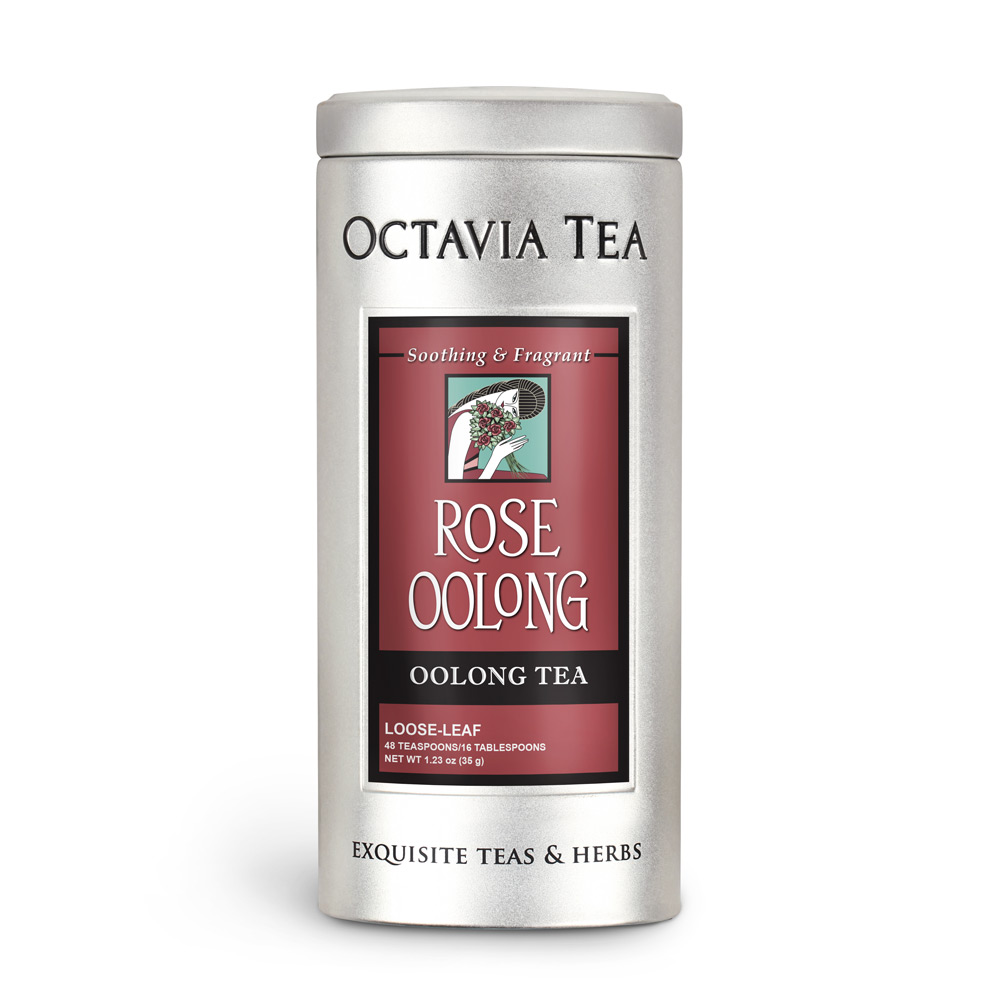
Rose Oolong has a smooth, soothing body with the fragrance of crushed rose petals over an oolong base.
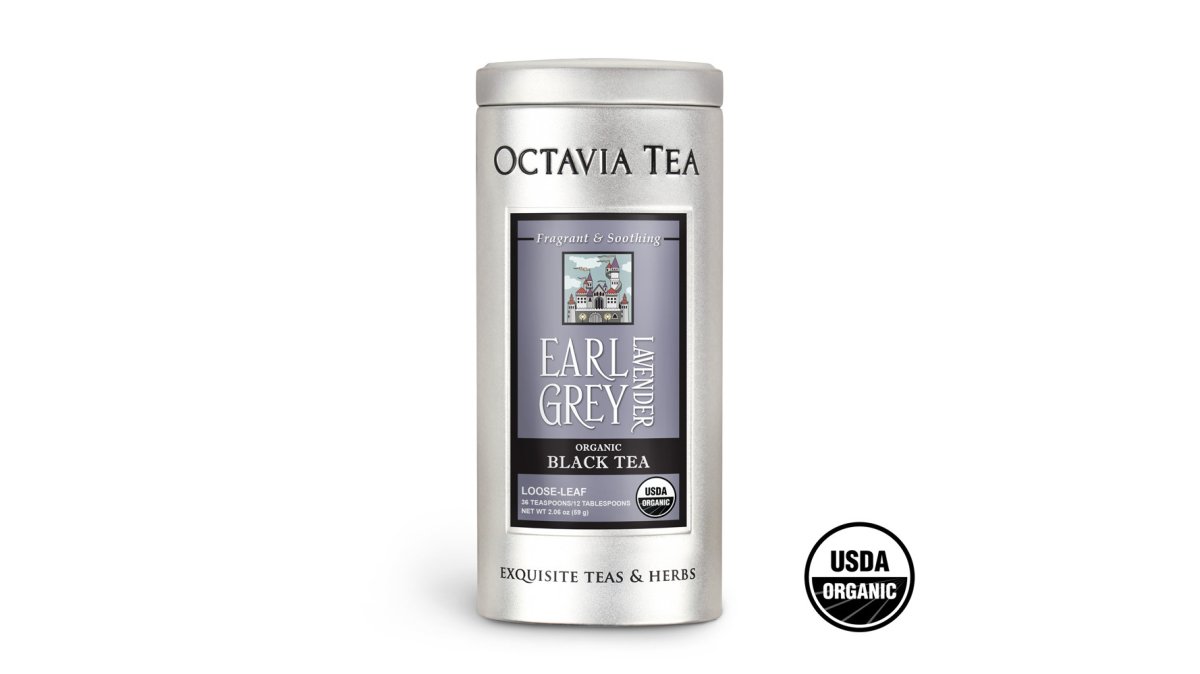
Earl Grey Lavender combines an antioxidant-rich black tea with essential oil of bergamot and a touch of French lavender.
Calming Chamomile and Moonlight Garden for Scones and Fruit Pastries
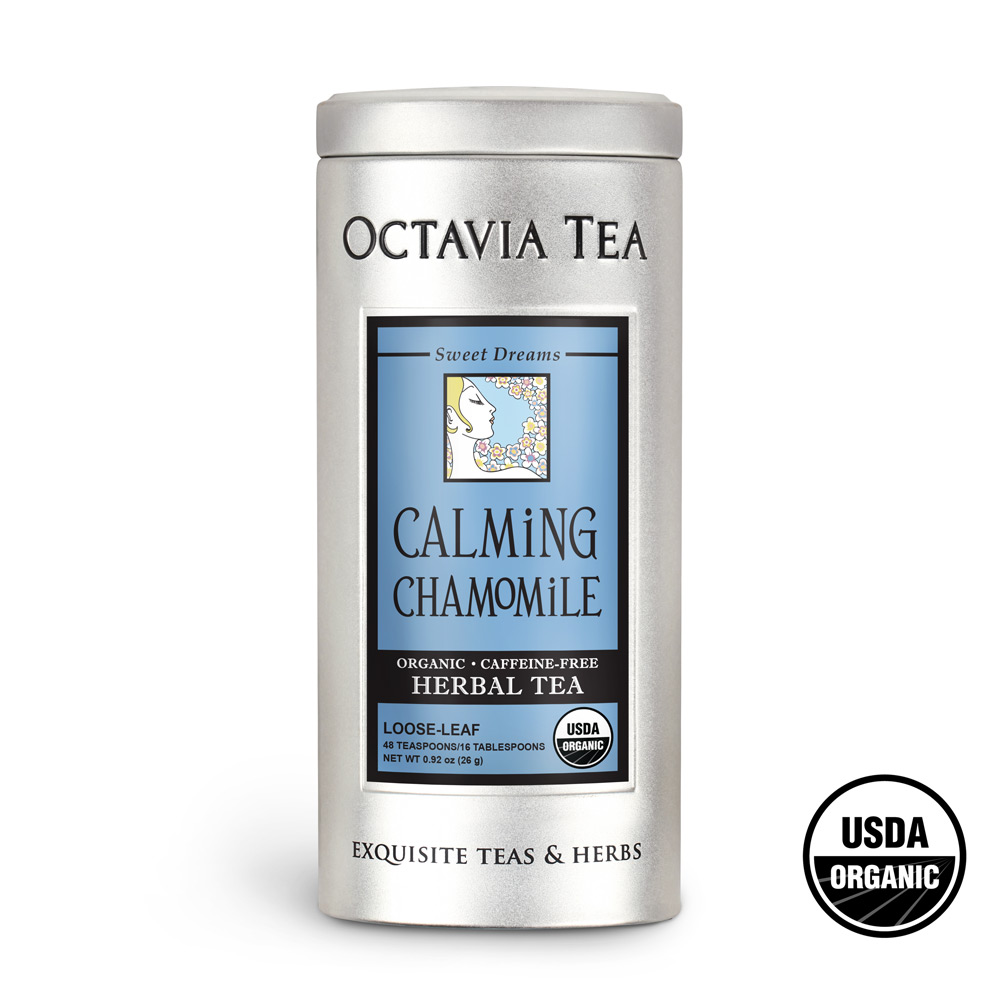
Calming Chamomile is a whole-flower herbal tea with notes reminiscent of honey, fruit blossom, and apple. Its honeyed sweetness suits fruit scones, apple turnovers, and lightly sweetened pastries with jam.
Moonlight Garden blends chamomile with lavender, spearmint, and rose, so it is softer and more aromatic than the plain chamomile. Try it with berry or stone-fruit pastries, where the mint and rose add brightness.
Black Lavender and Lavender Lemongrass for Richer Bakes
Black Lavender pairs fragrant lavender flowers with a bright, classic black tea. It makes a good bridge for guests who like a stronger cup.
Lavender Lemongrass is a herbal blend with honeyed lavender over lemongrass. The citrusy lemongrass keeps it fresh alongside lemon bars, shortbread, and vanilla cake.
Comparing Floral Tea Blends Side by Side
| Blend | Base | Flavor Profile | Best Pastries | Caffeine |
|---|---|---|---|---|
| Jasmine Green | Green tea | Sweet, fragrant jasmine | Custards, almond cakes, fruit tarts | Yes |
| Jasmine Pearl | Green tea | Delicate, slowly opening jasmine | Petit fours, fine desserts | Yes |
| Rose Oolong | Oolong tea | Soft rose over smooth oolong | Croissants, pain au chocolat | Yes |
| Earl Grey Lavender | Black tea | Bergamot and lavender | Scones, citrus cream pastries | Yes |
| Calming Chamomile | Herbal (chamomile) | Honey, apple, fruit blossom | Fruit scones, apple turnovers | No |
| Moonlight Garden | Herbal (chamomile) | Chamomile, lavender, mint, rose | Berry and stone-fruit pastries | No |
| Black Lavender | Black tea | Lavender with bold black tea | Chocolate cake, brownies | Yes |
| Lavender Lemongrass | Herbal | Lavender with bright lemongrass | Lemon bars, shortbread | No |
Pros and cons at a glance:
- Jasmine Green: Pro, light and easy to pour for groups. Con, can get lost against very strong chocolate.
- Jasmine Pearl: Pro, a striking presentation and a long, gradual finish. Con, a higher price point for large tables.
- Rose Oolong: Pro, a smooth match for buttery pastries. Con, the rose is subtle, so it can disappear next to bold fruit fillings.
- Earl Grey Lavender: Pro, bergamot and lavender give range. Con, the citrus can clash with some fruit desserts.
- Calming Chamomile: Pro, caffeine-free and mellow. Con, its gentle flavor is easily overwhelmed by rich chocolate.
- Moonlight Garden: Pro, a layered floral blend that suits many fruit desserts. Con, the mint can feel too bright with cream-heavy pastries.
- Black Lavender: Pro, enough body for dense bakes. Con, contains caffeine, which matters for late-day service.
- Lavender Lemongrass: Pro, fresh and clean after heavy desserts. Con, caffeine-free, so it may not suit guests wanting a stronger cup.
Choosing Your Next Tea Tin for a Pastry Table
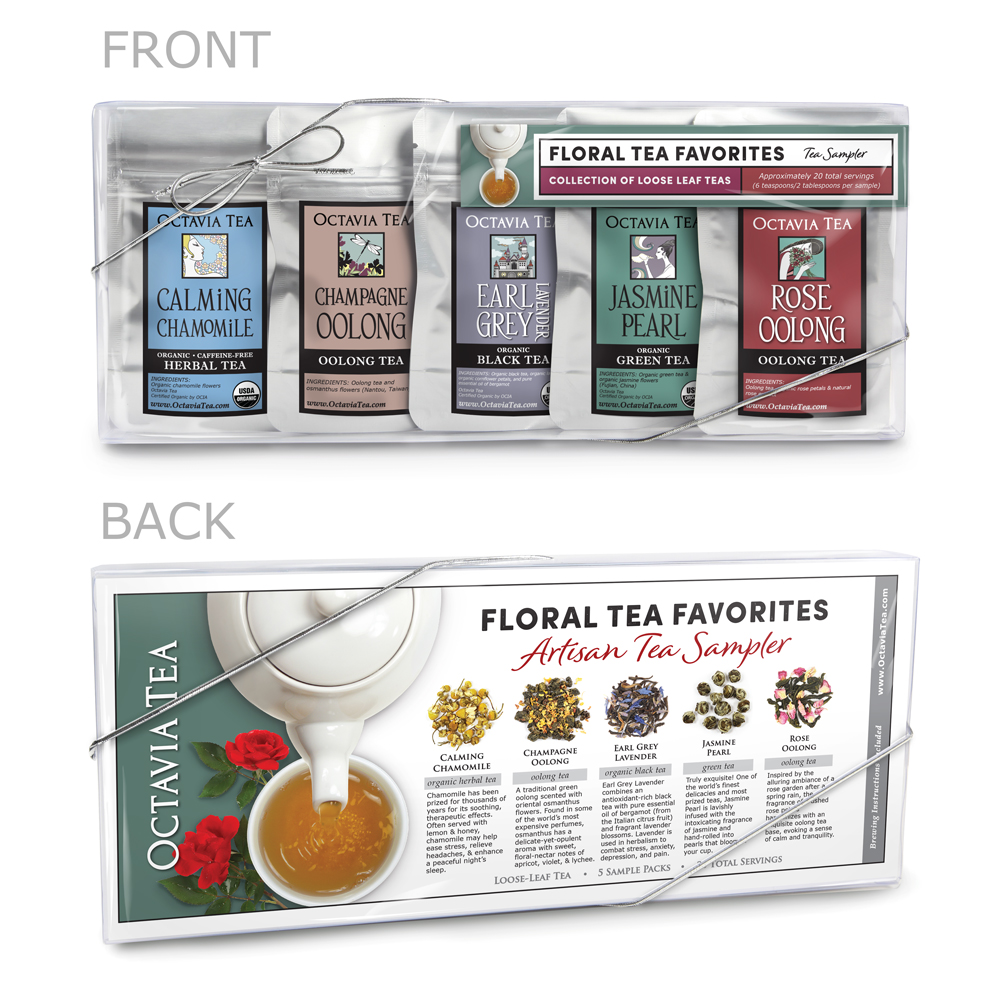
Start with the pastries you already serve. If most of your menu is buttery, begin with Rose Oolong. If fruit tarts and scones dominate, Calming Chamomile or Moonlight Garden fits better. For a mixed table, the Floral Tea Favorites Sampler ($26.00) includes Calming Chamomile, Champagne Oolong, Earl Grey Lavender, Jasmine Pearl, and Rose Oolong, with about 20 servings and brewing instructions included. It is a practical way to test several pairings before you commit to full tins.
Individual tins are listed with prices on each product page. Jasmine Pearl and Jasmine Snow Bud are premium teas, so check their product pages for current pricing and sizes.
Once you have your tins, the brewing details matter as much as the blend. Floral teas are easy to over-steep, and an over-steeped cup turns bitter and buries the flower. Check the brewing instructions on each tin, since leaf size and blend composition change the right numbers.
Serving temperature matters too. Calming Chamomile, Moonlight Garden, and Lavender Lemongrass are the caffeine-free picks; Jasmine Green, Jasmine Pearl, Rose Oolong, Earl Grey Lavender, and Black Lavender carry caffeine from their tea bases. For evening service, lead with the herbal blends; for brunch, the green and black bases hold up better against a full table.
If you are serving guests with caffeine sensitivity or allergies, check the product pages for each tin and the ingredients of your pastries.
If you are not sure where to begin, try the sampler, note which pastries your guests reach for first, and then build your tin order around those favorites.
Frequently Asked Questions
What are some popular floral tea blends?
Among the floral blends in the Octavia Tea range, Jasmine Green, Jasmine Pearl, Rose Oolong, Earl Grey Lavender, Calming Chamomile and Moonlight Garden are among the most recognizable. Each brings a different floral note: jasmine tends toward sweet and perfumed, rose toward soft and fragrant, and lavender toward herbal and calming. If you are new to floral teas, a sampler lets you compare several at once before committing to a full tin. Brewing instructions are included with the sampler, which makes it a practical starting point for a pastry table.
What pastries go well with floral tea?
Lighter pastries usually suit floral blends best. Butter croissants, almond pastries, shortbread and lemon-based desserts let the flower stay in the foreground without competing. Richer, heavily spiced or chocolate-heavy pastries tend to overwhelm delicate blends, so pair those with a bolder black tea instead. Scones are a classic match for lavender-forward blends such as Earl Grey Lavender, which is designed to accompany afternoon tea alongside scones and cakes.
Does jasmine tea go well with desserts?
Jasmine green tea is often served with lightly sweet desserts because its fragrance is bright and perfumed without being heavy. Jasmine Pearl, hand-rolled and scented with night-blooming jasmine, makes a striking centerpiece when guests can watch the pearls open in the cup. Fruit tarts, custards and simple cakes all sit comfortably beside it. Avoid pairing it with very sugary frostings, which can flatten the jasmine character.
Which floral tea works best with scones?
Earl Grey Lavender is a natural choice for scones, since it is built for afternoon tea. The bergamot in the black tea base adds citrus brightness, while the French lavender stays soft. Rose Oolong also works well with plain or fruited scones, especially when served with a little clotted cream or jam. Start with a modest pot and adjust the strength to suit the sweetness of your bake.


Octavia Tea Sign In
Create New Account