























How Much Caffeine in a Cup of Green Tea?

Last Updated: November 17, 2026
Quick Summary
Most brewed green tea lands between 20 and 50 milligrams of caffeine per 8-ounce cup, so that range is the honest answer to how much caffeine in a cup of green tea. The exact number depends on the leaf, the variety, how much leaf you use, and your steeping time and water temperature.
- Brewed coffee commonly runs 80 to 100+ milligrams per 8-ounce cup, several times higher than green tea.
- Brewed black tea typically ranges from 40 to 70 milligrams per 8-ounce cup, generally higher than green tea.
- Sencha typically brews around 20 to 30 milligrams per 8-ounce cup with a short steep below boiling.
- Matcha delivers more caffeine per serving than brewed green tea because you ingest the entire leaf.
- If you want less caffeine, start with less leaf and a shorter steep rather than only cooler water.
Table of Contents
- How Much Caffeine Is in a Cup of Green Tea?
- How Much Caffeine in Green Tea vs Coffee
- How Much Caffeine in Green Tea vs Black Tea
- Caffeine by Green Tea Variety: Sencha, Dragonwell and Matcha
- How Brewing Method and Steeping Time Change Caffeine Levels
- Is Caffeine in Green Tea Bad for You?
- Does Lipton Green Tea Have Caffeine?
- Choosing a Loose Leaf Green Tea for Your Daily Cup
- Frequently Asked Questions
How Much Caffeine Is in a Cup of Green Tea?
If you are asking how much caffeine in a cup of green tea, most brewed green tea lands between 20 and 50 milligrams per 8-ounce cup, and that range is the honest answer rather than a dodge.
Green tea caffeine content is the amount of naturally occurring caffeine extracted from Camellia sinensis leaves into the water during steeping. It is not added, not standardized, and not printed on the tin with any legal precision. A cup is a measurement, not a guarantee.
Here is what we can say with confidence: the same green tea leaves, brewed two different ways, can produce noticeably different caffeine levels in your cup. Below, we break down the range, compare green tea against coffee and black tea, and show you exactly which brewing choices push the number up or down.
Why the Number Varies So Widely
Four things drive the variation, and only one of them is under your control at the moment of brewing.
- The leaf itself. Growing conditions, harvest season, and plant cultivar all affect how much caffeine the leaf accumulates before it ever reaches your kitchen. Shaded leaves and older leaves differ from young spring buds.
- The tea type. Green, black, and oolong all come from the same plant, but processing changes the leaf and how it releases caffeine.
- Leaf quantity. More leaf in the same volume of water means more caffeine available to extract.
- Steeping time and water temperature. Hotter water and longer contact extract more caffeine, up to a point.
The USDA FoodData Central database lists brewed green tea in its records, and the values there reflect averages rather than any specific leaf. Treat any single number you see as a midpoint, not a promise.
How Much Caffeine in Green Tea vs Coffee
Green tea typically delivers a fraction of the caffeine in coffee per 8-ounce cup. Coffee commonly runs several times higher, so a green tea drinker is usually working with a gentler dose across the day.
| Beverage (8 oz) | Typical Caffeine Range | Notes |
|---|---|---|
| Brewed green tea | 20-50 mg | Varies by leaf, dose, steep time |
| Brewed black tea | 40-70 mg | Generally higher than green |
| Brewed oolong tea | 30-55 mg | Between green and black |
| Brewed coffee | 80-100+ mg | Depends on roast and brew strength |
| Decaffeinated green tea | Minimal | Process removes most caffeine |
The practical takeaway: if you are replacing a morning coffee with green tea, expect less of a jolt and a softer landing. Many of our customers drink green tea in the afternoon precisely because coffee at that hour keeps them up. If you want to explore that trade-off in more depth, our guide to natural alternatives to coffee for energy compares caffeine levels and daily uses across yerba mate, matcha, black tea, and more.
How Much Caffeine in Green Tea vs Black Tea
Black tea generally contains more caffeine than green tea, though the two are closer than most people assume. The difference comes largely from processing and from how much leaf goes into the pot, not from the plant itself.
Both teas come from the same species. Black tea is fully oxidized, which darkens the leaf and shifts flavor, while green tea is heated early to stop oxidation. Caffeine survives both processes.
For a deeper side-by-side on antioxidants, caffeine, and health benefits, our article on organic black tea vs green tea walks through the comparison in detail. If you are choosing between the two for a daily habit, taste and how you feel matter as much as the milligram count.
Caffeine by Green Tea Variety: Sencha, Dragonwell and Matcha
Different green teas carry different caffeine loads, and the spread is wide enough that variety is one of the first things to pin down before you estimate a cup. The ranges below are for a standard 8-ounce brewed serving unless noted, and they reflect typical preparation rather than any single product label.
- Sencha. Japan's everyday green tea, steamed and dried. A typical sencha brews in the moderate range, roughly 20 to 30 milligrams per 8-ounce cup when steeped with water below boiling for about a minute and a half to two minutes. Our Sencha Kagoshima and Sencha Kyushu Island both reward a gentler pour.
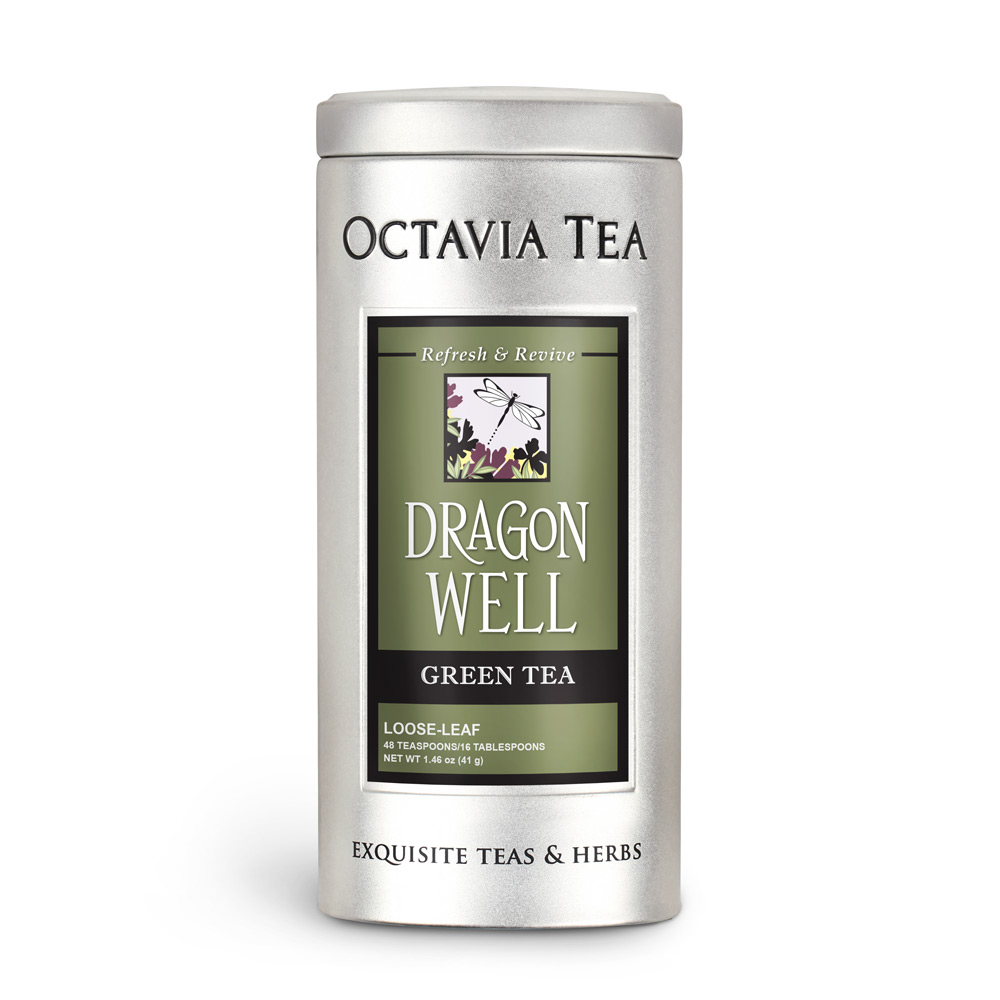
- Dragonwell. A famous Chinese green tea with flat, sword-shaped leaves and a buttery, roasted chestnut flavor. Dragonwell is a friendly entry point for many drinkers. You can see the leaf and its tasting notes on our Dragonwell product page.
- Bancha. A mature-leaf Japanese green tea harvested later in the season. Because older leaves tend to hold somewhat less caffeine than young spring buds, bancha commonly brews toward the lower end of the green tea range, often in the high teens to mid-twenties of milligrams per cup. It is a good choice for an evening-adjacent cup or for anyone watching total daily intake.
- Gyokuro. A shaded Japanese green tea grown under cover before harvest. Shading changes the leaf's chemistry, and gyokuro is typically brewed with a larger dose of leaf in cooler water. The result is a concentrated, umami-heavy cup that often lands at the higher end of the brewed green tea range, roughly 30 to 50 milligrams per 8-ounce serving depending on dose.
- Matcha. Stone-ground green tea powder whisked into water, so you ingest the entire leaf rather than steeping and discarding it. That means matcha typically delivers more caffeine per serving than a brewed green tea of the same volume. A common preparation using roughly half a teaspoon to a teaspoon of powder in 2 to 4 ounces of water often falls in the range of about 30 to 60 milligrams per serving, which is why matcha drinkers sometimes describe a steadier lift than they get from a steeped cup.
Our Zen Super Green blends premium sencha with matcha for a vivid, umami-forward cup. If you are matcha-curious but want the ease of a loose leaf blend, it is a natural starting point.
Watch out: matcha portions vary widely by product and by how strong you mix them, so treat any per-serving matcha figure as a range and check the product page for the manufacturer's own guidance rather than assuming a single number.
How Brewing Method and Steeping Time Change Caffeine Levels
Steeping time. Caffeine dissolves into water gradually, so a short steep extracts only part of what the leaf holds (pubmed.ncbi.nlm.nih.gov).
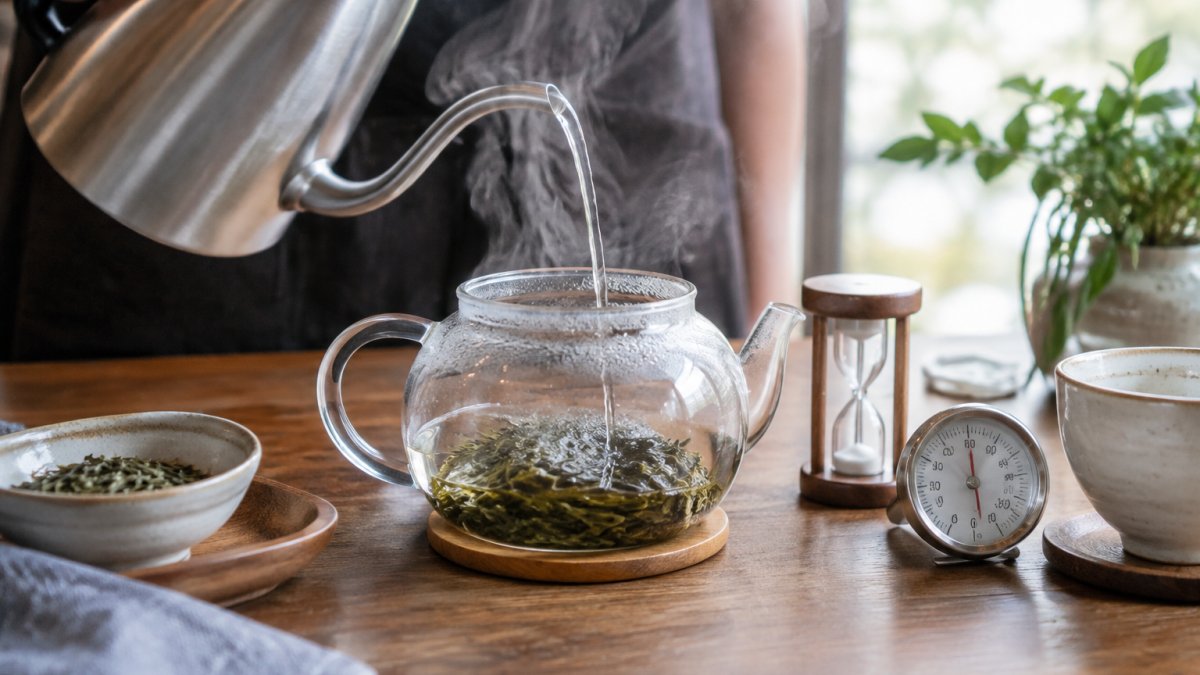
Water temperature. Hotter water extracts caffeine faster. Green tea is typically brewed with water below boiling; check the product page for each tea's recommended temperature.
Leaf quantity. More leaf in the same volume of water means more caffeine available to extract, and this is often the single biggest lever a drinker controls.
Repeated infusions.
Serving size and water volume. A cup is a measurement, not a guarantee.
A practical way to think about it: pick a leaf dose and a steep time you like, then adjust one variable at a time.
For a full temperature and timing reference, see our guide to steeping temperature for maximum tea nutrients, which includes a steeping times chart and water quality tips.
Is Caffeine in Green Tea Bad for You?
For most healthy adults, the caffeine in green tea is not a concern at typical daily intake. The amount per cup is modest, and green tea is usually consumed more slowly than coffee.
That said, caffeine sensitivity varies widely. Some people feel jittery after a single cup; others notice nothing. If you are sensitive, keep your steeps short, use less leaf, and drink your green tea earlier in the day. Decaffeinated green tea exists for those who want the flavor and ritual without the stimulant, though the decaffeination process can mute some of the delicate notes.
If you have a medical condition or take medication that interacts with caffeine, talk to your doctor about your daily intake rather than relying on general guidance.
Does Lipton Green Tea Have Caffeine?
Yes, Lipton green tea contains caffeine because it is made from real tea leaves. Bagged green tea from any mainstream brand carries caffeine unless it is specifically labeled decaffeinated. The amount varies by product and preparation, and the packaging is the reliable source for any specific product's numbers.
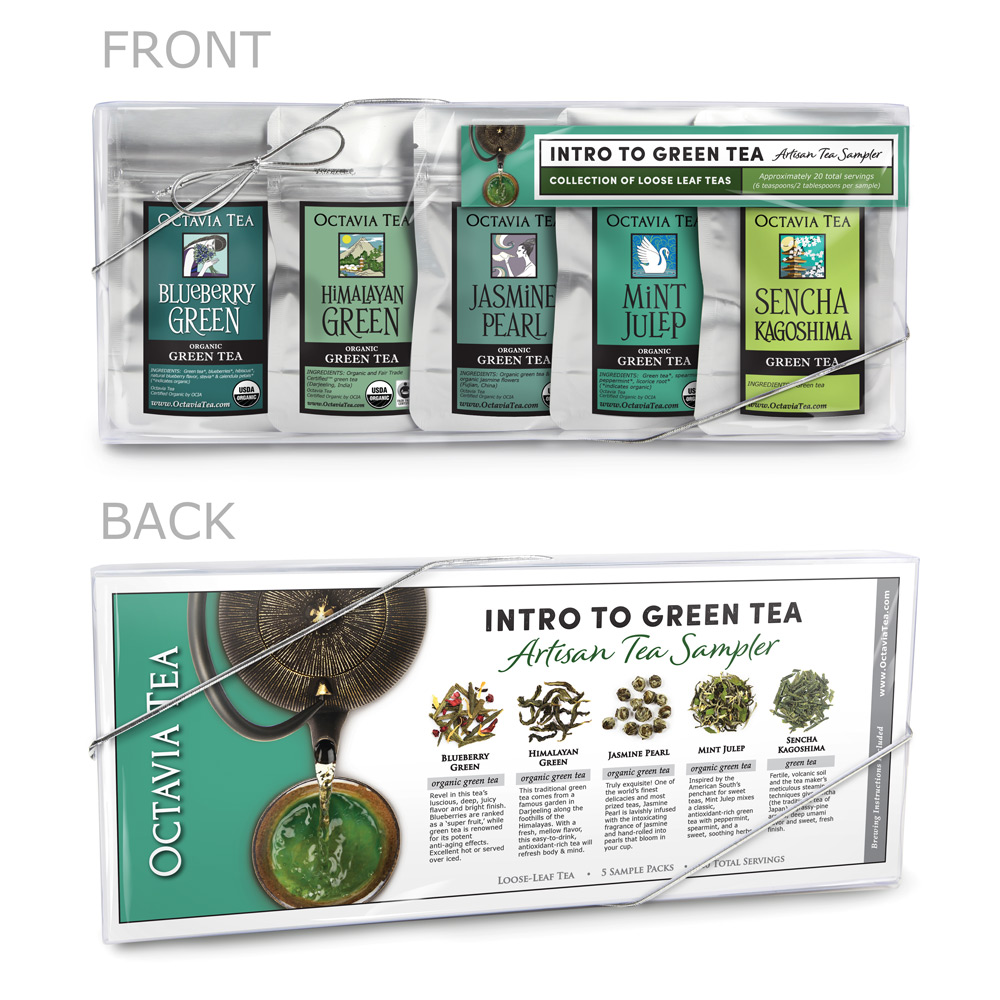
The bigger difference between a supermarket tea bag and loose leaf is not caffeine; it is freshness and leaf quality. Whole leaves retain more of their aromatic oils and give you more control over dose and steep time. If you are new to loose leaf and worried it is fussy, it is not. A thermometer and a timer get you most of the way there, and our intro to green tea sampler lets you try five different gourmet green teas before committing to a full tin.
Choosing a Loose Leaf Green Tea for Your Daily Cup
Start with how you drink tea, not with a caffeine number. If you want a gentle, grassy cup, lean toward a Japanese sencha. If you prefer something nuttier and more forgiving, Dragonwell is a friendly entry. If you want the most caffeine and the fullest flavor per serving, a sencha-and-matcha blend delivers both.
A few practical notes from our own blending:
- Buy in quantities you will finish. Loose leaf fades with age and exposure to air. Smaller tins keep the cup fresher.
- Store it away from light and heat. A sealed tin in a cool cupboard is enough.
- Adjust leaf, not just time. If a cup tastes weak, a little more leaf often helps more than a longer steep, which can turn green tea bitter.
Octavia Tea carries more than 120 organic loose leaf teas sourced directly from estate gardens, hand-blended with natural flavor essences and pure essential oils and nothing artificial. Retail orders over $65 ship free domestically.
The hardest part of green tea is not the caffeine question; it is finding the leaf you actually look forward to drinking every day. We hand-blend our organic green teas from estate-garden leaves, keep the ingredient list pure, and offer low minimums for wholesale partners who want to stock tea their customers will come back for.
Frequently Asked Questions
Is 2 cups of green tea too much caffeine?
Two 8-ounce cups of green tea typically deliver 40 to 120 milligrams of caffeine total, depending on the variety and how long you steep. That sits well under the 400 milligrams per day the FDA cites as a general ceiling for healthy adults. If you are sensitive to caffeine or drink tea late in the day, keep your last cup before mid-afternoon so it does not interfere with sleep.
Does the caffeine in green tea vary by brewing method?
Yes. Steeping longer extracts more caffeine, and hotter water pulls it out faster. A 2-minute steep at 180°F yields noticeably less than a 5-minute steep at a full boil. Leaf quantity matters too: more tea per cup means more caffeine. Matcha is different again, because you consume the whole ground leaf rather than straining it, so the caffeine you brew is the caffeine you drink.
How much caffeine is in green tea compared with decaf coffee?
A standard cup of green tea usually lands between 20 and 60 milligrams of caffeine. Decaffeinated coffee typically contains 2 to 5 milligrams per cup, so green tea is meaningfully higher. If you are cutting caffeine for health reasons, decaf coffee is the lower option; if you want a gentle lift, green tea sits in a comfortable middle ground.
Does green tea have caffeine if it is labeled decaffeinated?
Decaffeinated green tea is not caffeine-free. The decaffeination process removes most but not all of it, and the FDA allows decaf products to retain a small residual amount. If you are avoiding caffeine entirely, check the label for the stated milligram count rather than assuming zero, and treat herbal infusions as the truly caffeine-free choice.


Octavia Tea Sign In
Create New Account