























Steeping Temperature for Maximum Tea Nutrients

Table of Contents
- Why Steeping Temperature Decides How Many Nutrients Reach Your Cup
- What Heat Does to Catechins, Polyphenols, and Caffeine
- The Tea Steeping Times Chart: Temperature and Duration by Tea Type
- Water Quality and Mineral Content: The Variable Most Brewing Guides Skip
- Best Practices for Brewing Loose Leaf Tea at Home
- How to Brew Organic Loose Leaf Tea Without Scorching Delicate Leaves
- Cold Brew vs. Hot Brew: Nutrient Retention and the Degradation Timeline
- Frequently Asked Questions
Last Updated: September 15, 2026
Why Steeping Temperature Decides How Many Nutrients Reach Your Cup
Steeping temperature is the single most controllable variable separating a cup that delivers its full complement of catechins and polyphenols from one that tastes bitter and underperforms. This guide from Octavia Tea breaks down what heat actually does to tea chemistry, and how to use that knowledge in your own kitchen.
Water that is too hot pulls out tannins faster than it releases beneficial compounds. Water that is too cool leaves much of the leaf's potential locked inside. The narrow band between those extremes is where flavor and nutrition align.
Below, we'll show you exactly how to match temperature to tea type, why water quality matters as much as heat, and the mistakes that quietly strip antioxidants from every cup.
What Heat Does to Catechins, Polyphenols, and Caffeine
Heat drives extraction. As water temperature rises, it dissolves more compounds from the leaf, but not all at the same rate.
Catechins, the antioxidant family that includes epigallocatechin gallate (EGCG), extract efficiently across a fairly wide temperature range. Caffeine and tannins, by contrast, release aggressively once water passes roughly 85°C (185°F) (Factors affecting the levels of tea polyphenols and caffeine in tea leaves). That gap is the entire game.
A common mistake is assuming hotter always means more nutrients. In practice, prolonged exposure to near-boiling water degrades some heat-sensitive flavonoids while over-extracting astringent tannins.
The USDA nutrient data on tea preparation notes that preparation method materially changes what ends up in the cup.
The Tea Steeping Times Chart: Temperature and Duration by Tea Type
The tea steeping times chart below is the reference most brewing guides bury under paragraphs of preamble. Here it is up front.
Tea Type | Water Temperature | Steep Time | Notes |
|---|---|---|---|
White tea | 75-80°C (167-176°F) | 2-3 min | Most heat-sensitive |
Green tea | 70-80°C (158-176°F) | 1-3 min | Scorches easily |
Oolong tea | 85-90°C (185-194°F) | 3-4 min | Tolerates higher heat |
Black tea | 90-95°C (194-203°F) | 3-5 min | Needs heat to open |
Herbal infusion | 95-100°C (203-212°F) | 5-7 min | No true tea leaves |
How to Read the Chart Without Overthinking It
Pick the lower temperature for delicate, high-antioxidant teas and the higher end for strong, oxidized ones. If your tea tastes bitter, your water was too hot or your steep ran too long. If it tastes flat and watery, you went too cool or too brief.
That's the whole diagnostic loop. Adjust one variable at a time.
Water Quality and Mineral Content: The Variable Most Brewing Guides Skip
Water is roughly 99% of your cup, so its chemistry sets the ceiling on how much of the leaf you can actually extract. Most guides treat water as an afterthought. It is not.
The two variables that matter are total dissolved solids (TDS) and mineral composition. TDS is the sum of everything dissolved in the water, measured in parts per million (ppm). A common target among brewing practitioners is roughly 75-150 ppm TDS for tea: enough minerals to carry flavor and assist extraction, not so many that they compete with the leaf.
How Hard Water Suppresses Antioxidant Extraction
Hard water is high in calcium and magnesium. Those ions bind with polyphenols, including the catechins you are steeping for, and form complexes that stay in the leaf or precipitate out of solution instead of reaching your cup. The result is a tea that tastes dull and delivers less of what you wanted. A common pattern is that the same leaf brewed in very hard water tastes flatter and less astringent than in moderate water, because the astringent compounds are the ones being bound up.
Soft water sits at the other extreme. It extracts aggressively and can pull tannins so efficiently that a green tea turns bitter at a temperature that would be fine elsewhere. Distilled or reverse-osmosis water is softer still, and because it lacks the minerals that carry flavor, it tends to taste hollow even when extraction is technically complete.
Chlorine, Chloramine, and Off-Flavor Carryover
Municipal water is treated with chlorine or chloramine to keep it safe to drink (the EPA). Both react with the aromatic compounds in tea and mute them. Chlorine dissipates if you let water sit uncovered, but chloramine does not, it needs a carbon filter. If your tap water smells like a pool, filtering it is the single highest-return change you can make, often improving a cup more than any temperature adjustment.
A Practical Water Checklist
- If your tap water tastes good cold, it will usually brew acceptable tea.
- If it tastes strongly of chlorine or minerals, run it through a carbon filter.
- If you use reverse-osmosis or distilled water, consider a remineralizing cartridge or a pinch of mineral blend to restore the ions that carry flavor.
- If your tea tastes flat no matter what you do to temperature and time, suspect the water before you suspect the leaf.
Water quality is not a footnote to temperature, it is the medium temperature acts through. Fix the water first, then dial in the heat.
Best Practices for Brewing Loose Leaf Tea at Home
Start with fresh, whole loose leaf and measure it rather than eyeballing. Loose leaf gives leaves room to unfurl, which is where consistent extraction begins.
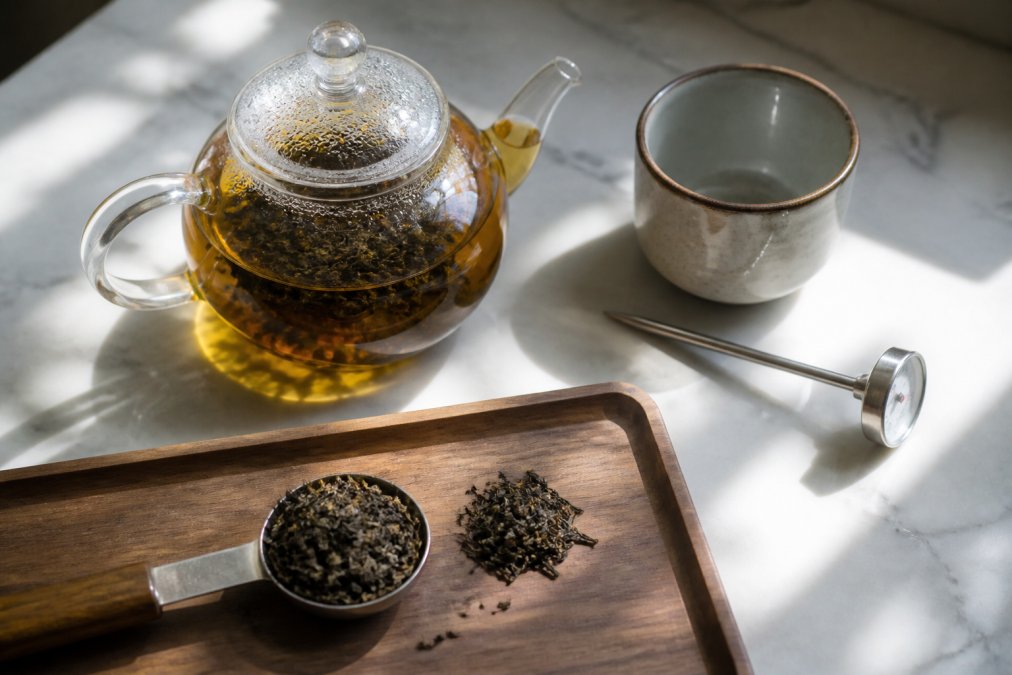
Heat your water, then let it rest briefly before pouring over delicate leaves. A simple kitchen thermometer removes all guesswork.
Leaf-to-Water Ratio and Vessel Material
Leaf-to-water ratio matters as much as temperature. A common starting point is roughly one teaspoon of loose leaf per 8 ounces of water, adjusted for leaf size and your preferred strength.
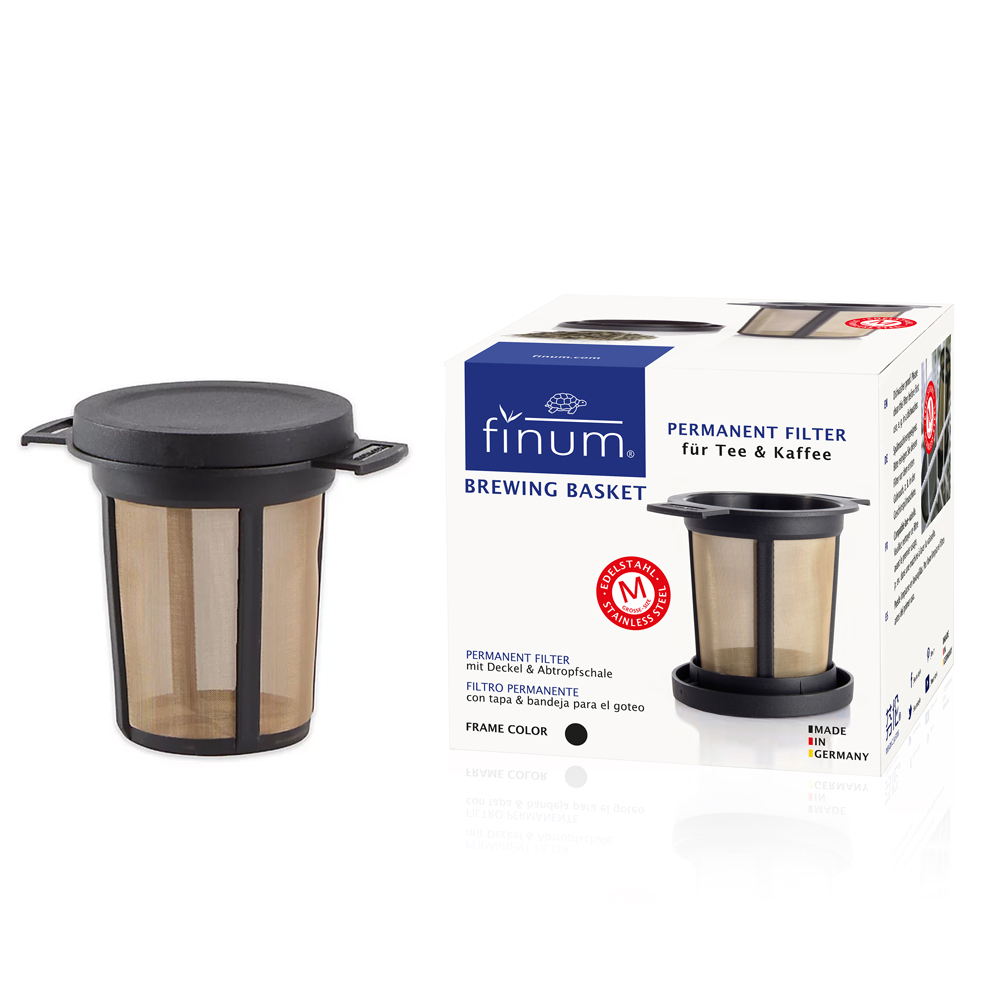
Vessel material also plays a role. Glass and ceramic are neutral and hold heat predictably. A [cast iron teapot(/cast-iron-teapot.html) | octaviatea.com] retains heat well for black and oolong teas, while a Finum brewing basket gives leaves full room to expand for a single cup. A glass teapot lets you watch the color develop, which is genuinely useful when you're dialing in a new tea.
How to Brew Organic Loose Leaf Tea Without Scorching Delicate Leaves
Scorching happens when water is too hot for the leaf in front of you. The fix is temperature control, not technique.
Pour water down the side of the vessel rather than directly onto the leaves. This lowers the effective temperature at the leaf surface and reduces the shock that damages delicate compounds.
For green and white teas, aim for the lower end of the range and taste at the one-minute mark. Organic loose leaf tends to be less processed, so it responds quickly and punishes impatience.
Cold Brew vs. Hot Brew: Nutrient Retention and the Degradation Timeline
Cold and hot brewing do not just produce different flavors, they produce different chemical profiles, and the difference is largest for the compounds you are steeping for.
What Each Method Extracts
Hot water is a solvent with energy behind it. It dissolves catechins, caffeine, and tannins quickly and completely, which is why a three-minute hot steep can taste full and brisk. Cold water extracts the same compounds, but slowly and selectively. Over 8-12 hours in the refrigerator, cold water pulls out a meaningful share of the catechins and a smaller share of the caffeine and tannins. The result is a smoother, less bitter cup with a different nutrient balance, not a weaker one.
A practical rule: cold brew is the better choice when you want a mellow, low-bitterness result from green or white tea, or when you plan to drink the tea over several hours.
The Degradation Timeline: Where Longer Stops Helping
After the Brew
Frequently Asked Questions
What is the optimal temperature to steep tea?
It depends on the tea type. Delicate white and green teas extract best between 160°F and 180°F, oolong sits around 185°F to 195°F, and black and pu-erh teas handle 200°F to 212°F. Staying within these ranges protects catechins and polyphenols from thermal degradation while still pulling out enough flavor compounds. A quick-read thermometer takes the guesswork out of steeping temperature.
Can boiling water destroy the nutrients in delicate tea leaves?
Yes, it can reduce them. Water at a rolling boil degrades heat-sensitive compounds like EGCG and other catechins in green and white teas, and it also scorches the leaves, which turns the cup bitter and astringent. Let boiled water rest two to three minutes before pouring it over delicate leaves to bring the temperature down to a safer range.
How does water temperature affect the antioxidant content of tea?
Higher temperatures extract polyphenols and flavonoids faster, but past a certain point the same heat begins breaking them down. Green tea steeped at 175°F for two to three minutes typically yields strong antioxidant extraction without heavy thermal degradation. Boiling water pushes extraction faster but also increases tannin release, which adds bitterness and can mask the cup's lighter notes.
Should I follow a tea steeping times chart for cold brew too?
Cold brew follows different rules. Because there is no heat, extraction takes six to twelve hours in the refrigerator, and the slower process preserves heat-sensitive nutrients while producing a smoother, less astringent cup. Use roughly double the leaf-to-water ratio you would for hot brewing, then strain and refrigerate. It is a practical option for anyone who wants maximum nutrient retention without monitoring steeping temperature.


Octavia Tea Sign In
Create New Account