























How to Brew Herbal Tea for Maximum Potency at Home

Last Updated: November 20, 2026
Quick Summary
To brew herbal tea for maximum potency, use a measured amount of herb, steep in freshly boiled water, and cover the cup while it steeps. Match the steeping time to the herb: three to five minutes for delicate flowers, longer for roots and bark. If you want a stronger cup, extend the steep instead of raising the heat.
- Weigh dry herbs or use the same scoop every time for a repeatable cup.
- Measure your mug once, since a 12-ounce mug tastes thinner with the same herb.
- Steep delicate flowers three to five minutes, covered, to keep volatile oils in.
- Simmer roots, bark and seeds gently for about 15 to 20 minutes.
- Change one variable at a time and log each cup to find your ideal strength.
Table of Contents
- Why Herbal Tea Strength Varies So Much From Cup to Cup
- Choosing Dried or Fresh Herbs for a Stronger Cup
- How Much Herb and Water to Use Per Cup
- How Long to Steep Herbal Tea and When to Cover It
- How to Make Herbal Tea With Tea Bags or an Infuser
- Herbal Tea Infusion vs Decoction and When to Use Each
- Making an Overnight Herbal Infusion at Home
- Your Next Step: Pick a Blend and Brew a Test Cup
- Frequently Asked Questions
Why Herbal Tea Strength Varies So Much From Cup to Cup
At Octavia Tea, we hear the same question from customers again and again: why does my tea taste weak one morning and bitter the next? Often the blend is not the problem. It is the way the cup was brewed. Small changes in the amount of herb, the water temperature, and the steeping time all change how strong the final cup tastes.
Herbal tea is not like black tea, which is made from one plant. Herbal blends use flowers, leaves, roots, and bark, and each one releases flavor and aroma at a different rate. Chamomile flowers give up their character quickly, while tougher plant parts need more time and heat to open up, so learning to brew herbal tea well starts with knowing your herbs.
When you learn these basics, you stop guessing. The rest of this guide walks through each variable so you can learn to brew herbal tea that tastes the way you want, every time.
Choosing Dried or Fresh Herbs for a Stronger Cup
Dried herbs are a common choice for home brewing. They are easy to measure, and their flavor is concentrated because the water has been removed.
Fresh herbs are softer and more delicate. You generally need more of them by weight to match the strength of dried material, and they fade quickly after picking. If you grow your own mint or lemon balm, a generous handful will brew a bright, fragrant cup.
Our practical advice:
- Use dried herbs for most blends, especially roots and seeds
- Use fresh herbs when you want a lighter, more delicate taste
- Check the cut and texture. Whole or large pieces release flavor slower than finely cut material
- Store dried herbs in an airtight container away from light and heat to protect their potency
How Much Herb and Water to Use Per Cup
A heaping teaspoon is a fine place to start, but it is a poor way to repeat a cup you loved. A teaspoon of fluffy chamomile and a teaspoon of dense ginger root can differ several-fold in weight, and a heaping spoon depends on who is doing the heaping. If you want a cup you can reproduce, weigh the herb.
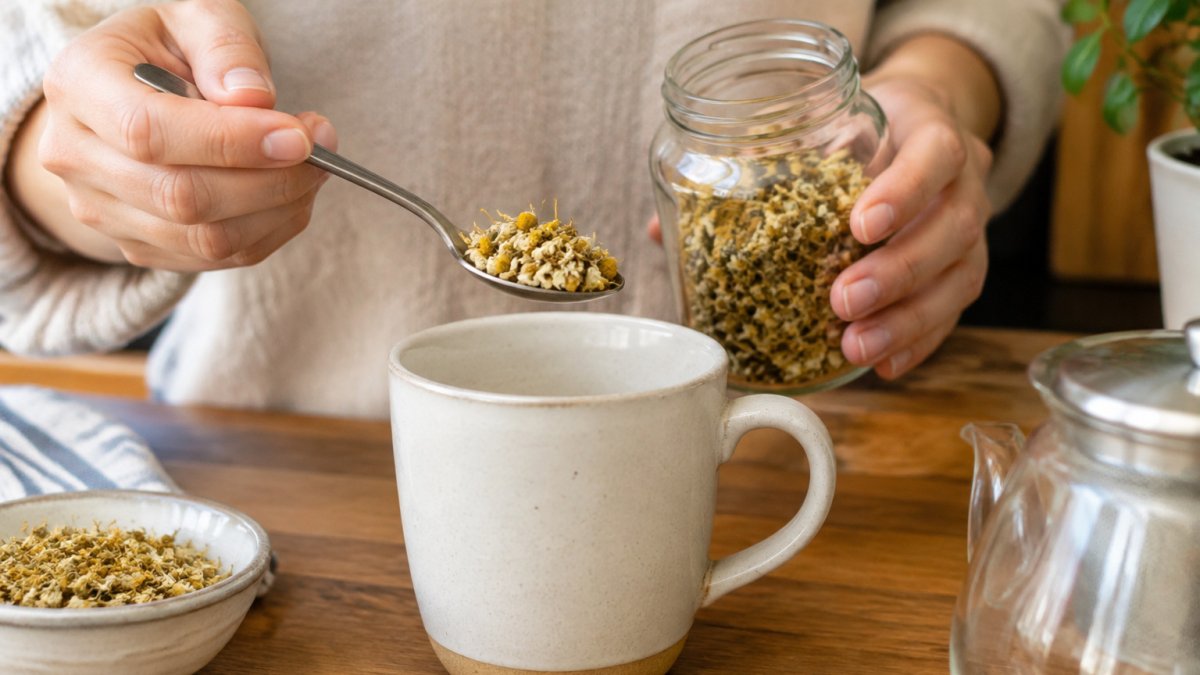
A kitchen scale that reads to a gram is a useful upgrade to your brewing (Metric Kitchen: Cookware and Tools | NIST). Weigh the dry herb, note the water volume, and you have a recipe you can repeat and adjust. Brew ratios vary by blend, so check the product page for guidance on your specific tea and let your own taste decide the rest. If you do not have a scale, use the same scoop every time and level it consistently, so at least your own measurements stay comparable.
Cup volume matters as much as herb weight. An 8-ounce cup is the reference most instructions assume, but mugs vary widely; a 12-ounce mug with the same teaspoon will taste noticeably thinner. Measure your mug once with a measuring cup and write the number on a sticky note, or keep a marked measuring cup by the kettle. When you scale a recipe, scale both sides: doubling the water without doubling the herb just dilutes the cup.
Grind and cut size change the math too. Finely cut material exposes more surface area and extracts faster, so it can taste strong sooner and turn bitter if left too long. Whole or large pieces release more slowly and forgivingly. If you switch from a fine cut to a coarse cut of the same herb, expect to adjust either the dose or the time.
A repeatable protocol removes the guesswork. Pick one variable to change at a time: hold the water volume and temperature steady, then adjust only the herb weight by a small step, taste, and note the result. Keep a simple log, herb, weight, water volume, temperature, time, and a one-word verdict. After a handful of cups you will have a personal recipe instead of a guess, and you will know exactly what to change when a cup comes out weak or harsh.
Increase the herb in small steps and taste as you go, since a large jump can make a cup taste bitter or astringent.
The amount of herb and the size of your cup both shape how strong the final brew tastes, so here is what to keep in mind.
| Variable | What to do | Why it matters |
|---|---|---|
| Herb amount | Weigh the dry herb if you can | A heaping spoon varies between people and herbs |
| Cup volume | Measure your mug once | A 12-ounce mug with one teaspoon tastes thinner |
| Cut size | Note whether the cut is fine or coarse | Fine cuts extract faster and can turn bitter |
| Changes | Adjust one variable at a time | Makes it clear what caused a weak or harsh cup |
| Increasing herb | Raise the dose in small steps | Large jumps can make the cup bitter or astringent |
How Long to Steep Herbal Tea and When to Cover It
Steeping time is where most people lose strength without realizing it. A short steep of three to five minutes works well for delicate flowers like chamomile. Leaf and mixed blends often do well at five to ten minutes. Tougher herbs may need fifteen to twenty minutes to release their character.
Cover your cup or pot while the herbs steep. If you are thinking about selling blends like these, our guide to starting a herbal tea business covers sourcing and packaging. Covering traps the volatile oils that carry much of the aroma and flavor. Without a lid, those oils escape into the air, and the tea tastes flatter.
Here is a simple way to think about it:
- Delicate flowers: 3-5 minutes, covered
- Leaves and mixed blends: 5-10 minutes, covered
- Roots and tough bark: 15-20 minutes, covered or simmered
Taste as you go. If you want more strength, let the tea steep longer, not hotter. Heat alone can pull out bitterness.
How to Make Herbal Tea With Tea Bags or an Infuser
Tea bags and infusers are the easiest way to brew, and they work well with the same principles. Pour freshly boiled water over the bag or infuser, cover, and steep for the recommended time.
Give the infuser room to work. A basket infuser allows the herbs to expand. Our Tea Infusers give the herbs room to work.
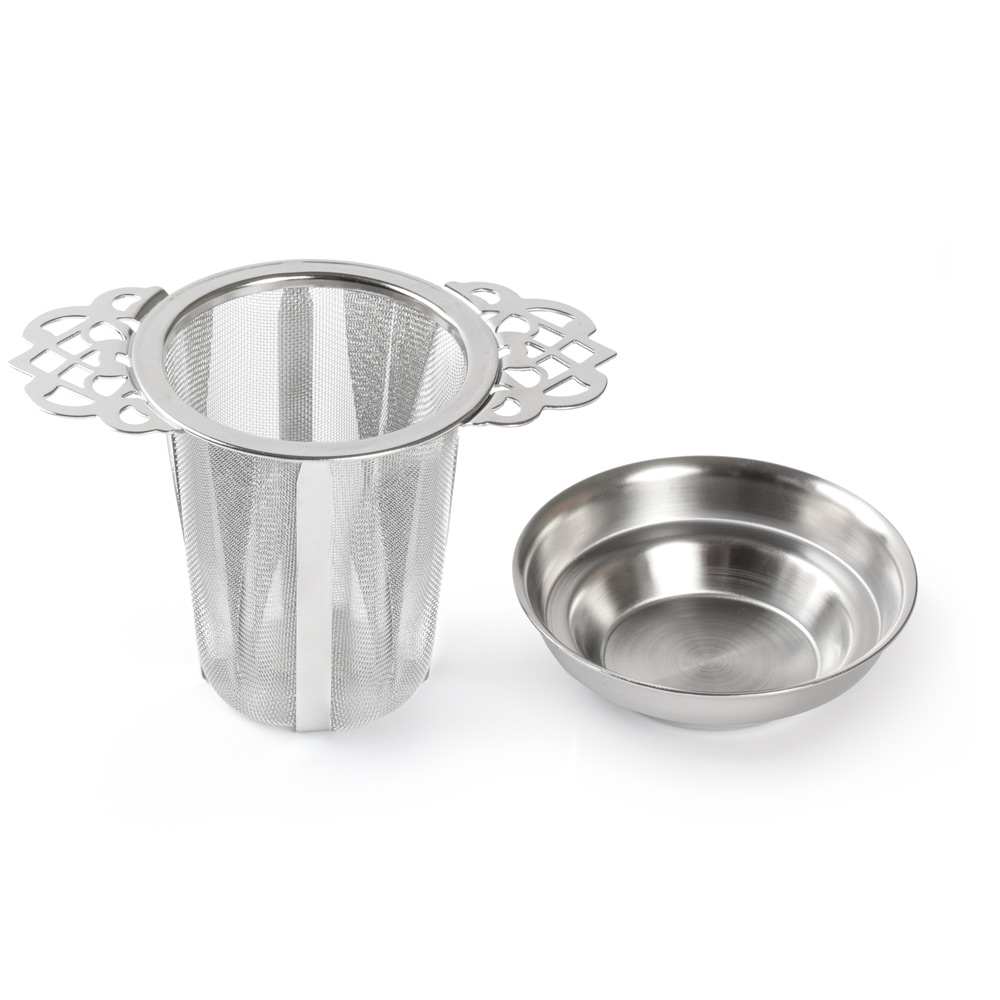
Remove the bag or infuser at the right moment. Leaving it in too long can make the tea bitter, especially with mint or roots. Lift it out, let it drip, and set it aside.
WATCH OUT: Squeezing a tea bag against the side of the cup pushes out bitter compounds. Let it drip naturally instead.
Herbal Tea Infusion vs Decoction and When to Use Each
Infusion and decoction are two ways of coaxing compounds out of plant material, and the right choice depends less on tradition than on what the herb is made of. Soft, thin material, leaves and flowers, gives up its character quickly in hot water. Dense material, roots, bark, seeds, and tough stems, resists a short steep, so it needs sustained heat to break down cell walls and release what is inside. That is the whole logic behind the two methods.
An infusion steeps herbs in hot water off the heat. It preserves delicate volatile oils that would otherwise boil away, which is why flowers and leafy blends taste brighter this way. A decoction simmers the herb gently in water on the stove for a longer stretch, usually in the range of 15 to 20 minutes, which suits hard plant parts that would barely soften in a five-minute steep.
A practical way to choose is by plant part. Flowers and delicate leaves: infuse. Roots, bark, seeds, and tough stems: decoct. Mixed blends that contain both: decoct the hard parts first, then take the pot off the heat and add the flowers and leaves for the last several minutes so they are not overcooked. This two-stage approach is a common pattern among experienced brewers and gives you the best of both methods in one cup.
A few parameters keep either method consistent. For infusion, use freshly boiled water poured over the herb and keep the vessel covered; for decoction, keep the simmer gentle rather than rolling, and keep the pot covered to hold in aromatics. Strain promptly once you reach the strength you like, since leaving herbs in the liquid continues the extraction.
Troubleshooting follows the same logic. A decoction that tastes muddy or overly bitter usually simmered too long or used too much herb, shorten the time or reduce the dose next round. An infusion that tastes thin with a tough herb usually needs the decoction method instead. And a cup that tastes harsh regardless of method often points to a fine cut extracting too fast, so a coarser cut or a shorter steep will smooth it out.
One more thing worth saying plainly: stronger does not automatically mean better or more beneficial. A darker, more intense cup reflects more extracted material, including bitter and astringent compounds, and it is not a reliable sign that you are getting more of whatever you wanted. Before you increase strength or frequency, check a reputable source or ask a pharmacist or your doctor, especially if you take medication, are pregnant, or are managing a health condition.
Making an Overnight Herbal Infusion at Home
An overnight infusion, sometimes called a cold or long infusion, produces a rich, mineral-tasting brew with gentle strength. Place a generous amount of dried herb in a jar, pour in room-temperature or cool water, cover, and leave it in the fridge for 8 to 12 hours.
Strain the liquid before drinking. Overnight infusions keep for about 24 hours in the refrigerator, so make only what you plan to drink within that window.
This method suits sturdier herbs that release their flavor slowly. Try a small batch first to find the strength you like.
Your Next Step: Pick a Blend and Brew a Test Cup
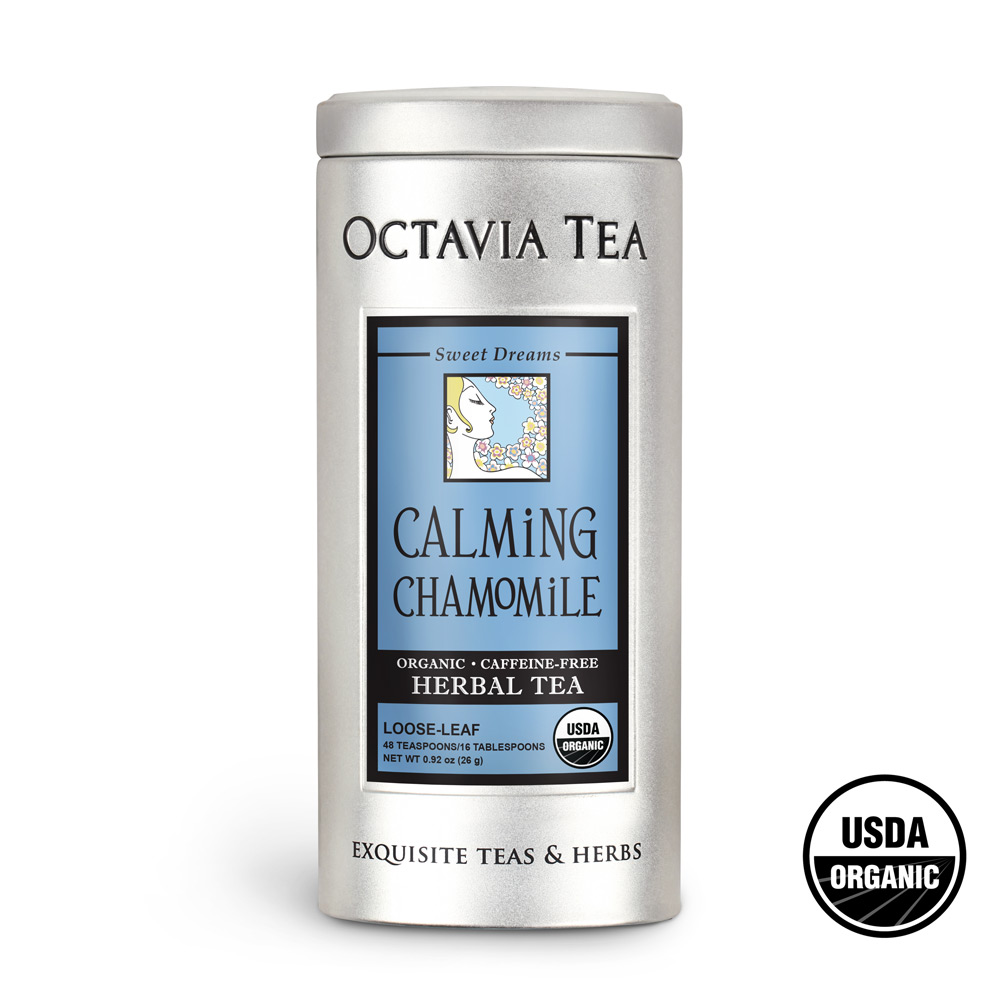
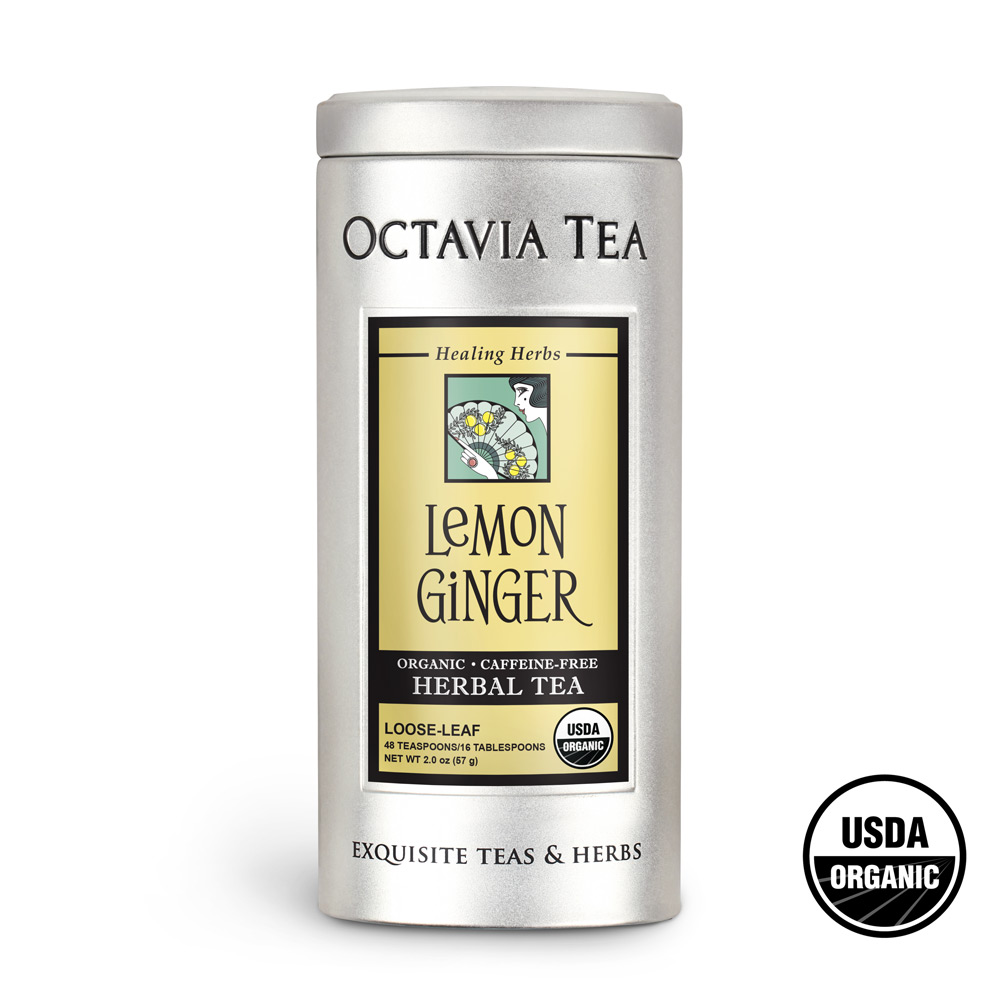
The best way to learn potency is to brew, taste, and adjust. Choose one blend, such as our Calming Chamomile or Lemon Ginger, and make a test cup using the measurements above. Then change one thing at a time: a little more herb, a longer steep, or a lid on the cup. Write down what you did and how it tasted.
Within a few cups, you will know exactly how you like your tea. Browse the full range of Octavia Tea blends to find your next favorite.
Frequently Asked Questions
How long should you steep herbal tea?
Most herbal infusions do well with 5 to 10 minutes of steeping in covered water just off the boil. Flowers and delicate leaves like chamomile often need only a few minutes, while denser leaves and bark may benefit from longer. Start at the low end, taste, and steep a bit longer next time if you want more strength. Keeping the cup covered holds in the aromatic oils that carry much of the flavor, so a lid or saucer makes a noticeable difference.
What is the best water temperature for herbal tea?
For most herbal blends, freshly boiled water that has rested for a few seconds works well. Very delicate flowers can be steeped with water slightly below a full boil to avoid scorching them. Using boiling water consistently makes it easier to compare one brew with the next, which matters if you are trying to get repeatable strength.
Can you brew herbal tea from tea bags for maximum potency?
Yes. Tea bags are convenient, and loose herbs give the plant material more room to release its flavor. If you use bags, steep them covered for the full time and consider using two bags for a stronger brew. An infuser basket with loose herbs is a good middle ground when you want more control.


Octavia Tea Sign In
Create New Account