























How to Start a Herbal Tea Business: A Complete Guide

Table of Contents
- Understanding the Herbal Tea Market and Your Niche
- Legal Structure, Registration, and Cottage Food Laws for Herbal Tea
- Sourcing and Developing Your Tea Blends
- FDA Food Labeling Requirements for Tea Products
- Finding Reliable Loose Leaf Tea Wholesale Suppliers
- Packaging, Branding, and Getting to Market
- Pricing Strategy, Startup Costs, and Profitability
- Marketing and Selling Your Herbal Tea Business
- Frequently Asked Questions
Last Updated: September 3, 2026
Understanding the Herbal Tea Market and Your Niche
The herbal tea market has experienced steady growth as consumers seek natural wellness alternatives. Successful entrepreneurs identify a specific niche, organic blends for sleep, energizing combinations, or specialty culinary teas, rather than trying to appeal to everyone. Your niche determines sourcing decisions, pricing, marketing channels, and regulatory compliance.
Before investing in inventory, research your target customer. What problems are they solving? What price point makes sense? Are they seeking convenience, health benefits, sustainability, or exotic flavors? The loose leaf segment has gained traction among discerning consumers who value freshness and customization. At Octavia Tea, we work with retailers and spas who recognize that premium loose leaf tea commands higher margins and builds customer loyalty.
Decide your business model early: Will you blend and package tea yourself or work with a co-packer? Will you sell wholesale, direct-to-consumer, or both? Your answers shape licensing requirements, startup costs, and operational complexity.
Legal Structure, Registration, and Cottage Food Laws for Herbal Tea
Most herbal tea entrepreneurs operate as sole proprietorships, LLCs, or S-corporations. An LLC shields personal assets while offering pass-through taxation. An S-corporation can reduce self-employment taxes once revenue reaches certain thresholds. Consult a business accountant to determine which structure minimizes your tax burden.
Register your business name with your state and obtain an Employer Identification Number (EIN) from the IRS. This takes minutes online and costs nothing.
Cottage food laws present both opportunity and constraint. Many states allow certain non-potentially hazardous foods in home kitchens, but herbal tea falls into a gray area. Some states permit home production of dried herbal blends; others require commercial kitchen use. Contact your local health department directly to verify your state's specific rules.
If your state permits home-based production, you typically must display a label stating "Made in a home kitchen that is not subject to state licensing or inspection" and restrict sales to direct-to-consumer only. Once you exceed those limits or want to sell wholesale, you'll need commercial kitchen access through a shared facility or co-packer.
FDA registration is required for any facility that manufactures, processes, packs, or holds food for consumption in the United States. Registration is free and happens online through the FDA's registration system. Your facility must comply with Current Good Manufacturing Practices (CGMP), which establish standards for facility sanitation, equipment maintenance, and record-keeping (the FDA).
Sourcing and Developing Your Tea Blends
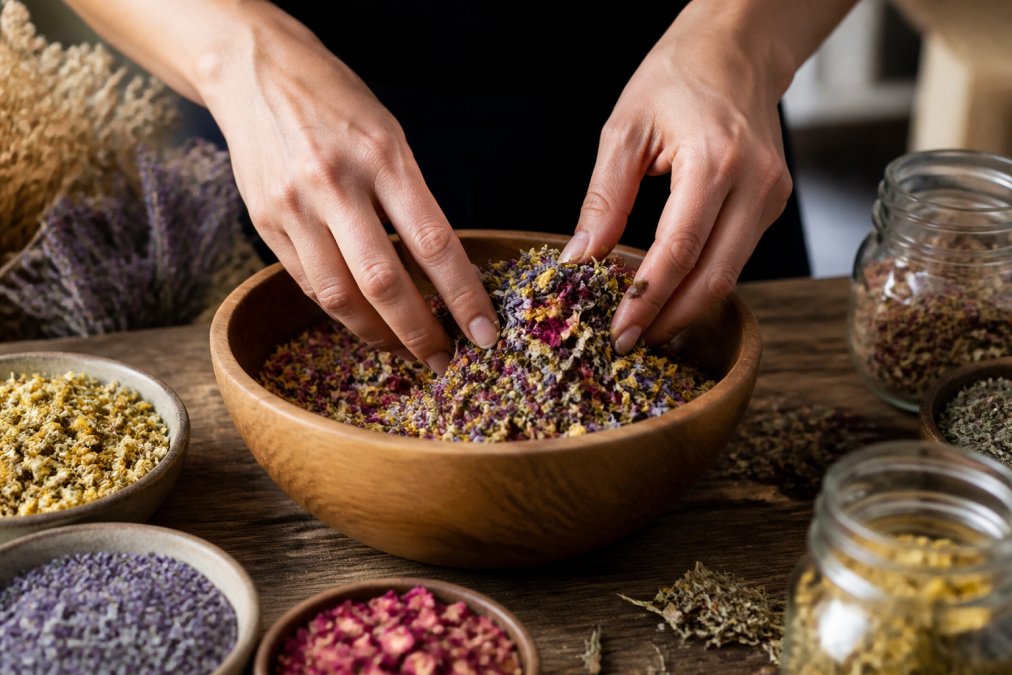
Finding reliable wholesale suppliers for herbal ingredients is critical. Quality, consistency, and trustworthiness separate successful tea businesses from those struggling with product inconsistency or supply chain disruptions. You need suppliers who guarantee organic certification, provide batch testing results, and maintain consistent flavor profiles.
Most small tea producers work with specialty distributors rather than sourcing directly from farmers. These distributors handle import logistics, quality testing, and compliance documentation. They typically require minimum order quantities of 5-25 pounds per ingredient. Start with a focused product line using 5-8 core ingredients rather than attempting 20 different blends immediately.
Develop unique blends through systematic testing. Most successful blends use a base ingredient (like chamomile or rooibos) comprising 40-60% of the blend, with 2-4 complementary herbs adding flavor and functional benefits. Natural flavor essences and essential oils can enhance your profile but must be food-grade and clearly disclosed on your label.
Dried herbs typically maintain quality for 6-12 months when stored in cool, dry conditions away from light (the FDA). Once blended, your tea should be consumed within 6-9 months for optimal flavor (peer-reviewed research). Plan production runs around realistic sales velocity.
Document every blend's ingredient list, sourcing information, and testing results. This documentation becomes essential for FDA compliance and customer inquiries about sourcing or certifications.
FDA Food Labeling Requirements for Tea Products
Your product label must comply with FDA regulations. The label is your primary communication tool with customers and regulators.
Every herbal tea product requires a principal display panel clearly identifying it as "herbal tea" or "herbal blend." The ingredient list must appear in descending order by weight. Natural flavor essences can be listed simply as "natural flavors." If your blend contains common allergens, tree nuts, sesame, or certain herbs that trigger allergies, declare them clearly.
Net weight must be stated in both metric and standard units (e.g., "2 oz (56g)"). The manufacturer's name and address are required. If using a co-packer, your company name appears as the manufacturer, with the co-packer's facility information listed separately.
Herbal tea is exempt from nutrition facts panels if you make no nutrient content claims. However, any health claim (like "high in antioxidants" or "caffeine-free") triggers labeling requirements and FDA oversight. Avoid disease claims like "treats IBS", these cross into drug territory. Statements like "may support relaxation" are generally acceptable.
Include lot codes or batch numbers on your label for traceability in case of recall. Store label designs and ingredient documentation for at least two years.
Finding Reliable Loose Leaf Tea Wholesale Suppliers
Wholesale suppliers fall into several categories: dried herb distributors, tea-specific importers, and co-packing facilities.
Dried herb distributors supply bulk ingredients but don't handle blending or packaging. You assemble blends yourself, offering maximum control but requiring your own commercial kitchen and equipment. Minimum orders are typically 5-25 pounds per ingredient. kitchen herbalism basics.
Tea-specific importers focus exclusively on tea and herbal ingredients, offering higher quality control and more consistent flavor profiles. Many provide private label services where they blend and package under your brand name.
Co-packing relationships offer the most turnkey approach. You provide your blend formula, and the co-packer handles sourcing, blending, packaging, and labeling. This eliminates your need for commercial kitchen space and equipment. Co-packers typically require minimum order runs of 500-1,000 units per SKU.
Evaluate suppliers on minimum order quantities, lead times, price per pound, quality consistency, and willingness to work with small businesses. Request samples before committing to bulk orders. Understand whether suppliers lock in prices or adjust them quarterly. Premium organic herbs cost more but protect your brand reputation and justify retail pricing.
Packaging, Branding, and Getting to Market
Your packaging protects the product, ensures regulatory compliance, communicates your brand, and creates customer experience. Loose leaf tea requires packaging that protects against moisture, light, and air exposure while remaining visually distinctive.
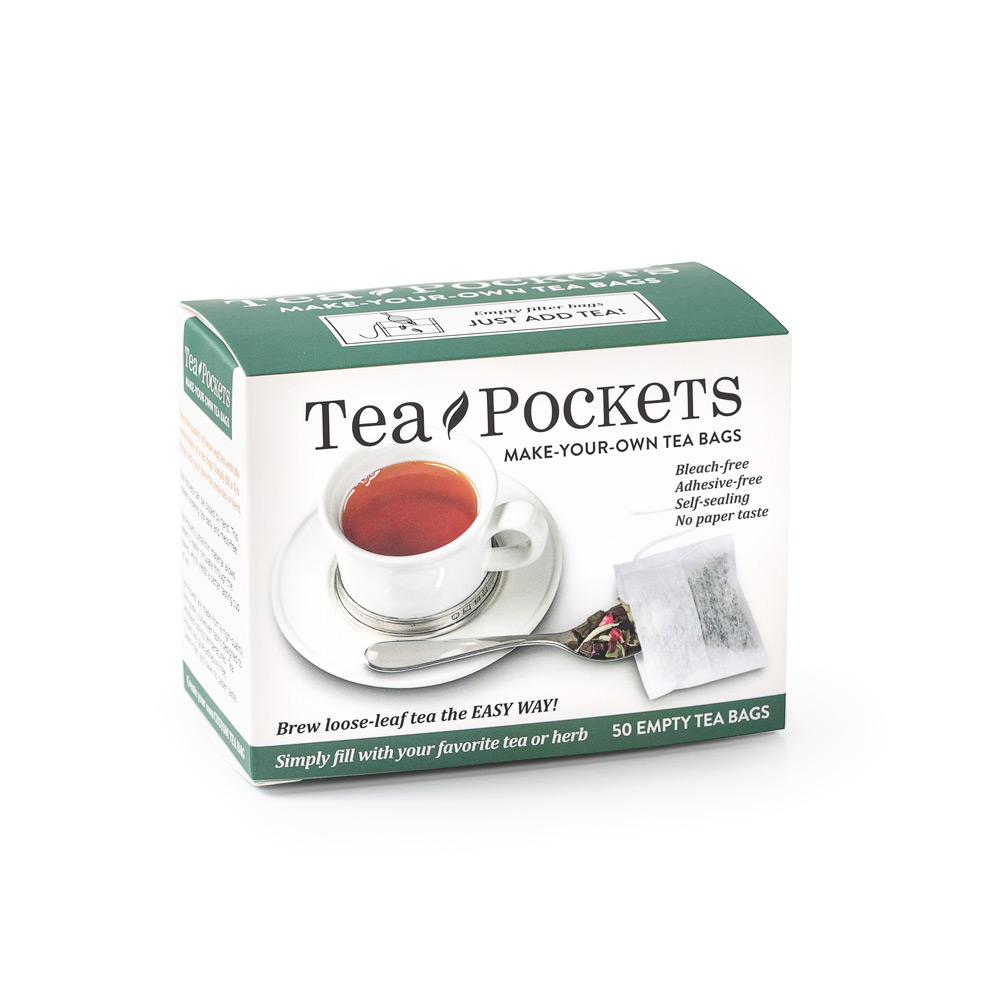
Common options include kraft paper bags with resealable zippers (roughly 50 cents to $1.50 per unit), tin containers ($1-2 per unit), or custom-printed pouches. Kraft bags are affordable and eco-conscious; tin containers create a premium perception and offer better protection.
Your label design must include all required FDA elements while communicating your brand story. Customers buy herbal tea partly for the product and partly for the narrative, organic sourcing, sustainable farming, artisanal blending. Your packaging should reflect these values through design, materials, and messaging.
Choose a color palette reflecting your positioning. Natural earth tones or calming greens appeal to wellness-conscious consumers; minimalist design and premium materials signal quality for upscale positioning.
Getting to market requires deciding between direct-to-consumer sales, wholesale distribution, or both. Direct-to-consumer means selling through your website or farmers markets; you capture full retail margin but handle all customer service and marketing. Wholesale means selling to retailers, spas, and cafes at 40-50% of retail; they handle retail sales, but you give up margin. Many successful businesses start direct-to-consumer to validate their product and build brand awareness, then expand into wholesale as production volume increases.
Pricing Strategy, Startup Costs, and Profitability
Premium loose leaf tea typically retails for $8-15 per ounce. A 2-ounce pouch might retail for $12-18.
Calculate unit costs carefully. Ingredient costs for a premium herbal blend typically run $1-3 per 2-ounce serving. Add packaging costs of 50 cents to $2, labeling, and overhead, and your total landed cost might be $2.50-5.50 per unit. A retail price of $12-15 leaves healthy margin for marketing, fulfillment, and profit.
Wholesale pricing is typically 40-50% of retail. If your retail price is $12, wholesale accounts pay $6-7.20 per unit. This lower margin requires higher volume to be profitable.
Startup costs vary widely. A home-based business using a co-packer might start with $2,000-5,000. A business renting commercial kitchen space might require $10,000-25,000. Break-even analysis is essential: if your monthly fixed costs are $500 and your gross margin per unit is $7, you need to sell roughly 72 units monthly to cover fixed costs.
Most herbal tea businesses take 12-24 months to reach profitability if reinvesting revenue into growth.
Marketing and Selling Your Herbal Tea Business
Your marketing strategy depends on your target customer. Direct-to-consumer requires different tactics than wholesale.
Direct-to-consumer marketing typically happens through social media, email, and content marketing. Instagram and Pinterest work well for tea brands because the product is visually appealing. Show your blending process, sourcing story, and customer testimonials. Email marketing builds repeat purchase behavior; customers receiving regular emails about new blends have higher lifetime value.
Content marketing establishes authority. Write about herb health benefits, brewing techniques, or tea pairings. This attracts organic search traffic and positions you as knowledgeable. Octavia Tea's approach of highlighting sourcing practices and sustainable farming appeals to customers who care about environmental impact.
Wholesale marketing focuses on relationship building. Identify target retailers, spas, and cafes aligned with your brand positioning. Approach them with samples and a wholesale proposal. Offer point-of-sale materials, social media content, or co-marketing opportunities.
Customer retention is more profitable than constant acquisition. Build email lists, create loyalty programs, and develop seasonal offerings that encourage repeat purchases.
Starting a herbal tea business is achievable with careful planning around legal compliance, sourcing, and positioning. The key challenge is building a sustainable operation that maintains quality while scaling production. You need reliable suppliers delivering consistent product, packaging that communicates your brand story, and pricing that covers costs while remaining competitive. Focus first on developing exceptional blends that justify premium pricing. Octavia Tea's approach, sourcing directly from estate gardens, hand-blending with natural essences, and maintaining USDA organic certification, demonstrates how quality and transparency build customer trust. Explore our Intro to Tea Tasting Set to understand what premium loose leaf tea tastes like, then use that standard as your benchmark for your own blends.
Frequently Asked Questions
Do I need a license to sell herbal tea?
Yes. You'll need a business license, seller's permit, and possibly a food handler's license depending on your state and whether you operate from home under cottage food laws. If you're selling herbal tea blends that don't fall under your state's cottage food exemptions, you'll need a commercial kitchen and health department approval. Check with your local health department and state agriculture office for specific requirements in your area.
What are the FDA food labeling requirements for tea products?
FDA labeling requirements for herbal tea include product name, ingredient list, net weight, manufacturer address. If you make health claims (like 'improves digestion'), you must have scientific evidence. Allergen information must be clearly stated. All text must be in English and meet minimum font size requirements.
How much capital do I need to start a herbal tea business?
Startup costs typically range from $5,000 to $25,000+ depending on your model. Budget for sourcing inventory ($1,000–$5,000), packaging and labeling ($500–$2,000), licensing and permits ($200–$1,000), initial marketing ($500–$2,000), and equipment like scales or infusers. Starting small with a limited product line and direct-to-consumer sales can reduce costs significantly. Many successful tea entrepreneurs begin with under $10,000.
How do I find reliable loose leaf tea wholesale suppliers?
Look for suppliers who specialize in organic loose leaf tea wholesale suppliers with transparent sourcing and certifications. Request samples, ask about minimum order quantities, lead times, and pricing tiers. Verify organic certification and food safety standards. Build relationships with suppliers who understand your brand values—especially if sustainability and ethical sourcing matter to your business. Start with small orders to test quality before committing to larger volumes.


Octavia Tea Sign In
Create New Account