























Common Tea Quality Control Issues: A 2026 Guide

Table of Contents
- Why Tea Quality Control Issues Cost You More Than You Think
- Pesticide Residues and Chemical Contamination in Tea
- How to Evaluate Tea Leaf Quality Before You Buy
- Identifying Tea Adulteration: Foreign Matter, Fillers, and Synthetic Additives
- Moisture, Microbial Load, and Post-Harvest Handling Failures
- Tea Storage and Shelf Life Best Practices for Retailers
- Building a Quality Control Protocol That Works
- Frequently Asked Questions
Last Updated: September 24, 2026
Why Tea Quality Control Issues Cost You More Than You Think
A single compromised lot can undo years of work building a customer base. This guide from Octavia that we drafted based on our experiences, examines the tea quality control issues that quietly erode margins, damage reputations, and put retail and wholesale buyers at risk. Tea quality control is the set of practices, tests, and standards used to verify that a finished tea meets defined criteria for safety, purity, and sensory character before it reaches a customer.
Pesticide Residues and Chemical Contamination in Tea
Pesticide residue is the most publicized tea quality control concern, and for good reason. Tea leaves are not washed before processing, so anything applied in the field remains on the leaf through harvest, withering, and firing. The FDA guidance on pesticide monitoring in imported foods outlines how residue tolerances are set and enforced at the border, but enforcement is sampling-based, not exhaustive. That gap is where problems slip through. This is a main concern for us and is why we buy our tea from blenders and farms that we have established long relationships and trust with.
What Third-Party Certification Actually Verifies
Third-party certification verifies that a producer's processes and finished lots meet a defined standard, but it does not guarantee every batch is identical. USDA Organic certification, for example, confirms that synthetic pesticides and fertilizers were not used in production and that the operation maintains an audit trail. It does not test every shipment for residue. Fair Trade certification addresses labor and pricing conditions on the farm, not chemical safety. Octavia also will respect the certification from other countries for example in Japan. There is an organic certification that we respect as equal to ours which we require and must document for all our organic tea.
How to Evaluate Tea Leaf Quality Before You Buy
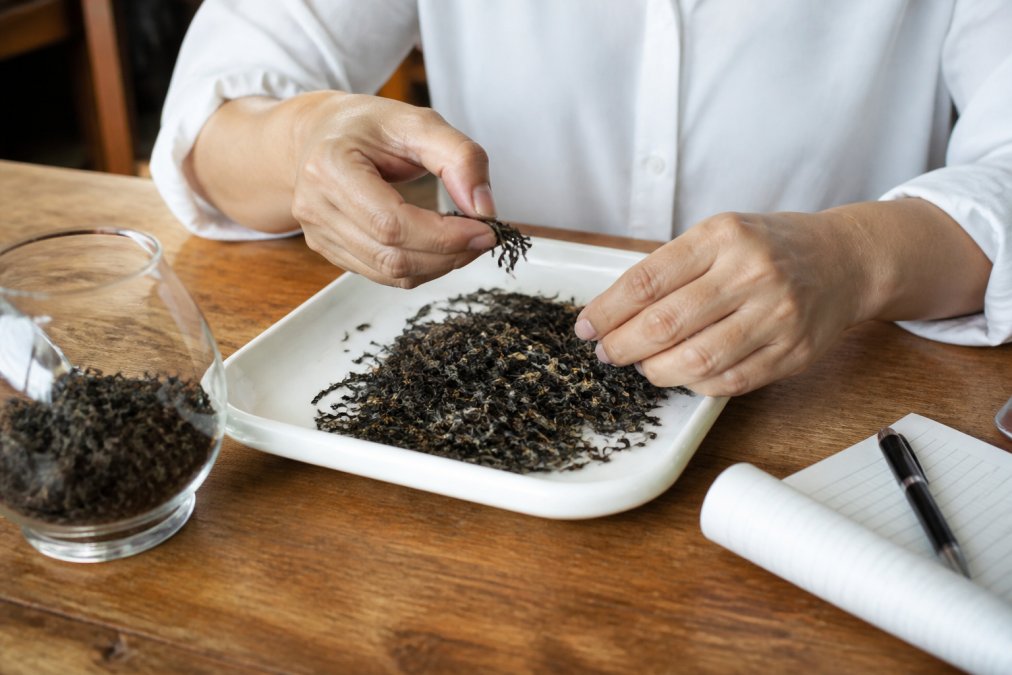
Evaluating tea leaf quality before purchase means assessing appearance, aroma, and physical consistency against a defined standard. A structured evaluation catches defects a quick glance misses. As owners of a small business we are constantly getting samples and testing the blends, quality and freshness of the tea. Tea even from the same grower can have a big difference from year to year and we strive to maintain high quality and purity.
Visual Identification of Defects: What to Look For
Visual defect identification takes practice, but it's the fastest screening tool you have. Look for:
- Excessive stem and fiber content, which signals rough plucking or poor sorting
- Uneven leaf size, a sign of inconsistent grading that will brew unevenly
- Dull or grayish color, often indicating age or oxidation damage
- Visible mold, clumping, or off-color patches, which point to moisture problems during storage
- Foreign matter such as twigs, seeds, or dust that shouldn't be in a finished lot
Identifying Tea Adulteration: Foreign Matter, Fillers, and Synthetic Additives
Adulteration is the deliberate or accidental addition of substances that shouldn't be in a finished tea, ranging from filler material to synthetic colorants and flavor compounds used to mask low-grade leaf. Detecting it requires visual inspection and, in some cases, analytical testing.
Common adulteration patterns include:
- Spent or recycled leaves blended back into fresh lots to add weight
- Non-tea plant material used as filler, often in ground or dust-grade products
- Synthetic dyes added to mimic the color of a higher-grade leaf
- Artificial flavorings used to cover stale or damaged base tea
Moisture, Microbial Load, and Post-Harvest Handling Failures
Post-harvest handling is where many otherwise sound lots degrade, and it's the stage most consumer-facing guides skip. Moisture content is the single most predictive variable for whether a lot survives storage. Above the safe threshold, microbial growth accelerates, oxidation flattens the flavor profile within weeks rather than months, and mold risk rises sharply. Proper drying and immediate packaging after firing are the two controls that matter most.
Moisture Control at Each Handoff
Tea is hygroscopic, meaning it equilibrates with the humidity around it. A lot that leaves the factory at a safe moisture level can pick up ambient moisture during trucking, port storage, or a humid warehouse. Controls at each handoff:
- At origin: Confirm the lot was dried to a stable level before packing, and that the supplier can document the final moisture reading. Ask for the reading, not just a pass/fail statement.
- In transit: Insist on moisture-barrier packaging (foil-lined or metallized bags with a heat seal) rather than paper or unlined cloth. Container sweat during temperature swings is a common and underrecognized source of rehydration.
- At receiving: Weigh and inspect incoming lots for clumping, softness, or a dull surface sheen, all early indicators that moisture has crept in. A lot that feels cool and damp to the touch should be quarantined, not shelved.
- In storage: Keep relative humidity low and stable. Fluctuation is more damaging than a consistently moderate level because it drives repeated moisture cycling in and out of the leaf.
Microbial Load: Where It Matters Most
Microbial testing matters most for fermented, pile-processed, and shade-grown teas, where extended handling and warm, damp conditions favor mold and bacteria. Without testing, a buyer can't know whether a lot is safe to store long-term or will develop off-flavors and visible growth months after purchase.
Traceability as a Risk Signal
Supply chain traceability, from garden to warehouse, makes post-harvest claims verifiable rather than assumed. When a supplier can't document where a lot was processed, how it was dried, and how it was stored in transit, treat that as a risk signal, not a paperwork gap. The absence of records usually means the absence of controls.
Tea Storage and Shelf Life Best Practices for Retailers
Practical storage rules for retail and café environments:
- Store in opaque, airtight containers, never clear glass on a sunlit shelf
- Keep inventory in a cool, dry area away from ovens, espresso machines, and dishwashing stations
- Rotate stock using first-in, first-out so older lots move before they fade
- Separate strongly scented teas from delicate ones to prevent cross-contamination
- Label every container with the lot date so staff can track age at a glance
Shelf life varies by type. Delicate green and white teas lose their character fastest, while tightly rolled oolongs and pu-erh hold up longer under proper conditions. Retailers who track lot dates and rotate consistently waste less inventory and field fewer complaints about inconsistent flavor.
Building a Quality Control Protocol That Works
A working tea quality control protocol combines incoming inspection, documented testing, and ongoing supplier review. It doesn't need to be complicated, but it must be consistent, written down, and built around the points where failures actually occur. The framework below borrows the logic of HACCP, identify critical control points, set a limit at each, monitor it, and define what happens when a limit is missed.
Step 1: Map Your Critical Control Points
A critical control point is any step where a failure would let a defect reach a customer undetected. For most tea buyers, four points cover the majority of risk:
- Supplier qualification, before the first order, not after
- Incoming lot inspection, every shipment, no exceptions
- Storage and rotation, continuous, with scheduled checks
- Pre-sale sensory confirmation, every new lot before it hits the shelf
Step 2: Set a Limit and a Response at Each Point
A control point without a defined limit is just a habit. For each point, write down what "pass" looks like, what "fail" looks like, and who has authority to act.
Stage | What to Check | Frequency | If It Fails |
|---|---|---|---|
Supplier qualification | Certifications, batch test records, traceability documentation | Before first order, then annually | Do not onboard; request records or source elsewhere |
Incoming lot | Visual defects, aroma, moisture feel, lot documentation | Every shipment | Quarantine the lot; do not shelve until resolved |
Storage | Temperature, humidity, container seals, rotation order | Weekly walkthrough | Correct conditions immediately; pull affected lots for re-evaluation |
Pre-sale sensory | Brewed evaluation, infusion clarity, mouthfeel | Every new lot | Hold the lot; re-test or reject |
Step 3: Assign Ownership and Authority
The key insight most guides miss is that quality control fails at handoff points, not in the lab. A lot can pass every test at origin and still degrade in a warm warehouse or get mislabeled during repackaging. Assign one person to own the protocol and give them explicit authority to reject a lot without justifying the decision upward. Without that authority, checks become a formality and borderline lots get waved through.
Step 4: Review and Tighten
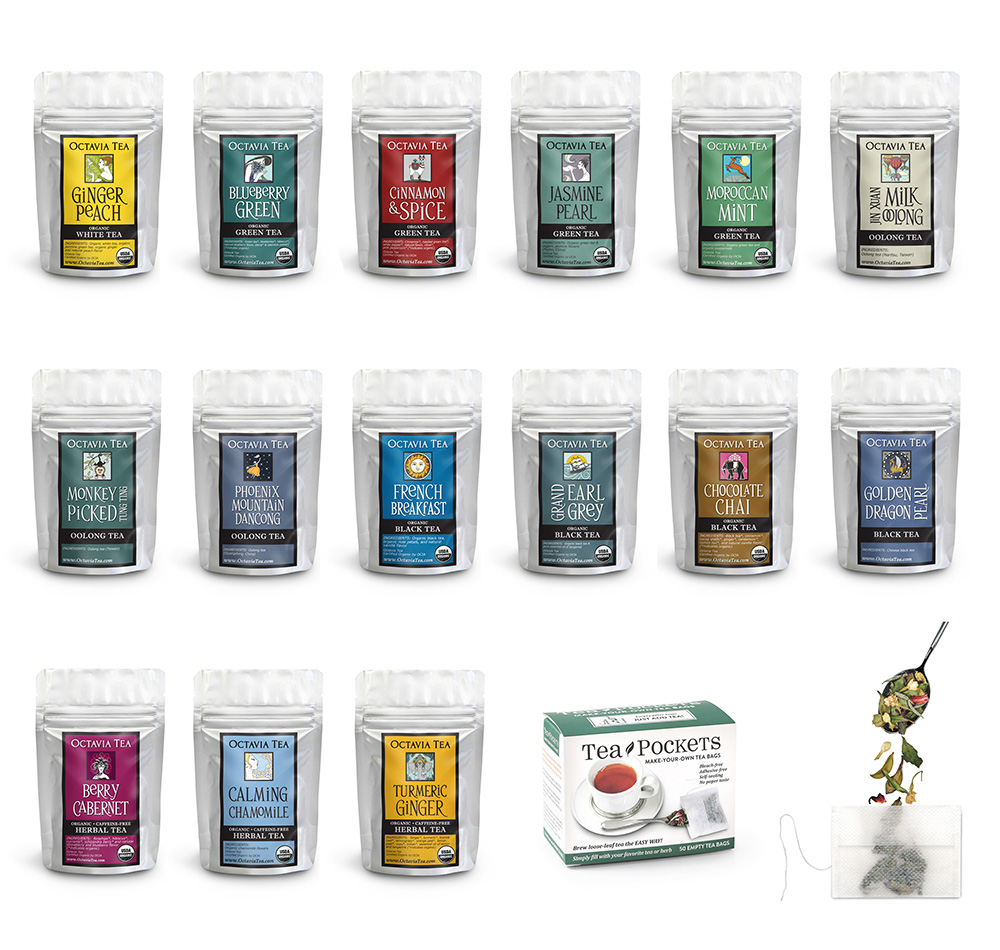
For buyers new to loose leaf, a structured tasting set is a low-risk way to calibrate your palate before committing to full cases. Octavia Tea's Intro to Tea Tasting Set includes samples of 15 premium white, green, oolong, black, and herbal teas, all made from 100% natural or USDA Certified Organic ingredients, a real reference point for what a clean, defect-free cup should taste like. Retailers who want customers to evaluate before buying can also use display jars so shoppers can see and smell each tea directly.
Frequently Asked Questions
What are the most common indicators of poor-quality tea?
Dull or faded leaf color, excessive dust and broken pieces, a flat or musty smell, and a thin, bitter infusion are the clearest signs. High moisture content causes clumping and stale flavors. Visible stems, stones, or other foreign matter point to weak sorting at origin. For loose leaf tea, whole or tightly rolled leaves that unfurl evenly during steeping usually signal better handling and fresher stock.
What are the common adulterants found in tea?
Adulterants range from spent tea leaves that have already been steeped and re-dried, to foreign matter like sand, twigs, and stones added for weight. Some products carry artificial colors or synthetic flavorings that mask low-grade leaf. In loose leaf tea, look for uniform leaf appearance and a clean aroma. If the color bleeds instantly into cold water, that is a warning sign worth investigating.
How does moisture content affect tea quality control?
Moisture is one of the most overlooked tea quality control issues. Leaves that absorb too much water during storage lose crispness, develop mold, and oxidize faster. Damp tea also clumps together and produces a flat, stale cup. Keeping stock in airtight containers away from heat and light slows this decline. Retailers should check stored tea regularly for softening, off-aromas, or visible mold before it reaches customers.
How can retailers ensure the purity of their loose leaf tea supply?
Ask suppliers for batch testing records and third-party certification documentation, then verify those certifications independently. Request samples before committing to volume and evaluate leaf grade, aroma, and infusion quality yourself. Store tea in sealed, opaque containers and rotate stock on a first-in, first-out basis. Building a relationship with a supplier who can trace tea back to specific estate gardens makes accountability far easier when a problem appears.


Octavia Tea Sign In
Create New Account