























5 Best Herbal Teas for Evening Relaxation in 2026
September 28, 2026

Table of Contents
- Why Herbal Teas Work for Evening Wind-Down
- Quick Comparison: 5 Best Herbal Teas for Evening Relaxation
- 1. Calming Chamomile: The Gentle Classic
- 2. Serene Dream: Valerian Root and Lavender for Deep Rest
- 3. Berry Lullaby: Caffeine Free Tea With Rooibos and Chamomile
- 4. Moonlight Garden: A Spa-Inspired Sensory Experience
- 5. Chocolate Mint: A Dessert-Inspired Evening Treat
- How to Brew Loose Leaf Tea for Maximum Calming Benefits
- Frequently Asked Questions
Why Herbal Teas Work for Evening Wind-Down
Herbal teas are caffeine-free botanical infusions that support the body's natural transition into rest by working with the nervous system rather than against it.
Herbs like chamomile contain apigenin, a compound that binds to GABA receptors in the brain. Valerian root works along a similar pathway.
A cup of herbal tea at 9 p.m. does very little if your cortisol levels are still elevated from a screen-lit evening.
How Sleep-Promoting Herbs Affect the Nervous System
Sleep-promoting herbs work by modulating the nervous system's arousal response, helping lower cortisol and ease the body toward sleep onset without forcing sedation. They act gradually, which is why they pair well with consistent sleep hygiene rather than replacing it.
The calming effect builds over 20 to 45 minutes after drinking. That window is why steeping time and temperature matter: under-extracted tea delivers fewer active compounds, and boiling water can degrade delicate botanicals like lavender and rose.
National Center for Complementary and Integrative Health overview of chamomile
Quick Comparison: 5 Best Herbal Teas for Evening Relaxation
Each of these five blends targets a different kind of evening. Some are gentle enough for a nightly ritual, others are heavier on sedative herbs for nights when your mind won't slow down.
Tea | Base | Key Botanicals | Best For |
|---|---|---|---|
Chamomile | Whole chamomile flowers | A gentle nightly ritual | |
Valerian root | Valerian, lavender, spearmint | Deep rest on restless nights | |
Rooibos | Rooibos, blueberry, hibiscus | Caffeine-free fruity calm | |
Moonlight Garden | Chamomile | Lavender, spearmint, rose | A sensory, spa-style wind-down |
Chocolate Mint | Rooibos | Vanilla, chocolate, peppermint | Replacing an evening dessert |
1. Calming Chamomile: The Gentle Classic
Chamomile is the most studied evening herb for good reason: it's mild, it's pleasant, and it works on the same GABA pathways that regulate sleep onset. Octavia Tea's Calming Chamomile uses whole chamomile flowers rather than the dusty broken petals common in tea bags, which preserves both flavor and the apigenin content that does the actual work.
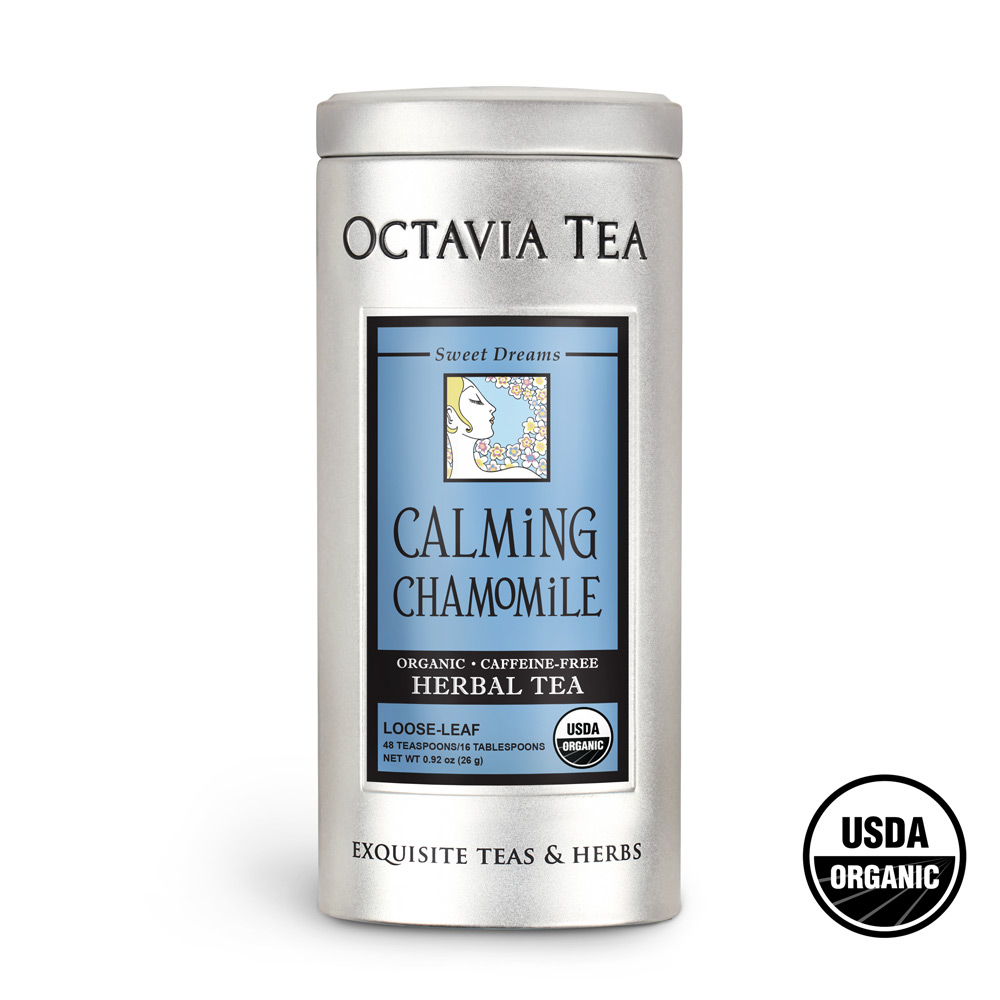
The fragrance leans honey, fruit blossom, and apple. It's a tea you can drink every night without building tolerance, which is more than can be said for stronger sedative blends.
If your insomnia is driven by anxiety rather than a racing schedule, chamomile alone may feel too gentle. Consider a valerian blend for a stronger effect.
2. Serene Dream: Valerian Root and Lavender for Deep Rest
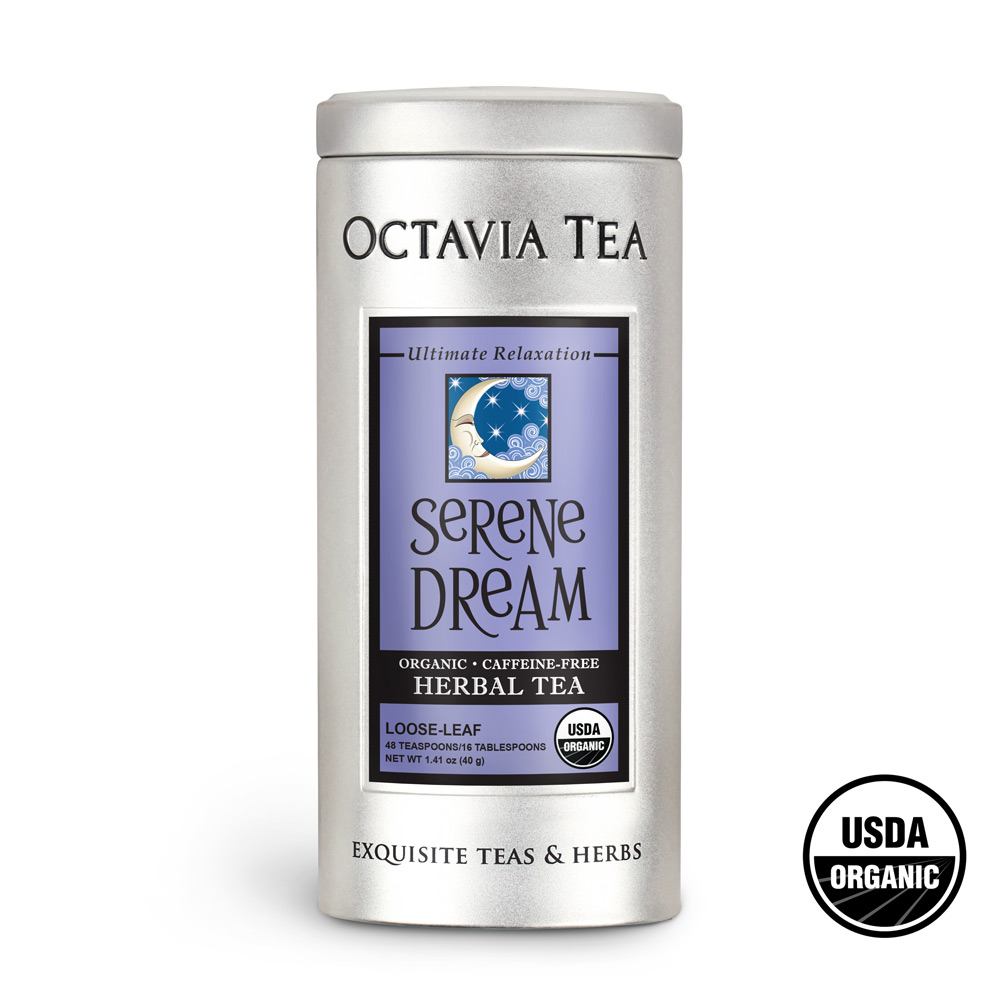
Valerian root is the heavyweight here. It has been used as a sleep aid since ancient Greece and Rome, and it works by increasing GABA availability in the brain, producing a mild sedative effect that's noticeably stronger than chamomile.
Serene Dream combines valerian root with lavender, spearmint, and chamomile. The spearmint matters: valerian on its own has an earthy, almost medicinal taste that many people can't get past. The mint and lavender round it into something drinkable.
Chamomile's apigenin binds to GABA receptors gently. Valerian appears to work differently, it contains compounds that are thought to slow the breakdown of GABA already in the brain, so the calming signal lingers longer instead of being cleared away. That's why the effect feels cumulative and why the blend is better suited to restless nights than to a light wind-down.
That stronger action is exactly why the safety picture deserves more than a passing mention. Valerian can interact with sedatives, anti-anxiety medications, and some antidepressants. If you take any of those, or if you take a blood thinner, talk to your doctor or pharmacist before making this a nightly habit. The same caution applies if you're pregnant, nursing, or scheduled for surgery, since valerian's effects can linger. A common pattern is to treat valerian as an occasional tool for genuinely restless nights rather than an every-night default, and to keep chamomile or a rooibos blend as the routine cup.
Start with a shorter steep and a smaller cup the first time you try it, and see how your body responds before committing to a full mug.
3. Berry Lullaby: Caffeine Free Tea With Rooibos and Chamomile
Rooibos is a naturally caffeine-free and rich in antioxidants (pubmed.ncbi.nlm.nih.gov). That sweetness is what makes Berry Lullaby work as an evening tea for people who find straight chamomile too floral.
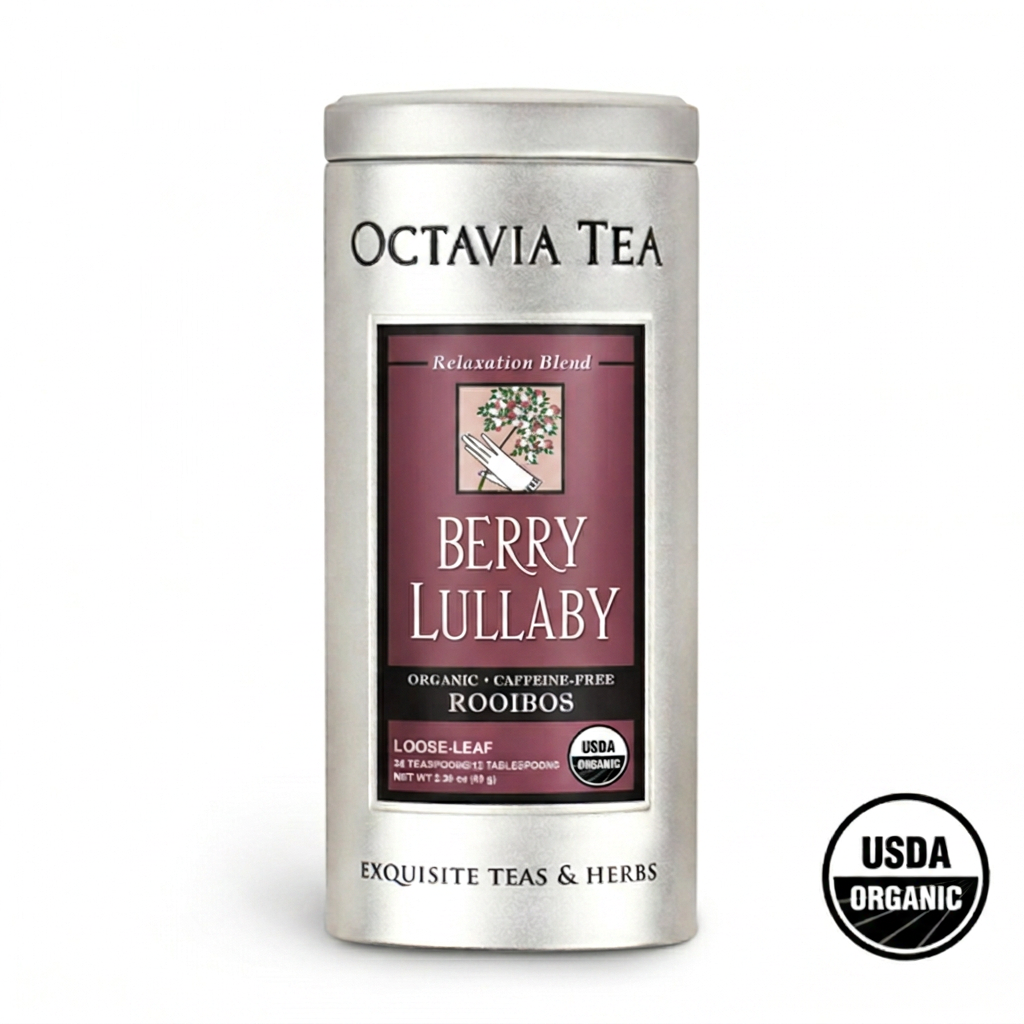
Blueberries and hibiscus give it a full-bodied berry flavor, while a touch of chamomile adds calming support. It brews well hot or over ice, which makes it useful in warmer months when a hot cup feels wrong before bed.
Rooibos is soothing, but it isn't a sedative herb. Treat this one as a pleasant ritual rather than a sleep intervention.
4. Moonlight Garden: A Spa-Inspired Sensory Experience
Aromatherapy is doing real work in this blend. Lavender and rose release volatile compounds that you inhale before you even take a sip.
Moonlight Garden layers chamomile with lavender, spearmint, and rose. The chamomile brings fruit nectar, apple, and quince notes; the lavender and rose turn the whole cup into something closer to a spa treatment than a beverage.
If you've tried lavender teas before and found them soapy, this one is worth revisiting. The rose and spearmint keep it from tipping into perfume territory.
5. Chocolate Mint: A Dessert-Inspired Evening Treat
Chocolate Mint is the answer to that evening sugar craving: rooibos with warm vanilla, creamy chocolate notes, and fragrant peppermint, at less than two calories per cup.
The peppermint adds a cooling finish that makes the whole thing feel indulgent.
This is the one to reach for when you'd otherwise be in the pantry at 10 p.m. It won't sedate you, but it will stop the dessert run.
How to Brew Loose Leaf Tea for Maximum Calming Benefits
Getting the brew right is what separates a genuinely calming cup from a disappointing one. Most calming compounds in herbs are water-soluble but heat-sensitive, so temperature and steeping time matter more than most people realize.
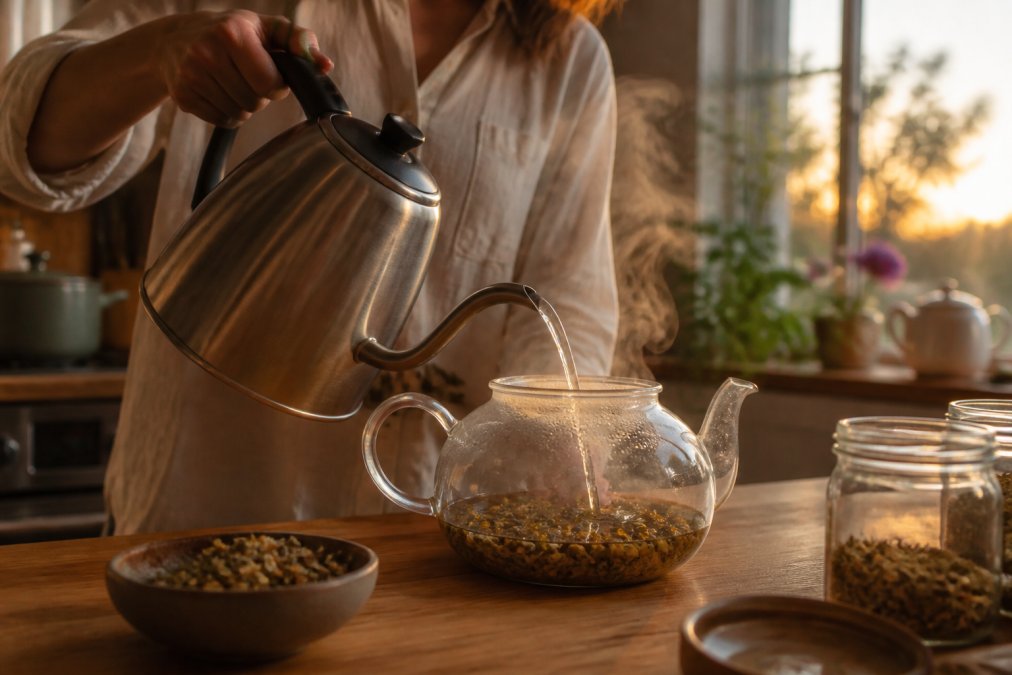
The mechanism is worth understanding before you touch the kettle. Chamomile's apigenin and valerian's valerenic acid are relatively stable and need sustained heat and time to move from the plant material into the water.
Here's the process that works across all five blends:
- Use fresh, filtered water. Chlorine and hard minerals flatten the flavor and can mask the aromatics.
- Heat to the right temperature. Roughly 200-212°F for chamomile, rooibos, and valerian blends; closer to 190-200°F for lavender- and rose-heavy blends so the florals don't turn bitter.
- Measure generously. About one heaping teaspoon of loose leaf per 8 ounces of water. Loose leaf needs more room than a tea bag because the leaves are whole.
- Steep 5 to 7 minutes. Chamomile and rooibos can go longer; valerian blends benefit from a full 7 minutes to extract the root.
- Cover the cup while steeping. This keeps the volatile aromatic oils from escaping with the steam, which is where much of the calming effect lives.
- Drink it 30 to 45 minutes before bed. That gives the herbs time to work while you're winding down, not after you're already in bed.
Pro TipIf you're new to loose leaf, start with the Bedtime Blends Sampler. It includes five evening blends and about 20 total servings, so you can figure out which one your body actually responds to before committing to a full tin.
One more thing worth knowing: caffeine content isn't the only variable. Even caffeine-free teas can interfere with sleep if you drink them too close to bedtime and end up waking for the bathroom at 3 a.m. Front-load your evening cup rather than sipping right up until lights out.
Frequently Asked Questions
What is the best tea to drink at night for relaxation?
Chamomile, valerian root, and lavender are among the most studied herbs for evening relaxation. Blends that combine several of these herbs, such as a chamomile-valerian mix, tend to work better than a single botanical.
What is the most relaxing herbal tea?
Valerian root has the strongest reputation as a sedative herb, which is why it anchors blends like Serene Dream. Chamomile is the gentler everyday option. If you want to feel calm without heavy drowsiness, chamomile or a rooibos-based caffeine free tea is a better fit than a valerian-heavy blend.
What kind of tea makes you feel calm but not sleepy?
Chamomile and peppermint are good choices when you want stress relief without feeling sedated. These herbs have calming properties but lack the stronger sedative effects of valerian root. A caffeine free tea like Pacific Peppermint works well in the early evening, while a chamomile blend fits better as you get closer to bedtime.
Are there any side effects to drinking herbal tea before bed?
Most herbal teas are well tolerated, but some herbs interact with medications. Valerian root can interact with sedatives, anti-anxiety drugs, and certain antidepressants, so check with a healthcare provider before using it regularly. Drinking large volumes of any liquid close to bedtime may also increase nighttime urination.
How long before bed should I drink herbal tea?
Aim for 30 to 45 minutes before bedtime. This gives the calming compounds time to take effect while leaving room for a bathroom trip before you lie down. Steep your tea for the full recommended time, since steeping time affects how much of the beneficial compounds actually end up in your cup.

Share on Facebook

Share on X

Share on Pinterest
Recent Posts


Octavia Tea Sign In
Create New Account