























Black Lavender Tea: A Complete 2026 Guide

Table of Contents
- What Exactly Is Black Lavender?
- Taste and Aroma: What to Expect in the Cup
- Lavender Tea Brewing Temperature: Getting It Right
- How to Brew Black Lavender Tea: Step by Step
- Frequently Asked Questions
Last Updated: September 30, 2026
What Exactly Is Black Lavender?
Black lavender is a black tea blend infused with dried lavender flowers, not a distinct plant species. The name describes the pairing of a bold, oxidized camellia sinensis leaf with the floral buds of Lavandula, and it has become one of the most recognizable flavored black teas on the market.
The distinction matters because the phrase gets used loosely, and a lot of shoppers end up confused about whether they're buying a flower, a color, or a drink.
Not a Plant: A Tea Blend
There is no lavender cultivar called "black lavender." The term refers to a blend, and the "black" half comes from the tea, not the flower.
Black tea is fully oxidized, which is what gives it the deep coppery liquor, malt backbone, and tannic structure that can stand up to a strong floral addition. Lavender on its own is an herb, and it brews pale and delicate. Combine the two and you get a cup where the lavender reads as aroma and top note while the black tea supplies body.
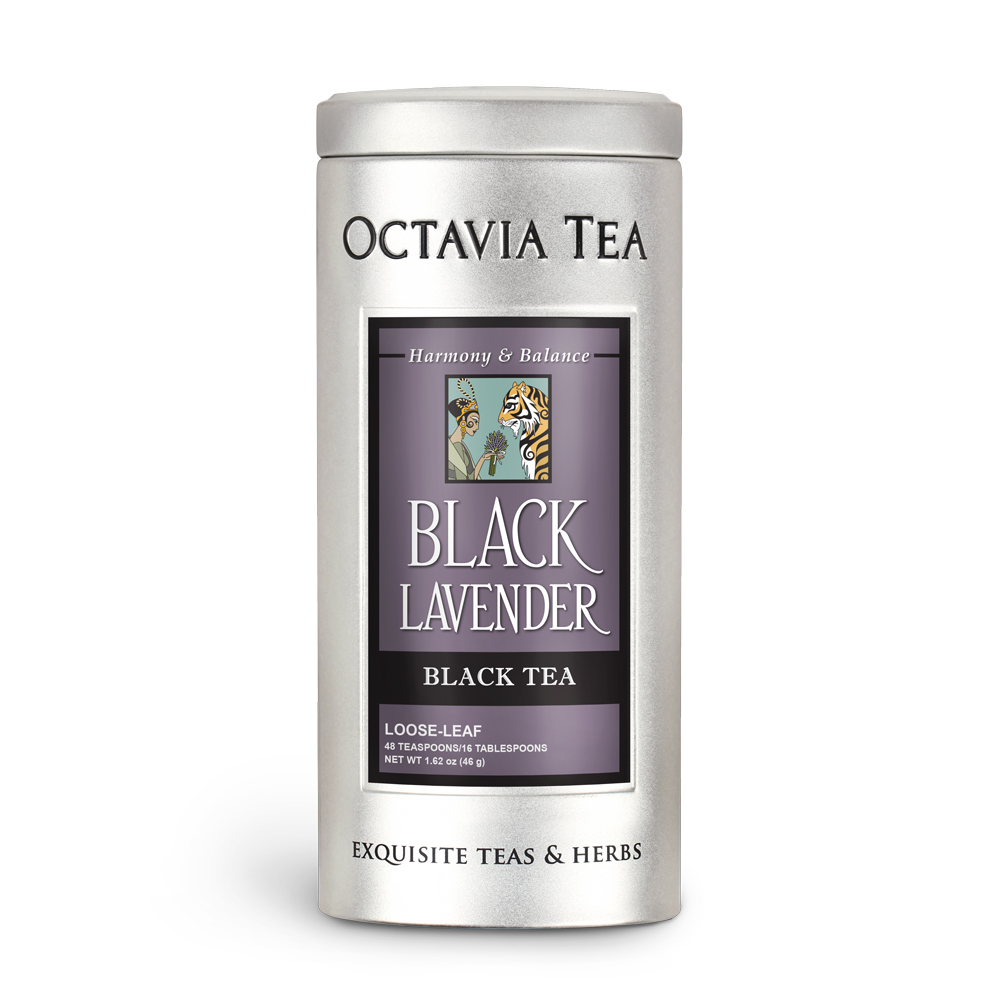
That structure is why Octavia Tea Black Lavender tea blend holds milk and sugar better than a pure lavender tisane ever could.
Why Lavender Sometimes Turns Black
Fresh lavender buds are purple-gray. Dried buds darken considerably, and in a finished blend they can look almost charcoal against dark tea leaves.
Several things drive that shift:
- Oxidation during drying. Exposure to air darkens plant pigments over time.
- Chlorophyll retention. Buds harvested and dried slowly keep more green pigment, which reads as near-black once it browns.
- Blending contrast. Against jet-black tea leaves, genuinely dark purple buds look black by comparison.
A bud that looks black can still carry a bright, clean lavender aroma. Color is a poor proxy for freshness in dried botanicals.
Taste and Aroma: What to Expect in the Cup
A well-made black lavender tea tastes like malt and stone fruit first, with lavender arriving as aroma and a soft floral finish. The tea should lead. The lavender should follow.
Lavender Tea Brewing Temperature: Getting It Right
Brewing temperature depends on the base. Black lavender blends want water just off a boil, while all-lavender or herbal blends want it cooler.
Blend Type | Water Temperature | Steep Time | Caffeine |
|---|---|---|---|
200-212°F | 3-5 minutes | Yes | |
Earl Grey lavender | 200-212°F | 3-5 minutes | Yes |
Lavender lemongrass | 200-205°F | 5-7 minutes | No |
Keeping Black Lavender Color and Aroma From Fading
Whole-leaf tea and dried lavender buds both degrade the same way: oxygen, light, heat, and moisture break down the volatile oils that carry aroma and the pigments that carry color. The mechanism is oxidation, the same reaction that darkens a cut apple. In tea, it converts the catechins and aromatic compounds you paid for into flatter, duller versions of themselves, and the lavender's purple pigments fade toward brown as the anthocyanins oxidize.
- Keep it dark. Store leaf in an opaque tin or a cabinet, not a clear jar on a sunny counter. Light accelerates pigment breakdown.
- Keep it sealed. Oxygen is the main culprit. A tight lid or a bag with the air pressed out beats a folded-over pouch.
- Keep it cool and dry. A pantry shelf away from the stove is better than above the kettle. Steam and heat both push the reaction faster.
- Buy in sizes you'll finish. A one-pound bag is economical, but if you brew a cup a day, split it into smaller containers and open one at a time so the rest stays sealed.
- Skip the fridge and freezer for daily-use leaf. Condensation from repeated temperature swings introduces moisture, which is worse than the slow room-temperature decline.
How to Brew Black Lavender Tea: Step by Step
Four variables will decide the cup: water temperature, leaf quantity, steep time, and whether you pre-warm the vessel. Get those right and the blend does the rest.
Here's a recommended sequence:
- Heat fresh water to 200-212°F. Use filtered water if your tap runs hard. Minerals flatten floral notes fast.
- Warm your teapot or mug. Swirl hot water through it, then discard. A cold vessel drops your brewing temperature immediately.
- Measure one teaspoon of leaf per 8 ounces of water. For a stronger cup, add leaf rather than time.
- Pour and start timing. Aim for 3 minutes on the first infusion.
- Taste at 3 minutes, then decide. If it needs more body, give it another 30-60 seconds.
- Strain fully. Leaving leaf in the pot keeps extracting and turns the second cup bitter.
- Re-steep if you like. Many black lavender blends give a decent second infusion at a slightly longer steep.
Frequently Asked Questions
Why did my lavender turn black?
Lavender buds turning black usually points to oxidation, mold, or moisture exposure. If stored in a humid spot or past its prime, the flowers darken and lose aroma. In the garden, blackened foliage often signals root rot or fungal disease rather than a color variety. For tea, check that your lavender smells sweet and looks purple-gray, not musty or charcoal-dark. Proper storage in an airtight container away from light keeps buds fresh for months.
Is black lavender a real botanical species?
No. There is no plant called black lavender. The name describes a tea blend that pairs black tea leaves with lavender flowers, or it refers to dark-colored lavender varieties like 'Hidcote' that appear nearly black in certain light. True lavender belongs to the Lavandula genus and blooms in purple, blue, pink, or white. When you see black lavender on a menu or product page, it almost always means a black tea and lavender blend.
What are the benefits of drinking lavender black tea?
Black tea brings antioxidants and a gentle caffeine lift, while lavender has been used in herbalism for anxiety, bloating, and nerve or joint discomfort. The combination may help you feel calmer without feeling sedated. Octavia Tea's Black Lavender blend highlights this pairing, offering a floral, bright cup that fits an afternoon wind-down or a focused morning. As with any herbal ingredient, check with your doctor if you take medication or are pregnant.
Can you drink lavender blended with black tea?
Yes, and it is one of the most popular floral-black tea pairings. The malt and brightness of black tea balance lavender's perfume so the cup stays drinkable rather than soapy. Use about one teaspoon of blend per 8 ounces of water, steep at 200-212°F for 3-5 minutes, and taste before adding sweetener. Octavia Tea's Black Lavender and Earl Grey Lavender both show how the combination works in practice.


Octavia Tea Sign In
Create New Account