























Hibiscus Tea Sangria: A Refreshing 2026 Guide

Table of Contents
- Why Hibiscus Tea Sangria Deserves a Spot in Your Rotation
- Ingredients and What You'll Need
- Step-by-Step: How to Make Hibiscus Tea Sangria
- Best Fruit Pairings for Hibiscus Tea Sangria
- Batch Prep, Ice Cube Infusion, and Wine Pairing Tips
- Frequently Asked Questions
Last Updated: October 2, 2026
Why Hibiscus Tea Sangria Deserves a Spot in Your Rotation
Hibiscus tea sangria is a chilled wine punch built on a deep ruby base of steeped hibiscus petals, layered with fruit, a touch of sweetener, and plenty of ice. It drinks like a vacation in a glass, but it costs a fraction of what a bar charges for a single cocktail.
Hibiscus is naturally caffeine-free, boldly tart, and gorgeous to look at. The petals give you color and acidity without any added dye.
Most sangria recipes bury the wine under sugary soda. Hibiscus does the opposite. Its tannins and bright acidity cut through fruit and wine alike, so the finished pitcher tastes fresh instead of syrupy.
Ingredients and What You'll Need
You will need four things: a hibiscus base, a wine, a sweetener, and fruit. Get those four right and the rest is timing.
Choosing Your Hibiscus Base
Start with whole dried hibiscus petals, not powdered mix. Whole petals steep cleanly and give you control over strength. Loose-leaf blends work especially well here because the petals are already balanced with complementary flavors.
For a tropical, punch-like result, look for a blend with pineapple, mango, and jasmine notes. For something softer and fruitier, a hibiscus and peach blend brings a juice-like quality that plays nicely with wine.
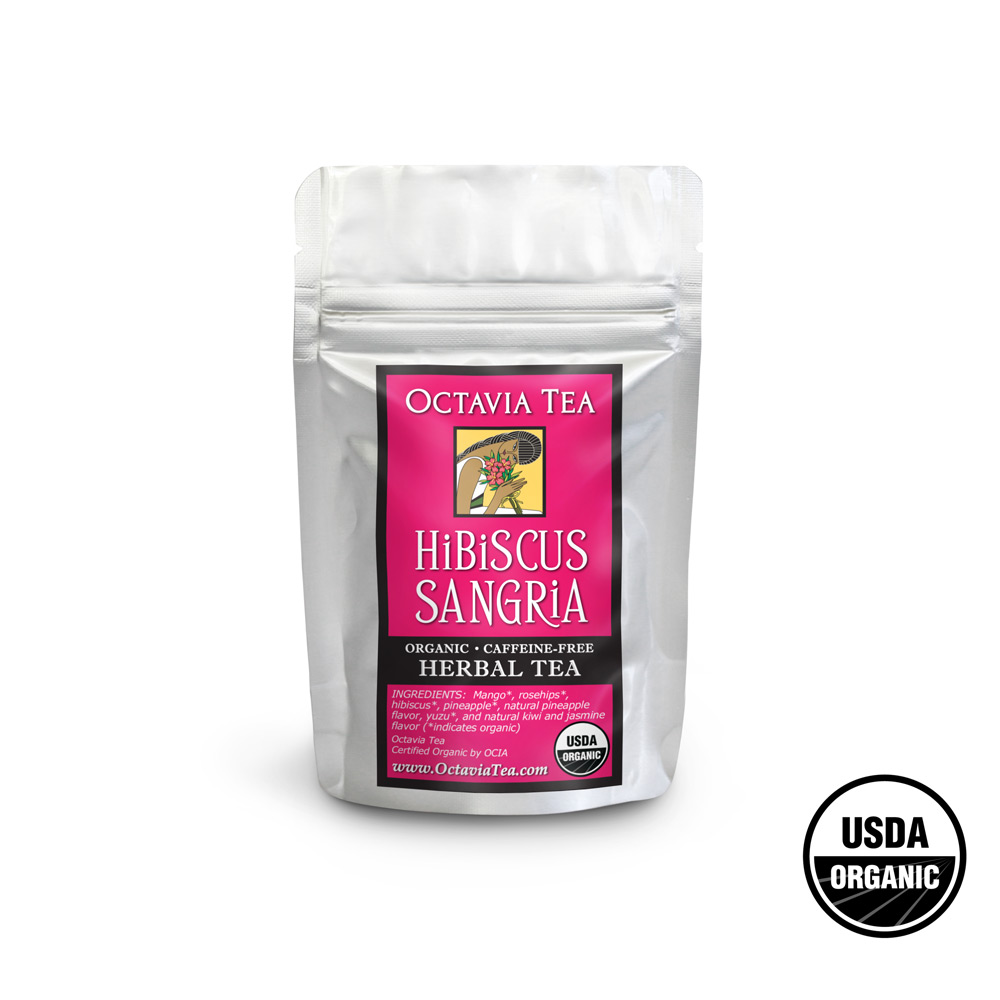
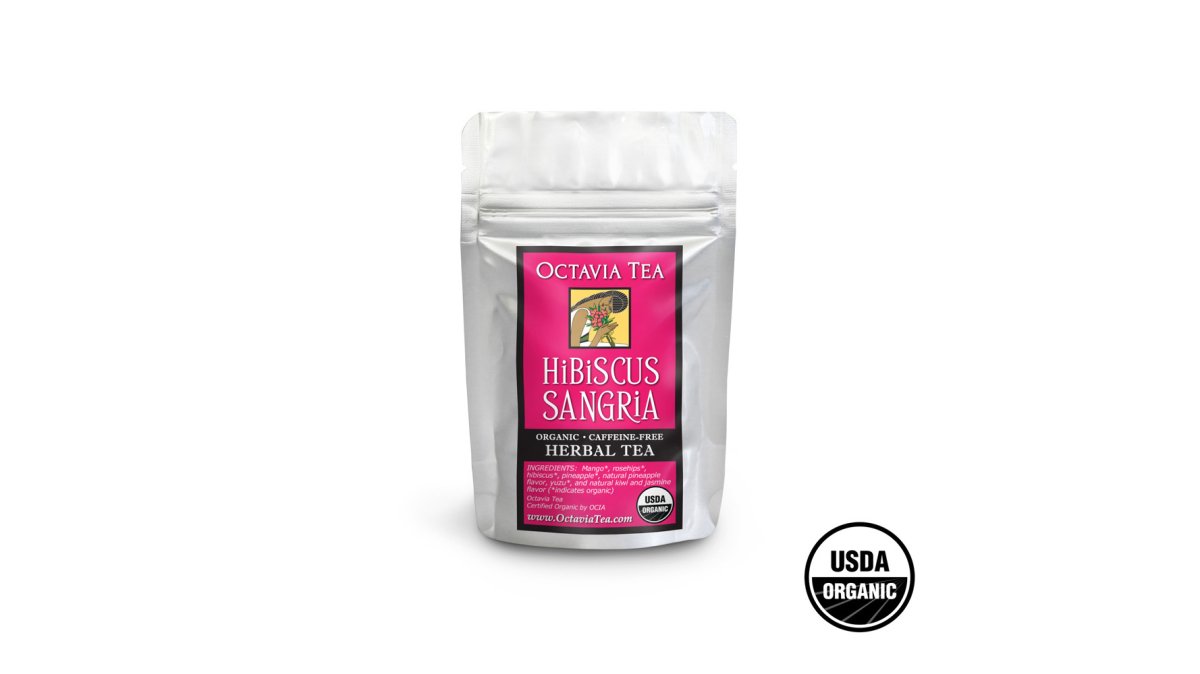
Octavia Tea's Hibiscus Sangria tea was built for exactly this kind of drink. Its ruby-red cup and tropical aroma carry straight through to the finished pitcher.
Wine, Sweetener, and Fruit
A dry red is the classic choice. A fruity red or a dry rosé also works and keeps the color vibrant. Skip anything heavily oaked; it fights the floral notes.
Step-by-Step: How to Make Hibiscus Tea Sangria
Making hibiscus tea sangria takes about 15 minutes of hands-on work plus 2 to 4 hours of chilling. The method below is built for a standard pitcher.
Cold-Brew the Tea
Cold-brewing keeps the flavor smooth and avoids the bitterness that hot steeping can pull out of hibiscus.
- Add your loose hibiscus blend to a large teapot or pitcher.
- Pour in cool, filtered water.
- Refrigerate for 4 to 8 hours.
- Strain out the petals and chill the liquid until ready to use.
Combine and Chill
Now build the drink.
- Pour the chilled hibiscus tea into your pitcher, filling it about halfway.
- Add your wine, roughly equal to the tea.
- Stir in simple syrup or agave nectar to taste.
- Drop in citrus slices and berries.
- Refrigerate for at least 2 hours so the fruit infuses.
- Add ice just before serving.
The two-hour rest is important because it's the difference between fruit sitting in liquid and fruit actually flavoring the drink.
Best Fruit Pairings for Hibiscus Tea Sangria
Citrus, berries, and stone fruit, all work well and the reason comes down to how each one interacts with the tea.
Hibiscus is high in organic acids, which is what gives it that sharp, cranberry-like bite. Fruit high in its own acids (citrus, pineapple) amplifies that bite, while fruit high in pectin and soft sugars (berries, stone fruit) rounds it off.
Citrus: The Acidity Anchor
Citrus does two jobs at once. The juice adds brightness, and the peel adds aromatic oils that sit on top of the drink and hit your nose before the first sip. Orange and blood orange are the classic picks because their sweetness balances the tea's tartness. Lime sharpens everything and works best when you want a leaner, more cocktail-like pitcher.
Berries: Softness and Color
Strawberries and raspberries soften the tea's acidity with jammy sweetness and bleed color into the pitcher, deepening the ruby tone. Blackberries add a darker, more wine-like note. Frozen berries work as well as fresh here, and they double as chill without dilution.
Stone Fruit: Body and Depth
Peaches, plums, and nectarines add a mellow, fruit-forward depth that reads as riper and rounder than citrus alone. They pair especially well with hibiscus blends that already carry stone-fruit notes, since the flavors reinforce each other rather than compete.
Pineapple and Pomegranate: The Accent Players
Pineapple leans into the tropical side of hibiscus and adds its own acidity, so it works best in smaller amounts. Cut it into chunks rather than spears so it releases juice evenly. Pomegranate seeds do not add much flavor, but they add crunch and a jewel-like look that reads as intentional garnish.
What to Skip
Banana and apples brown quickly and turn the pitcher muddy in both color and flavor. Skip anything frozen in syrup, since the added sugar throws off your sweetener balance. And avoid dried fruit unless you rehydrate it first; dry fruit absorbs liquid and leaves you with a pitcher that tastes weaker than you planned.
How Much Fruit Per Pitcher
A reliable starting point is about one and a half to two cups of mixed fruit for a standard pitcher. Split it roughly in half between citrus and softer fruit so you get both brightness and body. Taste after the two-hour chill and adjust: if the drink tastes flat, add citrus; if it tastes sharp, add berries or a touch more sweetener.
Non-Alcoholic Hibiscus Tea Sangria for Any Crowd
A non-alcoholic hibiscus tea sangria works exactly like the original, minus the wine. You keep the tea, the sweetener, and the fruit, then swap the wine for something with body and a little sparkle.
Good swaps:
- Sparkling water with a splash of orange juice
- Ginger ale or ginger beer for a spicy kick
- Chilled grape juice for a wine-like depth
- Kombucha for tang and light bubbles
Batch Prep, Ice Cube Infusion, and Wine Pairing Tips
Scaling up for a party, freezing flavor into your ice, and choosing the right wine turn a good pitcher into a great one.
Scaling for a Party
Keep the ratio steady and chill in bulk.
- Use a large drink dispenser instead of multiple pitchers.
- Brew the tea a day ahead and refrigerate it.
- Add wine and sweetener up to 4 hours before guests arrive.
- Hold the ice and delicate fruit until the last 30 minutes.
Batch Size | Hibiscus Tea | Wine | Sweetener | Fruit |
|---|---|---|---|---|
Small (4 glasses) | 2 cups | 2 cups | 2-3 tbsp | 1 cup |
Medium (10 glasses) | 5 cups | 5 cups | 1/3 cup | 2-3 cups |
Large (20 glasses) | 10 cups | 10 cups | 2/3 cup | 5-6 cups |
Non-alcoholic | 10 cups | 10 cups mixer | 2/3 cup | 5-6 cups |
Ice Cube Infusion
Ice cube infusion keeps the drink strong as the ice melts. Freeze hibiscus tea, fruit juice, or whole berries into cubes and drop them in instead of plain ice. As they melt, they add flavor rather than water.
Wine Pairing Guide
Match the tartness of the tea.
- Dry red (Tempranillo, Grenache): the classic choice, holds up to bold fruit
- Dry rosé: keeps the color bright and the body light
- Sparkling wine: adds bubbles and a festive edge
- White (Sauvignon Blanc): crisp and citrusy, good with peach blends
Frequently Asked Questions
What alcohol goes well with hibiscus tea?
Hibiscus tea sangria traditionally uses dry red wine, but you can also try sparkling wine for a lighter, bubbly version. The key is to balance the tea's natural tartness with a touch of sweetener and fresh fruit. Start with a 1:1 ratio of cold-brewed hibiscus tea to wine, then adjust to taste.
How can you make a non-alcoholic hibiscus tea sangria?
Replace the wine with sparkling water or a zero-proof sparkling wine alternative. Cold-brew the hibiscus tea, combine with fresh citrus slices, berries, and a splash of agave nectar or simple syrup, then top with sparkling water just before serving. This mocktail version keeps the vibrant color and tart flavor while remaining caffeine-free and family-friendly. Serve over ice with extra fruit for a refreshing summer beverage.
What fruits complement the tart profile of hibiscus tea?
Citrus slices like orange, lime, and lemon work well, as do stone fruits such as peaches, plums, or even cherries. Berries, including strawberries, raspberries, and blueberries, add sweetness and color. For a tropical twist, try pineapple or mango. The best fruit pairings for hibiscus tea balance acidity with natural sugar. Avoid overly delicate fruits like banana but also melon, which can get lost against the tea's bold, tart flavor.
What is the difference between natural and artificial flavors in tea?
Natural flavors are derived from plant or animal sources, such as essential oils, fruit extracts, or spices. Artificial flavors are synthesized in a lab to mimic natural tastes. Octavia Tea uses only natural flavor essences and pure essential oils, with no artificial ingredients. This means the hibiscus tea sangria you make with their blends gets its fruit-forward notes from real botanical sources, not synthetic compounds, which many people prefer for both taste and transparency.


Octavia Tea Sign In
Create New Account