























Organic Tea and the Environment: What the Evidence Shows

Last Updated: November 6, 2026
Quick Summary
Organic tea is generally better for the environment because it avoids synthetic pesticides and fertilizers, which reduces residues and runoff reaching nearby water. Organic farms also rely on compost, cover crops and mulch that protect soil and can support biodiversity. Still, the benefit depends on the farm and the full supply chain, so the seal covers cultivation rather than the whole footprint.
- Organic tea replaces synthetic fertilizers with compost, manure and mulch.
- Certification addresses cultivation well but barely covers processing, packaging and transport.
- Organic yields can be lower in some conditions, requiring more land for the same output.
- Look for the USDA Organic seal rather than vague terms like natural or eco-friendly.
Table of Contents
- Why Organic Tea Matters for the Environment
- What Organic Certification Means and Does Not Guarantee
- Organic Tea vs Conventional Tea: The Environmental Differences
- Organic Tea Farming Practices That Protect Soil and Water
- Biodiversity, Carbon Storage, and the Full Life Cycle of Tea
- Trade-offs and Limits of Organic Tea Production
- How to Identify Certified Organic Tea Before You Buy
- Frequently Asked Questions
We have really high expectations for our tea but that only starts with amazing soil and the perfect environment to support the growth of the tea plants. We have a passion to support and understand the best tea gardens that use best practices in keeping the ground amazing. We also try and act as responsible as we can to support the larger environment from pollution and pesticides. We value our tea, we value our environment and we know in the end they support each other. We wanted to help you understand what we continue to learn and educate ourselves and staff on, and we think the greater understanding will give an appreciation for the high quality tea we try and offer.
Organic tea is often presented as the greener choice, but the evidence behind that claim is more nuanced than most marketing suggests. Organic farming avoids synthetic pesticides and fertilizers, and that choice affects soil, water and biodiversity in measurable ways. Why organic tea is better for the environment depends on what gets compared, how the farm is managed and what happens across the full supply chain.
Why Organic Tea Matters for the Environment
Organic tea production replaces synthetic inputs with methods that work with natural systems. Farmers rely on compost, cover crops and mulch rather than synthetic fertilizers, and they manage pests with biological and cultural controls. Each of these choices shifts what leaves the field and what stays in it.
The environmental case rests on three main channels. Reduced synthetic chemical use lowers the risk of residues and runoff reaching nearby water. Healthier soil supports more organic matter, which can store carbon. And fewer broad-spectrum sprays give pollinators and soil organisms a better chance of persisting on or near the farm.
What Organic Certification Means and Does Not Guarantee
Organic certification in the United States is administered under the USDA National Organic Program, which sets the production, handling, and labeling standards a farm or handler must meet before any product can carry the USDA Organic seal. The seal is not a marketing claim a brand can self-apply.
Organic is best understood as a production rulebook rather than a purity claim, and the USDA National Organic Program publishes the current standards for transition periods and permitted inputs.
Certification does not guarantee that a tea is free of every trace of contamination, and it does not measure the full environmental footprint. Treat the seal as a verified production standard, not a complete environmental score.
A package that says "made with organic ingredients" is not the same as one carrying the USDA Organic seal.
Organic Tea vs Conventional Tea: The Environmental Differences
The most direct difference between organic and conventional tea is the input profile. Conventional tea gardens often rely on synthetic fertilizers and a regular schedule of pesticide and herbicide applications. Organic gardens substitute compost, manure and mulch for fertilizer, and they use approved biological controls where pests need managing.
Yield and cost tend to differ as well. Organic systems can produce lower yields per hectare in some conditions, which means more land may be needed for the same volume of tea. That trade-off matters when comparing environmental outcomes, and it is one reason the evidence is mixed rather than uniformly favorable. Organic tea is generally the stronger option for reducing synthetic chemical exposure and runoff, but quantified comparisons vary by region, weather and farm management. For a closer look at what the research supports about organic bergamot tea, the page walks through the evidence and brewing basics.
The main differences between organic and conventional tea come down to inputs, yield and the trade-offs that follow from them.
Factor | Organic tea | Conventional tea |
|---|---|---|
Fertilizer | Compost, manure and mulch | Synthetic fertilizers |
Pest control | Biological and cultural controls | Regular synthetic pesticide and herbicide sprays |
Yield per hectare | Can be lower in some conditions | Often higher |
Land needed for same output | May be more | May be less |
Environmental strength | Reduced synthetic chemical use and runoff | Varies with farm management |
Organic Tea Farming Practices That Protect Soil and Water
Soil is where many of the environmental benefits begin. You can see how a heritage garden-grown oolong is cultivated in our Phoenix Dancong Ya Shi "Duck Shit" tin. Organic growers maintain soil cover with mulch and cover crops, which reduces erosion on sloped tea land. Compost and leaf litter add organic matter over time, improving water retention and supporting soil microbial life.
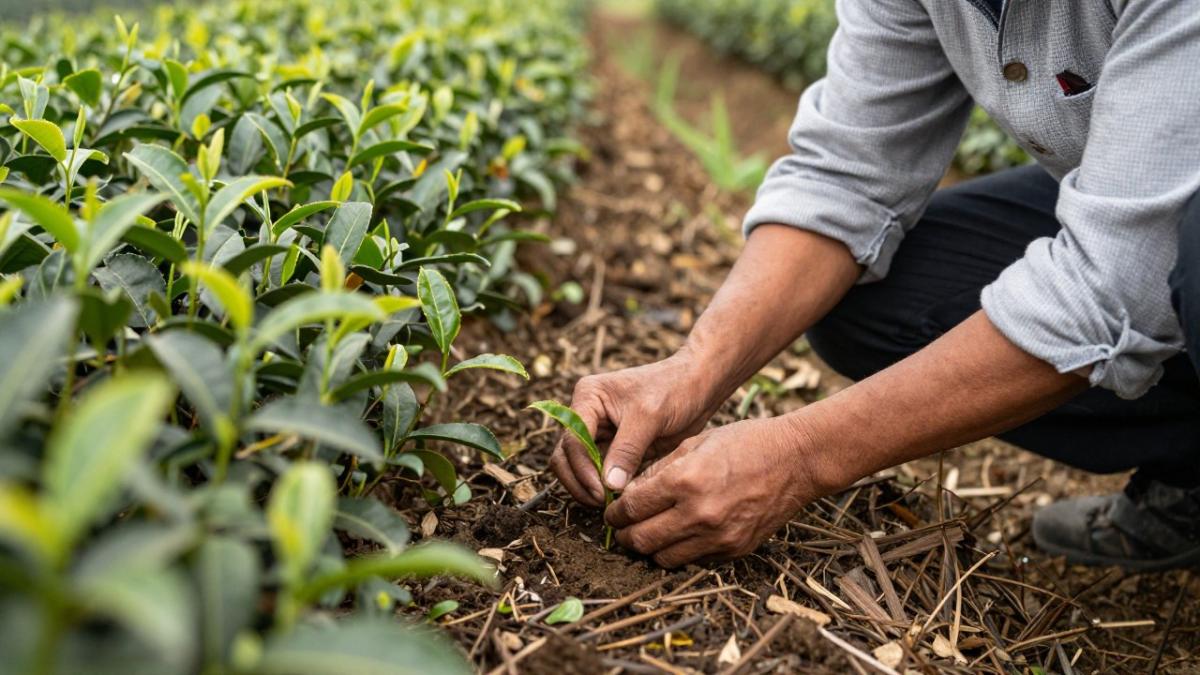
Water quality benefits follow from the same practices. Without synthetic nitrogen inputs, there is less nitrate available to leach into groundwater or wash into streams after heavy rain. Well-managed organic farms also tend to keep buffer strips of native vegetation along waterways, which filter sediment before it moves downstream. Growers who combine these methods can reduce the pressure their farm puts on local water systems.
Biodiversity, Carbon Storage, and the Full Life Cycle of Tea
Biodiversity on organic tea farms is often higher than on conventional ones, since hedgerows, shade trees, and flowering plants are more common. These features give insects, birds, and soil organisms habitat, though the size of the effect depends heavily on the surrounding landscape. A farm bordered by intact forest will support more species than one surrounded by cleared land, regardless of its input regime.
Carbon storage is a real but modest benefit. Soils with higher organic matter hold more carbon, and perennial tea bushes already store carbon in their wood and roots. Organic management can add to that storage, but the amount varies with climate, soil type, and how long practices have been in place. Most practitioners find that soil carbon gains accumulate slowly and are easily reversed if management lapses, so it is a contribution rather than a headline offset.
The full life cycle includes more than the farm, and this is where a lot of environmental claims get shaky. Cultivation is only the first stage. Processing and drying tea leaves require heat, and the fuel source behind that heat, whether wood, gas, or electricity, shapes the footprint of the finished leaf. Packaging adds material and weight: loose leaf tea often uses less packaging than individually wrapped bags, which is one reason the format matters when you weigh your options. Transport depends on whether tea moves by sea or air, and air freight carries a far larger emissions burden per unit of weight. Brewing is the stage most often ignored, yet heating water in a kettle can dominate the energy use of a single cup, especially when more water is boiled than needed. Disposal closes the loop: spent leaves can be composted, while bags made with plastic sealants may not break down.
A complete assessment would count all these stages, and few studies do so for tea specifically. The practical takeaway is that organic certification addresses the cultivation stage well and the rest of the chain barely at all, so a tea can be certified organic and still carry a large footprint from air freight or overpackaging. When you compare products, look for the cultivation standard and the supply-chain choices together rather than treating the seal as a total environmental verdict.
Trade-offs and Limits of Organic Tea Production
Organic production is not free of environmental cost. Lower yields can mean more land is cleared or occupied to reach the same output, and this can offset some gains per unit of tea. Organic farms may also rely on approved inputs such as copper-based products or plant extracts, which have their own environmental considerations if overused.
Social and economic questions add another layer. Organic certification adds cost and paperwork for growers, and whether those costs are shared fairly across the supply chain affects the livelihoods of the people who pick and process the leaves. A balanced view recognizes that environmental and social outcomes are linked, and that a label alone does not settle either one.
How to Identify Certified Organic Tea Before You Buy
Start by looking for the USDA Organic seal on the package, which indicates the product has been certified under the National Organic Program. The seal should appear alongside a certifying agent's information in the labeling. Be cautious with phrases like "natural" or "eco-friendly," which carry no specific standard and cannot replace certification.
Check the ingredient list as well, since a blend may combine organic and non-organic components. Review what a company publishes about its sourcing and whether it names its estate gardens or growing regions. Transparent suppliers tend to explain their certification, their processing and their supply relationships in plain terms. If a claim is not backed by a seal, a certifier or a clear sourcing story, treat it as unverified.
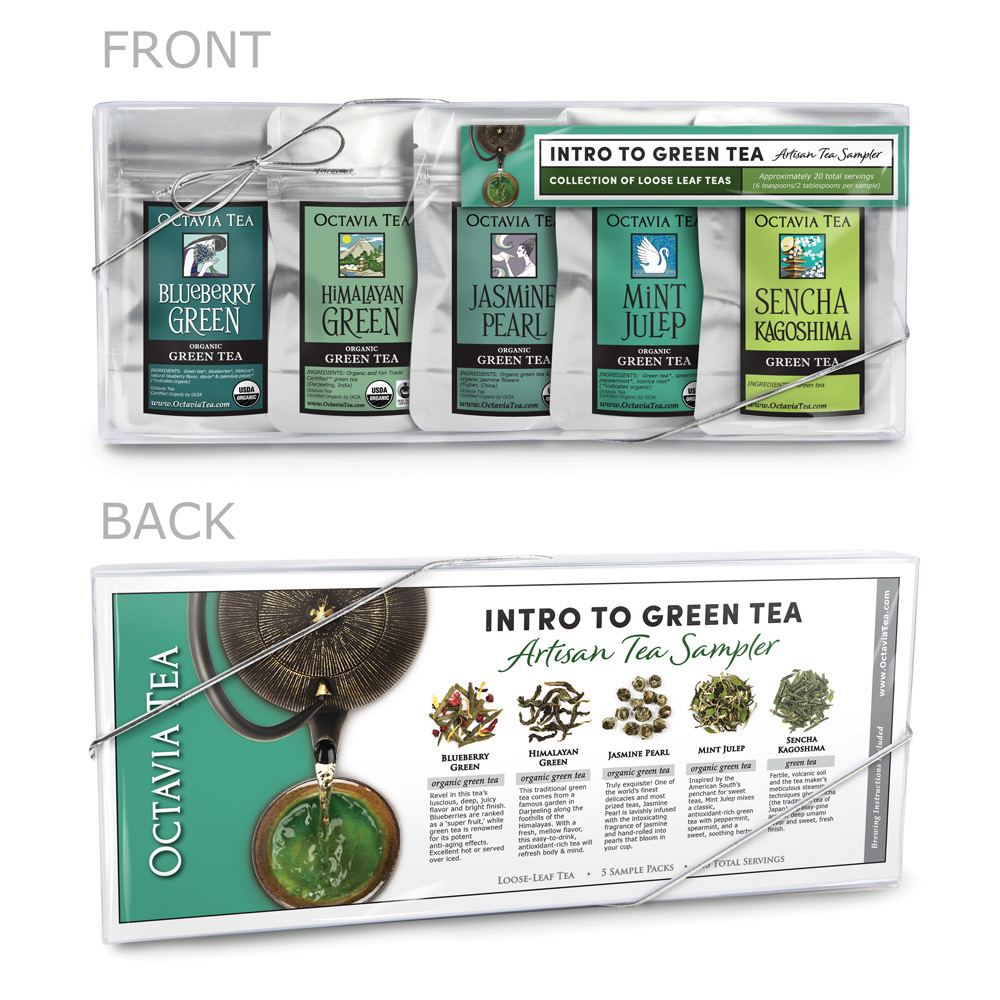
Octavia Tea hand-blends its teas using natural flavor essences and pure essential oils, and holds USDA organic certification. If you want to compare what organic loose leaf looks like in practice, you can start with our Intro to Green Tea sampler to try several styles before committing to a larger order. For a deeper look at how organic loose leaf compares to bagged tea on cost and quality, our organic loose leaf vs. tea bags guide walks through the differences.
Frequently Asked Questions
Why is organic tea better for the environment?
Organic tea production avoids synthetic pesticides, herbicides, and synthetic fertilizers, which reduces chemical runoff into waterways and lowers residue exposure in the surrounding ecosystem. Organic systems also rely on practices such as composting and cover crops that build soil organic matter over time. The overall benefit depends on how each farm is managed, so the environmental case is strongest when it is judged farm by farm rather than assumed from the label alone.
How can I tell if tea is certified organic?
Look for a USDA Certified Organic seal on the package, which indicates the product was produced and handled under USDA National Organic Program standards. Certified products are listed in the USDA Organic Integrity Database, so you can verify a supplier's certification status. Check the product page or ask the seller for the certifier's name if the information is not printed on the package.
Does organic tea have a lower carbon footprint than conventional tea?
Organic farming can store more carbon in soil through higher organic matter, but the net carbon footprint of a cup of tea also includes processing, packaging, and transport. Yields in organic systems can be lower in some cases, which affects the land required per kilogram of tea. A full life-cycle view gives a more accurate picture than looking at farm practices alone.


Octavia Tea Sign In
Create New Account