























Organic Adaptogen Tea vs Regular Herbal Tea for Stress

Last Updated: November 14, 2026
Quick Summary
Organic adaptogen tea is worth it for stress only if you buy it for a calming ritual, not a clinical result. Evidence is ingredient-specific and dose-dependent, and tea is a low-dose format, so choose blends with named adaptogens and a realistic cost per cup.
- Ashwagandha has the largest human literature of the group, though results are mixed across studies.
- Roots and mushrooms usually need a longer steep than delicate leaves, so follow the tin.
- A sampler at $23.00 with about 20 servings works out to roughly $1.15 per cup.
- Rhodiola can feel stimulating, so it suits a morning cup better than an evening one.
- Check for a certification mark on organic labels, not just the word natural.
Table of Contents
- Organic Adaptogen Tea vs Regular Herbal Tea: What's the Difference
- Are Adaptogens Scientifically Proven to Reduce Stress?
- List of Adaptogens and Benefits You'll Find in Tea
- Cost Breakdown: What Organic Adaptogen Tea Actually Costs Per Cup
- Side Effects of Adaptogens and Who Should Skip Them
- How to Choose an Organic Adaptogen Tea That's Worth the Price
- Building Your Stress-Relief Tea Ritual with Octavia Tea
- Frequently Asked Questions
Organic Adaptogen Tea vs Regular Herbal Tea: What's the Difference
Adaptogen tea is a blend built around adaptogenic herbs and roots, plants traditionally used to help the body manage stress and return to balance. Regular herbal tea, by contrast, is usually a single ingredient chosen for flavor or a mild calming effect.
The distinction matters because the two products are priced and sold very differently. An organic adaptogen blend asks you to pay for specific roots and mushrooms, while a plain chamomile or peppermint tea asks you to pay for leaves and flowers. Whether that premium is worth it depends on what you expect the cup to do.
Adaptogens are plant substances, including roots and mushrooms, that supporters say help the body resist physical stress and mental stress. The idea is homeostasis: support rather than suppression.
If you want the deeper comparison on caffeine and calming herbs, our breakdown of herbal tea vs green tea for stress relief covers it.
Are Adaptogens Scientifically Proven to Reduce Stress?
No adaptogen is proven to reduce stress the way a prescription drug is proven for a labeled condition. The honest answer is more useful than that headline, though: evidence quality varies sharply by ingredient and by the outcome you care about, and treating a five-ingredient blend as one thing hides exactly the information you need to decide whether it is worth buying.
The mechanism most often discussed is the body's stress-response axis, the loop that governs cortisol release and the downstream effects on sleep, mood, and energy (Interactions between sleep, stress, and metabolism). That mechanism is plausible and studied, but it is not the same as demonstrated clinical benefit, and the studies that exist differ in herb, extract, dose, duration, and population.
A practical way to read the evidence is ingredient by ingredient and outcome by outcome:
- Ashwagandha has the largest human literature of the group, with trials commonly focused on perceived stress and sleep quality in adults. Results are mixed across studies, and the studied material is usually a standardized root extract, not whole root steeped in water.
- Rhodiola has human trials often framed around fatigue and demanding cognitive or physical tasks. Effects are inconsistent, and the studied extracts are concentrated preparations rather than tea-strength infusions.
- Tulsi (holy basil) has smaller human studies, frequently on stress and mood measures, alongside a long traditional-use record. The evidence base is thinner than ashwagandha's.
- Reishi is studied more for immune and sleep-adjacent outcomes than for stress per se, and much of the human data is preliminary.
- Schisandra rests largely on traditional use and small trials, with less human stress-outcome data than the others.
The National Center for Complementary and Integrative Health is a sensible starting point because it summarizes evidence by ingredient and is candid about where it is thin. What it will not tell you is whether the specific blend in your cup contains a studied dose of any of these, because most tea labels do not disclose extract standardization or milligram amounts.
That is the crux for a buyer. A tea can be pleasant, caffeine-free, and made with real adaptogenic herbs while still delivering far less of any active compound than the trials used. So the fair conclusion is not 'adaptogens do not work' or 'adaptogens work.' It is that the evidence is ingredient-specific and dose-dependent, and a tea is a low-dose delivery format. Buy it for a calming ritual; do not buy it expecting a clinical result, and do not let a long ingredient list stand in for evidence.
List of Adaptogens and Benefits You'll Find in Tea
Here is the short list of adaptogens you will actually find in tea, and what each is traditionally used for.
- Ashwagandha: a root linked to stress support and relaxation; the most studied of the group.
- Tulsi, or holy basil: an aromatic herb associated with calm and mental clarity.
- Rhodiola: a root associated with physical stamina and fatigue.
- Reishi: a medicinal mushroom associated with relaxation and immune support.
- Schisandra: a berry used in herbal blends for balance and liver support.
Two practical notes. First, roots and mushrooms usually need a longer steep than delicate leaves, so follow the tin rather than a generic timer. Second, "adaptogenic" is a marketing category, not a regulated one.
Cost Breakdown: What Organic Adaptogen Tea Actually Costs Per Cup
Roots and mushrooms are slower and more expensive to produce than chamomile flowers, organic certification adds cost at the farm and in record-keeping, and a formulated blend carries more named ingredients than a single-herb bag. That is the honest reason the price is higher.
The value question is not the sticker price. It is cost per cup against how many cups you actually drink, and against what you would otherwise spend to manage stress. A tin that costs more but yields many cups can beat a cheap box you never finish, and both can beat a daily café habit. The comparison below uses our own range as a concrete example; check each product page for current pricing and stated serving counts, since those change.
Option | Price | Approx. servings | Cost per cup |
|---|---|---|---|
Stress-Relieving Teas sampler | $23.00 | ~20 | About $1.15 |
Chamomile Mango tin | $3.00 | Multiple | Lowest |
Berry Lullaby tin | $4.00 | Multiple | Low |
Price
To make that table mean something, compare it on three axes:
- Against plain herbal tea. A single-ingredient chamomile or peppermint bag is the cheapest per-cup option and delivers a mild calming ritual without the adaptogen premium. If that is all you want, the premium is not worth it.
- Against a café drink. A single specialty beverage often costs more than several cups brewed at home, so a tin pays for itself quickly if you replace even a few café runs a week.
- Against other stress-management spending. Compare the per-cup cost with what you spend on other calming purchases; the tea is usually the lower-cost recurring option, which is part of its appeal.
Watch out: per-cup math only works if the label states servings and you actually drink them. A blend you steep once and abandon is the most expensive option on the shelf, and a long ingredient list does not raise the value if the amounts are undisclosed. Divide the tin price by the servings you will genuinely drink, then decide whether the ritual is worth that number to you.
Side Effects of Adaptogens and Who Should Skip Them
Adaptogen side effects are usually mild but real, and some people should skip them entirely.
The most common reports are digestive upset and drowsiness, especially with calming herbs taken during the day. Rhodiola can feel stimulating to some people, so it suits a morning cup better than an evening one. Ashwagandha is the ingredient most often flagged for interactions.
Watch out: if you take thyroid medication, sedatives, or blood pressure medication, or you are pregnant or nursing, talk to your clinician before adding adaptogenic herbs to your routine. This is not a case for guesswork. Herbal blends are not risk-free simply because they are natural.
A safer starting point is a single-ingredient calming tea, then a formulated blend once you know how you respond.
How to Choose an Organic Adaptogen Tea That's Worth the Price
Judge the tin, not the front label. Four checks separate a blend worth its price from a flavored tea with a fashionable word on it.
- Named adaptogens with amounts. The specific roots or mushrooms appear in the ingredient list, not just in the product name.
- Certified organic. Look for a certification mark, not the word "natural."
- Whole ingredients. Whole leaf and whole flower material beats dust and fannings.
- A realistic price per cup. Divide the tin price by the servings you will genuinely drink.
On organic, the label should carry a recognized certification. The USDA Agricultural Marketing Service organic program explains what certified organic actually guarantees, and it is more specific than most shoppers assume. If you want to browse certified options, our organic tea collection is the place to start, and the full stress relief range lets you compare blends side by side.
Building Your Stress-Relief Tea Ritual with Octavia Tea
A ritual beats a single cup. The benefit of adaptogen tea comes as much from the pause as from the plants, so build a routine you will keep.
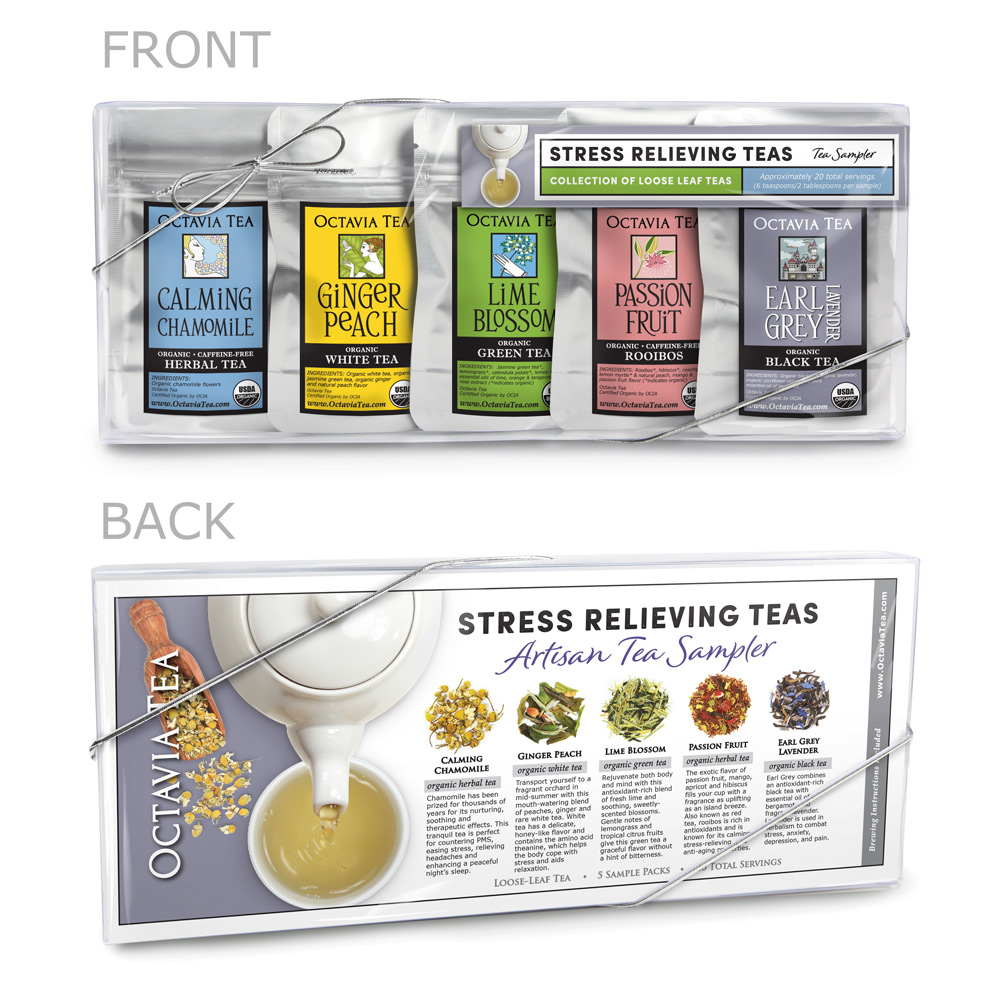
Start with a sampler if you are new to the category. Our Stress-Relieving Teas sampler includes five blends, about 20 servings total, and brewing instructions, so you can find your favorite before committing to a full tin. For evenings, Serene Dream combines valerian root, lavender, spearmint, and chamomile, while Berry Lullaby is a caffeine-free rooibos blend with chamomile. If you want more evening ideas, our roundup of the best herbal teas for evening relaxation goes deeper.
Steep by the tin, not by habit. Then drink it away from a screen, at the same time each day. That consistency is what turns a cup of tea into stress support.
The hardest part of building a tea ritual is not finding a blend. It is finding one you will actually finish. Octavia Tea carries over 120 organic loose leaf teas sourced direct from estate gardens, hand-blended with natural flavor essences and pure essential oils, with no artificial ingredients. Retail orders over $65 ship free. Start with a sampler, find your evening cup, and let the ritual do the rest.
Frequently Asked Questions
Which adaptogen is best for stress?
There is no single best adaptogen for stress. The right pick depends on whether your stress shows up as tension, poor sleep, or low energy. A blended adaptogen tea lets you try several herbs at once, which is a practical starting point before committing to a single ingredient.
Is it safe to drink adaptogen tea every day?
If you take medication, are pregnant, or have a thyroid condition, talk to your doctor before making it a daily habit. Rotating blends and keeping to the recommended brew strength is a sensible approach.
Do stress relief teas actually work, or is it just the ritual?
Both matter. Expect the ritual to help immediately and the herbs to build gradually.
What are the possible side effects of adaptogen tea?
Start with one cup a day, watch how you respond, and check with a healthcare provider if you take prescription medication.
How is adaptogen tea different from regular herbal tea?
Regular herbal tea is any caffeine-free infusion of botanicals, chosen mostly for flavor or a specific effect like chamomile for calm. Adaptogen tea is a subset that features herbs classified as adaptogens, such as ashwagandha, rhodiola, holy basil, and reishi. Many adaptogen blends also include traditional calming herbs, so the categories overlap. The main difference is intent: adaptogen tea is formulated for ongoing stress support, not just a pleasant cup.


Octavia Tea Sign In
Create New Account