























French Breakfast Tea: A Complete Brewing Guide

Table of Contents
- What Is French Breakfast Tea?
- Why Loose Leaf Organic Tea Matters for Breakfast Blends
- Black Tea Brewing Temperature and Steeping Time
- Serving Suggestions and Pairing Ideas
- Caffeine Content and Health Benefits
- Origins and History of French Breakfast Tea
- Sustainability and Ethical Sourcing in Premium Breakfast Teas
- Frequently Asked Questions
Last Updated: September 19, 2026
What Is French Breakfast Tea?
French breakfast tea is a sophisticated black tea blend that captures the essence of a Parisian café, combining bold character with refined notes that distinguish it from standard breakfast teas.
French breakfast tea blends black teas to create a harmonious profile that's both strong and nuanced, a cup that stands up to milk and sugar without losing complexity, yet works beautifully on its own.
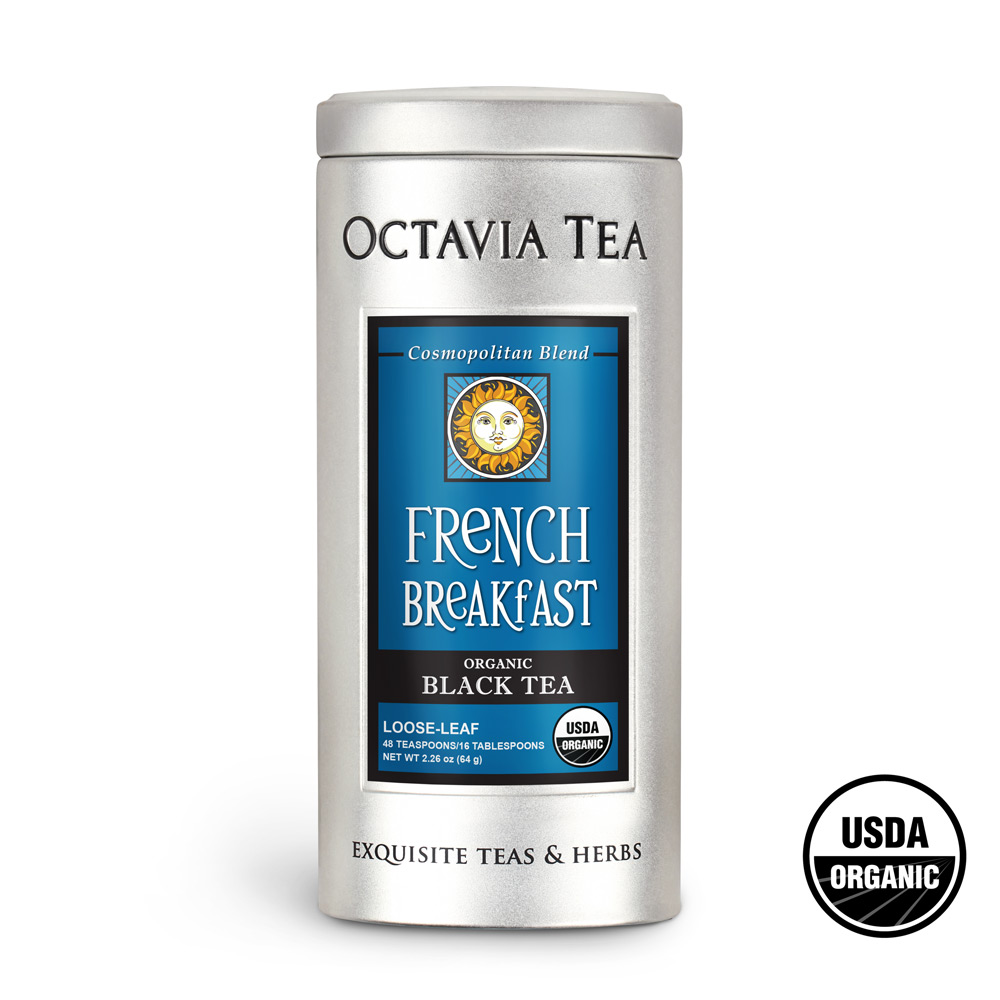
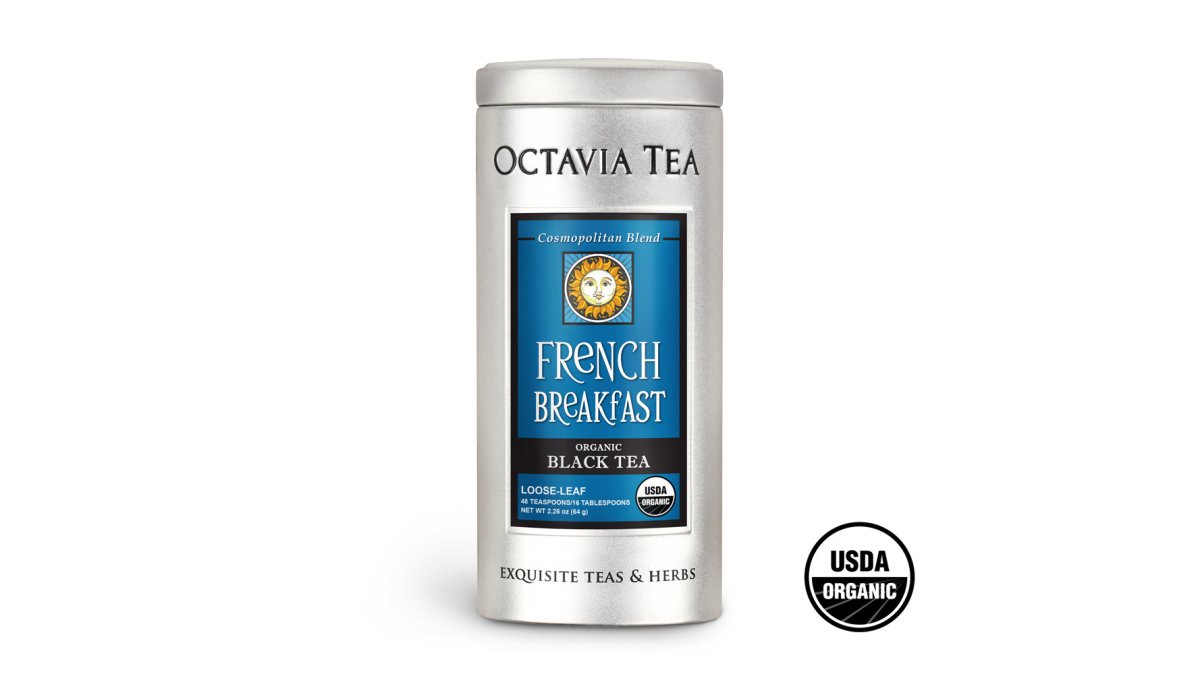
At Octavia Tea, we hand-blend our French Breakfast using natural flavor essences and pure essential oils, creating a full-bodied infusion with notes of vanilla and caramel that evoke the indulgence of French pastry culture. This approach ensures you're getting a premium loose leaf experience without artificial additives.
Flavor Profile and Tasting Notes
French breakfast tea delivers a rich, bittersweet foundation with distinct aromatic layers. The initial taste is malty and bold, followed by subtle floral undertones and creamy vanilla notes that linger on the palate. Many describe the finish as slightly chocolatey with hints of caramel sweetness, making it approachable even for those new to loose leaf tea.
Shorter steeping produces a brighter cup; extended steeping brings out deeper tannins and malty character, making French breakfast tea forgiving for beginners while rewarding enthusiasts.
Ingredients and Tea Blend Composition
A traditional French breakfast blend combines black teas for a malty backbone, brightness, natural sweetness, and smooth texture.
Quality depends on leaf grade: whole leaves extract slowly and create nuanced infusion, while broken particles produce flat, one-dimensional cups. Natural flavor essences enhance the blend without artificial aftertaste.
Why Loose Leaf Organic Tea Matters for Breakfast Blends
Loose leaf organic tea delivers superior flavor and purity: whole leaves retain essential oils and volatile compounds far longer than broken particles in tea bags.
Organic certification ensures tea leaves absorb no pesticide residues. USDA certified organic loose leaf supports your health and sustainable farming practices that protect soil and water quality.
Octavia Tea's organic French breakfast blend sources directly from estate gardens and hand-blends using natural flavor essences and pure essential oils, delivering fresher, more complex cups than commercial alternatives.
Black Tea Brewing Temperature and Steeping Time
Proper brewing transforms French breakfast tea from acceptable to exceptional. Water that's too hot or steeping too long produces a bitter, astringent cup.
Water Quality and Temperature Science
Black tea requires water between 195°F and 205°F, just below boiling. This temperature extracts full flavor without over-extracting tannins that create harsh, mouth-puckering sensation.
Water quality directly impacts flavor. Filtered or spring water produces cleaner, brighter results than tap water; a simple pitcher filter makes a measurable difference.
Steeping Time for Optimal Flavor Extraction
Steep French breakfast tea for 4 to 5 minutes per 8-ounce cup. This timing allows the full-bodied base and vanilla and caramel notes to develop without becoming bitter.
Beyond 5 minutes, steeping extracts excess tannins rather than desirable compounds. For a stronger cup, use more leaves: one teaspoon per 8 ounces of water, adjusted to taste.
Serving Suggestions and Pairing Ideas
French breakfast tea complements both sweet and savory breakfast items without overwhelming delicate flavors.
Pair French breakfast tea with croissants, scones with clotted cream, French toast, smoked salmon on toast, or aged cheddar, the vanilla and caramel notes complement pastry and savory fare alike.
Add milk and honey to soften tannins and enhance vanilla notes, or enjoy French breakfast tea without additions, the natural sweetness stands on its own. Serve in a proper teacup to elevate the experience.
Caffeine Content and Health Benefits
French breakfast tea contains caffeine, ideal for morning energy without excessive stimulation or afternoon jitters.
Caffeine in black tea works synergistically with L-theanine, an amino acid that promotes calm alertness (Theanine and Caffeine Content of Infusions Prepared from Commercial Tea Samples). This combination produces sustained energy without coffee's spike-and-crash cycle, maintaining mental clarity through the morning.
Polyphenols and Antioxidant Profiles
Black tea is rich in polyphenols, particularly theaflavins and thearubigins formed during oxidation (Tea polyphenols for health promotion). Whole-leaf teas deliver significantly higher content than tea bags.
Theaflavins and thearubigins are potent antioxidants studied for their potential role in supporting cardiovascular function and metabolic health.
Steeping time directly affects polyphenol extraction. This is one reason why the recommended 4-5 minute steeping window for French breakfast tea is optimal: it balances flavor development with maximum extraction of beneficial compounds. Over-steeping (beyond 6 minutes) doesn't significantly increase polyphenol content but does extract excess tannins, creating an unpleasantly astringent cup.
Health Research and Cardiovascular Support
Peer-reviewed research has examined black tea's potential health benefits, though it's important to note that tea is a food, not a medicine, and should never replace medical treatment. Studies have found associations between regular black tea consumption and markers of cardiovascular health, including improved arterial function and favorable cholesterol profiles. A meta-analysis of multiple studies found that consuming 2-3 cups of black tea daily was associated with a modest reduction in cardiovascular risk factors.
These benefits are attributed primarily to the polyphenol content, particularly theaflavins. The antioxidant action of these compounds may help reduce oxidative stress in blood vessels and support healthy inflammation responses. However, the effect is modest and most pronounced in people who consume tea regularly over time, not as a single-dose intervention.
Organic Loose Leaf and Compound Retention
Organic loose-leaf tea retains more of these beneficial compounds than conventional tea bags for several reasons. First, whole leaves oxidize more slowly than broken particles, preserving polyphenol structure longer during storage. Second, the absence of pesticide residues means you're consuming only the tea plant's natural compounds, not synthetic chemicals. Third, loose-leaf tea is typically fresher, meaning fewer polyphenols have degraded before brewing.
The ritual aspect of brewing and enjoying French breakfast tea matters for health too. Taking 5-10 minutes for a mindful morning beverage, rather than rushing through a quick caffeine fix, activates the parasympathetic nervous system and sets a calmer tone for your day. This intentional practice supports mental wellness and stress resilience, benefits that extend beyond the tea's chemical composition to the behavior itself.
Origins and History of French Breakfast Tea
French breakfast tea emerged in the 19th century as a deliberate departure from British breakfast tea culture, reflecting broader differences in how the two nations approached the ritual and flavor of morning tea. To understand French breakfast tea, it helps to first understand what it was designed not to be.
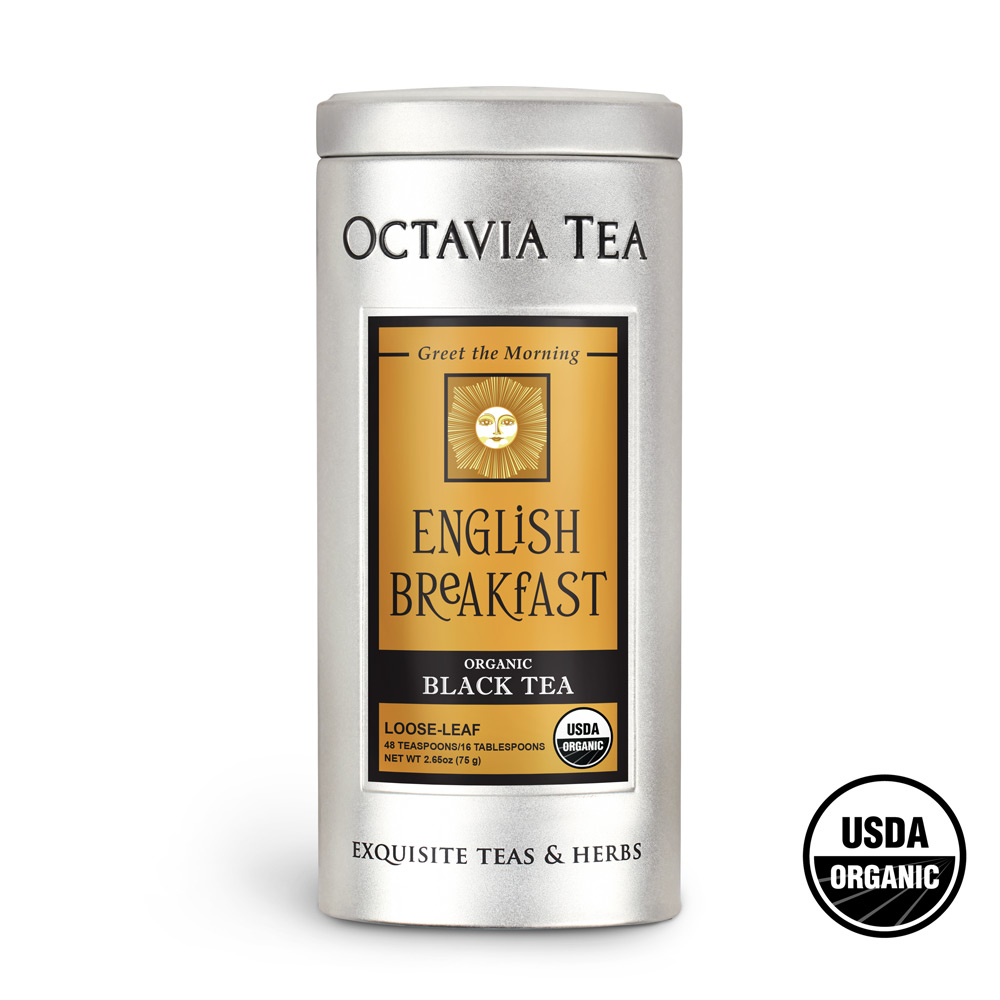
British breakfast tea, which became the dominant style in the mid-1800s, prioritizes boldness and briskness. English breakfast blends typically rely heavily on black teas chosen for their full body, malty character, and ability to cut through milk and sugar without losing presence. The British approach treated tea as a stimulating, no-nonsense morning beverage, strong enough to wake you, robust enough to pair with hearty breakfast foods like eggs, bacon, and toast. Irish breakfast tea took this formula even further, using even more black tea for additional punch.
The French, by contrast, developed a more refined aesthetic that balanced strength with elegance. Rather than maximizing boldness, French breakfast tea seeks harmony. The blend combines black teas for body, brightness and subtle dryness, and often natural sweetness and smooth texture. This approach creates a tea that feels substantial without dominating the palate, a cup that complements rather than overpowers the delicate flavors of French pastry and café culture.
The name "French breakfast tea" itself is somewhat of a marketing convention. The blend wasn't necessarily created in France, nor was it exclusively consumed at French breakfasts. Rather, it represents a French aesthetic, restraint, balance, sophistication, applied to the British tradition of blended black tea. European tea merchants in the late 1800s and early 1900s capitalized on this distinction, marketing the blend to consumers who wanted the energizing benefits of black tea without the aggressive character of English breakfast. The style gained particular popularity where café culture and pastry traditions made a more delicate, nuanced tea the natural choice.
What truly distinguishes French breakfast from its English and Irish cousins is the emphasis on smoothness and subtle flavor notes over pure strength. An English breakfast blend might feature a pronounced malty bite and assertive tannin structure. A French breakfast blend, by contrast, prioritizes a creamy mouthfeel, gentle sweetness, and aromatic complexity. The vanilla and caramel notes often added to modern French breakfast blends echo this philosophy, they soften the tea's natural astringency and suggest indulgence rather than utility.
This historical distinction matters because it explains why French breakfast tea appeals to a different drinker. If you find English breakfast too aggressive or Irish breakfast too intense, French breakfast offers a middle path: a black tea with real substance and caffeine content, but one that invites contemplation rather than demanding attention.
Sustainability and Ethical Sourcing in Premium Breakfast Teas
The tea industry's environmental and social impact is significant. Conventional tea farming often relies on heavy pesticide use and monoculture practices that degrade soil and reduce biodiversity. Premium organic loose leaf tea addresses these concerns through farming methods that build soil health, support wildlife, and eliminate synthetic chemicals.
Frequently Asked Questions
What is the difference between French breakfast tea and English breakfast tea?
French breakfast tea typically features lighter, more delicate black teas with floral and vanilla notes, often blended to complement morning pastries. English breakfast is traditionally a robust, full-bodied Assam blend designed to pair with hearty breakfasts and milk. French breakfast emphasizes aromatic complexity, while English breakfast prioritizes bold strength and malty character.
How should you brew the perfect cup of loose leaf organic tea like French breakfast?
Use water heated to the appropriate temperature and steep loose leaf French breakfast tea for 3-5 minutes. Start with one teaspoon per 8 ounces of water. Loose leaf organic tea delivers fuller flavor extraction than bags because the leaves expand freely. Adjust steeping time based on preference: shorter for delicate, lighter notes; longer for deeper, more robust flavor.
Is French breakfast tea caffeinated?
Yes, French breakfast tea is caffeinated because it's made from black tea leaves. The caffeine content provides an energizing lift without the intensity of coffee, making it ideal for morning rituals.
Why choose loose leaf organic tea over tea bags for breakfast blends?
Loose leaf organic tea offers superior flavor, aroma, and antioxidant content because whole leaves release their essential oils more completely during steeping. Organic certification ensures no synthetic pesticides or artificial additives. Loose leaf blends like French breakfast showcase complex flavor notes—vanilla, caramel, and floral undertones—that tea bags cannot match due to space constraints and broken leaf particles.


Octavia Tea Sign In
Create New Account