























How to Brew Perfect Loose Leaf Tea: 2026 Guide

Table of Contents
- What You'll Need Before You Brew Loose Leaf Tea
- Types of Tea Infusers and Which to Use
- Water Quality and Temperature: The Variables That Matter Most
- Loose Leaf Tea Brewing Ratios: How Much Tea Per Cup
- Steeping Times for Black vs Green Tea (and Every Type In Between)
- Step-by-Step: How to Brew Perfect Loose Leaf Tea
- Troubleshooting Bitter, Weak, or Off-Tasting Tea
- Cold Brewing Loose Leaf Tea: A Different Approach Worth Knowing
Last Updated: August 25, 2026
Brewing loose leaf tea sounds simple until your first cup tastes like bitter bark. At Octavia Tea, we hear this constantly from people switching from tea bags. The good news: every common brewing mistake has a straightforward fix. This guide covers water temperature, steeping time, infuser selection, ratios, and troubleshooting tricks that separate a mediocre cup from an exceptional one.
The biggest misconception is that loose leaf tea is complicated. It isn't. But it is unforgiving of a few specific variables, temperature and steep time chief among them. Get those right, and the rest falls into place.
What You'll Need Before You Brew Loose Leaf Tea
Before you steep a single leaf, having the right equipment makes the difference between frustration and success.
The essentials:
- A tea kettle, ideally with temperature control
- A brewing vessel (teapot, mug, or carafe)
- An infuser or strainer
- Quality loose leaf tea
- Fresh, cold water
Variable-temperature kettles let you hit specific targets for different tea types. If you're working with a standard kettle, a basic kitchen thermometer does the job.
Choosing Your Brewing Vessel
Your brewing vessel affects both flavor and heat retention. Ceramic teapots retain heat well, making them ideal for black teas and oolongs. Glass teapots offer visual pleasure of watching leaves unfurl and are better suited for shorter steeps or green and white teas. A mug with a basket infuser is the most practical single-serve option.
One critical detail most guides skip: pre-warm your vessel by rinsing it with hot water before brewing. A cold ceramic teapot will drop your water temperature by several degrees the moment you pour, affecting extraction.
Types of Tea Infusers and Which to Use
The infuser you choose shapes how well the tea extracts.
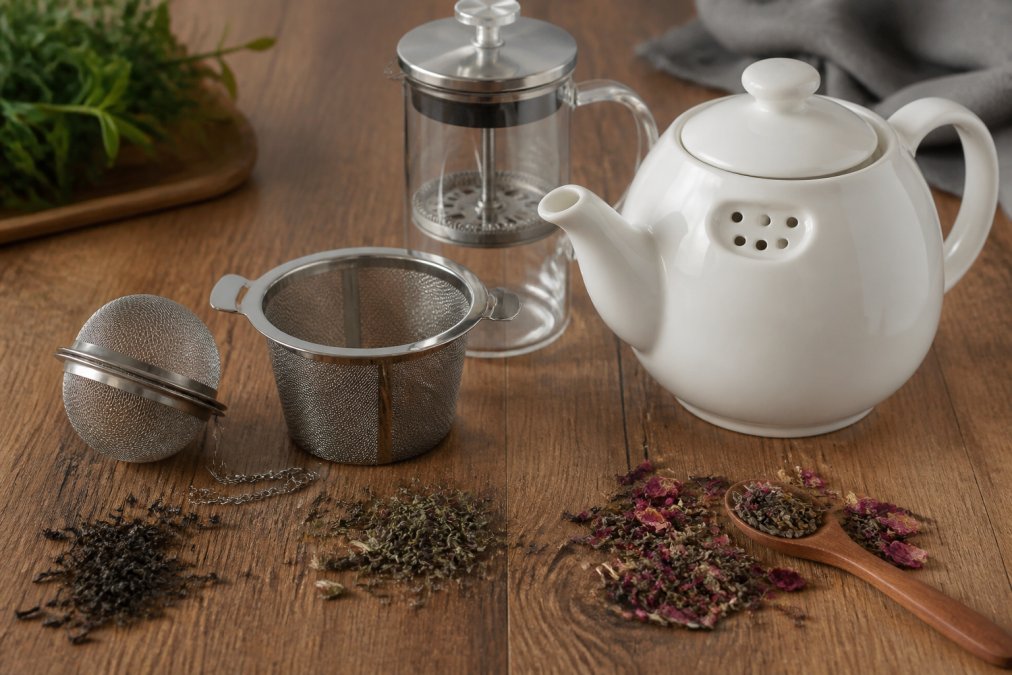
Basket infusers are the best all-purpose option. They give leaves room to expand fully; cramped leaves don't extract properly and produce weak, flat cups. Mesh ball infusers are popular but too small for most loose leaf teas, restricting expansion and producing uneven extraction. French press works surprisingly well for tea, giving leaves full freedom and keeping them separated from liquid once steeping is done. Built-in teapot strainers vary in quality; look for fine mesh to prevent leaf particles from continuing to extract in the cup.
Regardless of infuser type, separate the liquid from leaves the moment steeping is complete. Leaving leaves in contact with brewed tea is one of the most common causes of bitterness.
Water Quality and Temperature: The Variables That Matter Most
Most bitter tea isn't caused by bad leaves. It's caused by water that's too hot or too mineral-heavy.
According to the Tea Association of the USA's brewing guidance, water that's too hard or heavily chlorinated suppresses delicate aromatic compounds and amplifies astringency. Filtered water is the baseline recommendation. Water with moderate mineral content, particularly calcium and magnesium, can enhance extraction and body, while distilled water produces a flat, lifeless cup.
Temperature is critical because heat drives tannin extraction, the compounds responsible for bitterness. Different tea types require different temperatures to extract flavor without over-extracting tannins.
| Tea Type | Water Temperature | Notes |
|---|---|---|
| White tea | 160-175°F | Delicate leaves; high heat destroys flavor |
| Green tea | 170-185°F | Never use boiling water; causes bitterness |
| Oolong tea | 185-205°F | Varies by oxidation level |
| Black tea | 200-212°F | Near boiling or full boil |
| Herbal/tisane | 208-212°F | Full boil is fine; no true tea leaves |
At higher elevations, water boils at a lower temperature, which affects extraction for teas needing near-boiling heat.
Loose Leaf Tea Brewing Ratios: How Much Tea Per Cup
The standard ratio is 1 teaspoon of loose leaf tea per 8 ounces of water, but this is a starting point. Leaf density varies significantly by tea type; a teaspoon of tightly rolled oolong weighs considerably more than a teaspoon of airy white peony leaves. For precision, measure by weight: 2-3 grams per 8 ounces is reliable across most tea types.
Ratio adjustments by tea type:
- White and green teas: 2 grams per 8 oz
- Black teas: 2-3 grams per 8 oz
- Oolong teas: 3-5 grams per 8 oz
- Herbal blends: 1-2 teaspoons per 8 oz
A common mistake is doubling leaf quantity to get a stronger cup. This usually produces bitterness rather than depth. If you want stronger brew, extend steep time by 30 seconds before increasing tea amount.
Steeping Times for Black vs Green Tea (and Every Type In Between)
Steeping times differ significantly by tea type.
Black tea is fully oxidized, making it more tolerant of heat and longer steeps. Most black teas perform well at 3-5 minutes. Going beyond 5 minutes reliably produces bitterness from over-extracted tannins.
Green tea is unoxidized and far more sensitive. Most green teas need only 1-3 minutes at lower temperatures. The most common mistake is over-steeping at too high a temperature, producing harsh, grassy bitterness. A 2-minute steep at 175°F is a safe starting point.
White tea is the most delicate. Steep for 2-4 minutes at 165-175°F. White teas can often be re-steeped 2-3 times, with each infusion producing a slightly different flavor profile.
Oolong tea sits between green and black in oxidation. A general range of 2-4 minutes at 185-205°F covers most oolongs.
Herbal tisanes are most forgiving. Most herbs and flowers benefit from a full 5-7 minutes to extract their full aroma and flavor.
According to the Specialty Food Association's tea category overview, longer steeps extract more caffeine alongside more flavor compounds, which matters if you're sensitive to caffeine.
Step-by-Step: How to Brew Perfect Loose Leaf Tea
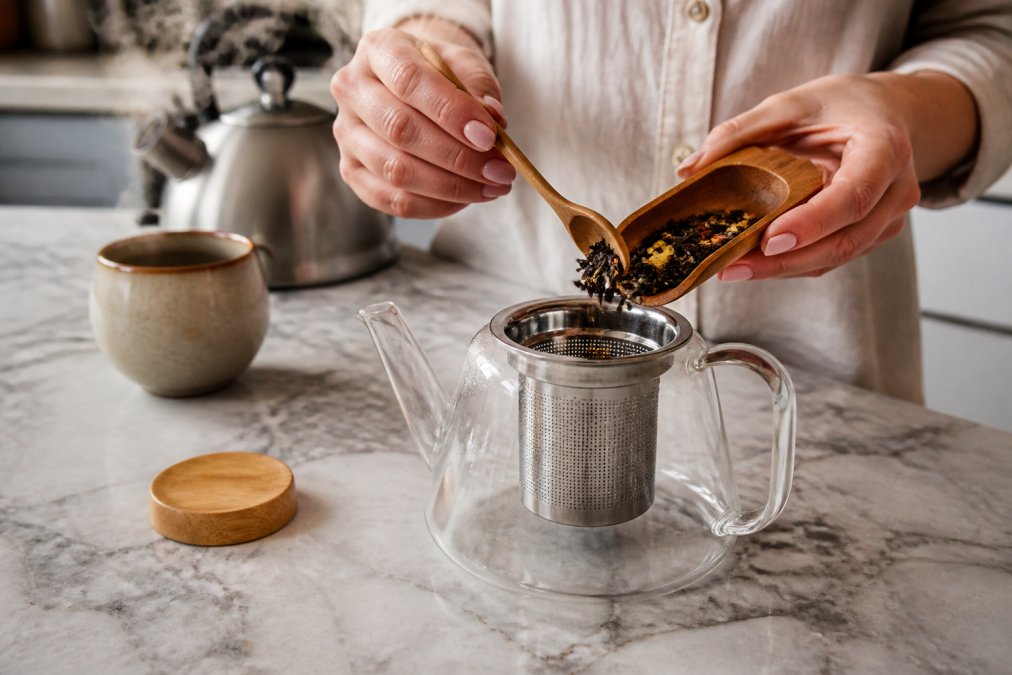
Here's the complete process, start to finish. Adjust temperature and time using the tables above.
-
Heat your water to the correct temperature. Use a variable-temperature kettle if available. If not, bring water to a boil and let it cool for 2-3 minutes for green and white teas.
-
Pre-warm your brewing vessel. Pour a small amount of hot water into your teapot or mug, swirl it, and discard. This prevents temperature drop at the critical moment of steeping.
-
Measure your loose leaf tea. Use 1 teaspoon or 2-3 grams per 8 ounces of water. Place the tea in your infuser or basket strainer.
-
Pour water over the leaves. Pour gently to start extraction evenly.
-
Steep for the appropriate time. Use a timer. Even 30 extra seconds can shift a green tea from bright to harsh.
-
Remove the infuser promptly. The moment steeping is complete, remove the leaves from the liquid.
-
Taste before adding anything. A well-steeped cup from quality loose leaf tea often needs nothing added.
Troubleshooting Bitter, Weak, or Off-Tasting Tea
Tea tastes bitter or astringent: The cause is almost always over-extraction. Either water was too hot, the steep was too long, or both. For green and white teas, water temperature is usually the culprit. For black teas, steep time is more often the issue. Reduce temperature by 10°F or cut steep time by 30-60 seconds and re-test.
Tea tastes weak or watery: You've under-extracted. Try increasing steep time before increasing leaf quantity. Also check your water temperature; water that's too cool will under-extract even with generous amounts of tea.
Tea tastes flat or dull: This usually points to water quality. Heavily chlorinated or very soft water strips aromatic complexity from tea. Switch to filtered water and the difference is often immediate. Stale tea leaves are the other cause.
Tea tastes grassy or vegetal (green teas specifically): This is a temperature problem. Water above 185°F on delicate green tea produces chlorophyll-heavy, grassy notes. Lower your temperature and the issue resolves.
The vessel material factor: Metal infusers and brewing vessels can impart a metallic note to delicate teas. Glass and ceramic are neutral.
Cold Brewing Loose Leaf Tea: A Different Approach Worth Knowing
Cold brewing produces a fundamentally different cup from hot brewing. Cold water extracts flavor compounds slowly over several hours rather than quickly at high temperatures. Because tannins are less soluble in cold water, the resulting brew is naturally smoother and less astringent, making cold brew particularly well-suited to green and white teas.
Cold brew method:
- Use a 1:15 to 1:20 ratio of tea to cold water (roughly 1 tablespoon per 12-16 oz)
- Combine tea and cold filtered water in a glass jar or carafe
- Refrigerate for 6-12 hours
- Strain through fine mesh strainer and serve over ice
A French press is an ideal vessel for cold brewing, providing clean separation at the end of the steep.
According to the National Coffee Association's cold brew research, cold brewing methods have grown significantly in consumer preference for both coffee and tea, largely because the resulting beverage is perceived as smoother and more approachable. For anyone who has found hot-brewed green tea too bitter, cold brew is worth trying before writing off the tea type entirely.
Octavia Tea's selection of over 120 organic loose leaf teas includes varieties that work particularly well as cold brews, including white teas and lightly oxidized oolongs. All are USDA certified organic and hand-blended using only natural flavor essences and pure essential oils, which means no artificial ingredients affecting the clean, cold-brew flavor profile.
The hardest part of brewing loose leaf tea is the first few cups, when variables feel uncertain and mistakes taste obvious. Once you've dialed in the right temperature and steep time for your preferred tea types, the process becomes second nature. Octavia Tea offers a curated range of over 120 organic loose leaf teas sourced directly from estate gardens, with USDA certified organic certification and no artificial ingredients, so the quality of what's in your cup is never in question. Add to Bag and start brewing with leaves worth the effort.
Frequently Asked Questions
How much loose leaf tea should I use for one cup of water?
The standard starting point is 1 teaspoon (roughly 2-3 grams) of loose leaf tea per 8 ounces of water. Full-leaf teas like white or oolong expand significantly when wet, so they need more room and sometimes a slightly larger dose. Finely cut teas or fannings extract faster and may need slightly less. Adjust from there based on your flavor preference, more tea means a stronger, more concentrated brew.
Can you steep loose leaf tea too long?
Yes. Over-steeping releases excess tannins, which create a bitter, astringent taste. Black tea becomes noticeably harsh after 5 minutes; green tea can turn unpleasant in as little as 3 minutes at high temperatures. The fix is simple: set a timer and remove or decant the leaves as soon as steeping is done. If you prefer a stronger flavor, use more tea rather than a longer steep time.
Does water temperature affect the taste of loose leaf tea?
Water temperature is one of the biggest variables in brewing loose leaf tea. Boiling water (212°F) works well for black and herbal teas, but it scorches green, white, and oolong leaves, pulling out bitter compounds before the delicate flavor profile develops. Green tea brews best between 160°F and 180°F; oolong between 185°F and 205°F. Using the correct temperature preserves aroma and keeps bitterness in check.
What equipment do I need to start brewing loose leaf tea?
You need three things: a kettle (ideally with temperature control), an infuser or strainer to hold the leaves, and a brewing vessel like a teapot, mug, or carafe. A basic mesh basket infuser that sits inside your mug is the most beginner-friendly option and costs very little. From there, a kitchen scale helps you dial in brewing ratios accurately, though a measuring teaspoon works fine when starting out.
This article was written using GrandRanker


Octavia Tea Sign In
Create New Account