























Loose Leaf Tea Wholesale Suppliers: 2026 Guide

Table of Contents
- How to Compare Loose Leaf Tea Wholesale Suppliers
- Top Loose Leaf Tea Wholesale Suppliers for 2026
- 1. Octavia Tea, Estate-Sourced Organic Blends With No Artificial Ingredients
- 2. Adagio Teas Wholesale, 200+ Blends With Custom Blending Options
- 3. Art of Tea, Menu Development Support for Food Service
- 4. Harney & Sons, 300+ Varieties Including Pyramid Sachets
- 5. Tea Forté, Whole Leaf Pyramid Infusers for Upscale Hospitality
- 6. Teatulia Organic Teas, Single-Garden Sourcing With Sustainable Packaging
- 7. DAVIDsTEA Wholesale, Wellness-Focused Teas With Compostable Sachets
- Profit Margin Analysis for Cafes Selling Loose Leaf Tea
- Private Label Tea Manufacturers: What to Look For
- How to Start a Tea Business: Sourcing and Setup
- Best Practices for Tea Storage to Protect Freshness
- Conclusion
Last Updated: August 26, 2026
Finding a reliable loose leaf tea wholesale supplier shapes your brand's tea program. The wrong partner means stale inventory and inconsistent quality. The right one gives you a menu that sells itself. At Octavia Tea, we've spent two decades sourcing directly from estate gardens across the world's top tea-producing regions. Below, this guide covers how to evaluate suppliers, and the operational details most buyers overlook.
Quick Picks:
- Best Overall: Octavia Tea, 120+ USDA certified organic blends, estate-direct sourcing, low minimums
- Best for Variety: Harney & Sons, 300+ varieties including pyramid sachets and loose leaf
- Best for Menu Development: Art of Tea, $75 minimum order with hands-on menu consulting
- Best for Sustainability: Teatulia Organic Teas, single-garden sourcing, 91% compostable packaging
- Best for Upscale Hospitality: Tea Forté, whole leaf pyramid infusers with gift-ready packaging
How to Compare Loose Leaf Tea Wholesale Suppliers
Choosing a wholesale supplier comes down to three factors: certification integrity, sourcing transparency, and minimum order flexibility. Price per pound matters, but a supplier with no organic documentation or opaque sourcing practices will cost you more in customer trust than you'll save on unit cost.
Organic and Fair Trade Certification
Organic certification verifies that tea was grown without synthetic pesticides, herbicides, or fertilizers under the USDA National Organic Program. For food service operators, stocking USDA certified organic teas signals credibility to health-conscious customers. Fair Trade certification confirms farmers received fair wages and worked under safe conditions. When evaluating suppliers, ask for current certificates, not just logos on a website, certificates have expiration dates.
Minimum Order Quantity and Volume Discounts
Minimum order quantity separates the accessible from the impractical. Many suppliers set minimums that work for large distributors but price out smaller cafes or boutique retailers. The practical range for food service operators is a single kilogram of loose leaf or a flat case of packaged goods. Always ask: what's the reorder minimum, not just the opening order minimum? Those two numbers are often different.
Top Loose Leaf Tea Wholesale Suppliers for 2026
The suppliers below represent strong options across organic certification, sourcing transparency, format flexibility, and wholesale support.
1. Octavia Tea, Estate-Sourced Organic Blends With No Artificial Ingredients
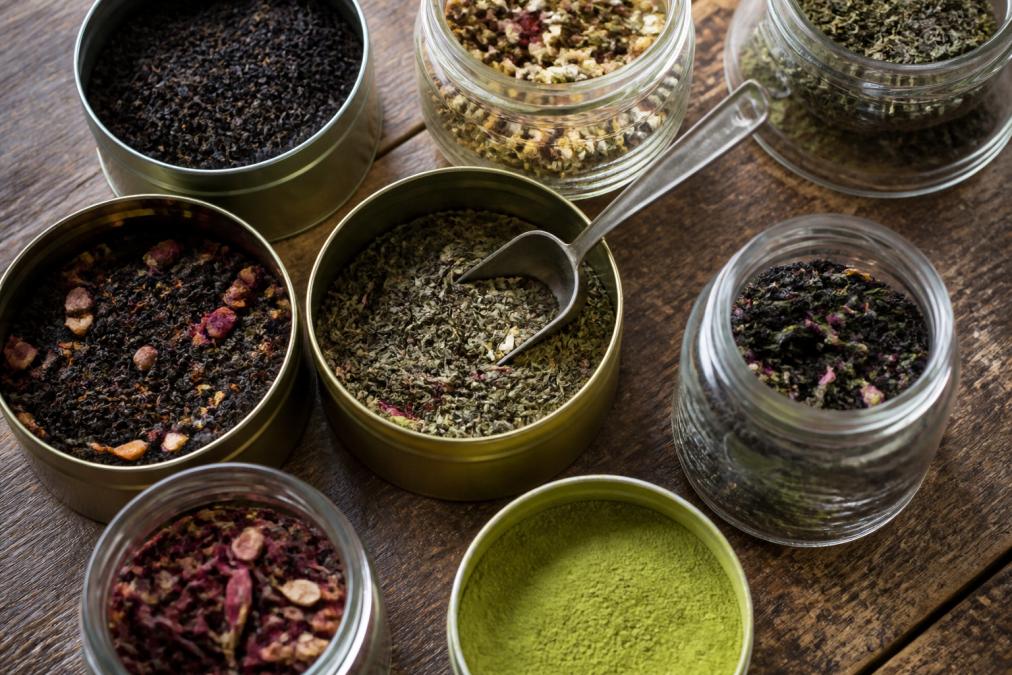
Octavia Tea is a top pick for wholesale buyers prioritizing verified organic quality, supply chain transparency, and curated selection. With over 120 USDA certified organic loose leaf teas sourced directly from estate gardens, Octavia Tea offers a wholesale program built around freshness and integrity.
Every blend uses only natural flavor essences and pure essential oils, no artificial ingredients. That distinction matters: many "natural" teas use synthetic flavor compounds that technically qualify as natural under labeling law but don't align with what health-conscious customers want. The wholesale program serves retailers, cafes, spas, and specialty grocery stores with low minimums. Wholesale partners receive marketing support.
Best for: Specialty retailers, cafes, spas, and gourmet grocery stores seeking estate-sourced organic teas with marketing support and low entry minimums.
2. Adagio Teas Wholesale, 200+ Blends With Custom Blending Options
Adagio Teas Wholesale offers over 200 bestselling blends spanning black, green, oolong, white, and herbal varieties, sourced directly from artisan growers. The wholesale minimum is approachable: one kilogram of loose leaf tea or a case of teaware. The custom blending program lets operators create signature teas with low minimums on custom work, making this accessible for smaller accounts.
Best for: Tea shops, hotels, and restaurants needing wide variety with flexible ordering.
3. Art of Tea, Menu Development Support for Food Service
Art of Tea stands out for food service operators wanting more than product. Their wholesale program includes menu development support, education, training, and tasting notes. The $75 minimum order is one of the lowest in the premium segment. Teas are organic, award-winning, and directly sourced.
Best for: Cafes, restaurants, hotels, and spas wanting hands-on support building a tea menu.
4. Harney & Sons, 300+ Varieties Including Pyramid Sachets
Harney & Sons brings the deepest catalog: over 300 varieties including pure teas, blends, flavored teas, luxury silken pyramid sachets, individually wrapped teabags, and bulk loose tea. Sourcing spans the finest tea gardens worldwide with Fair Trade Certified options. Wholesale orders can be placed through platforms like Upstock, simplifying reordering.
Best for: Boutique hotels, luxury lodges, fine food retailers, and premiere spas needing many formats and a recognized brand name.
5. Tea Forté, Whole Leaf Pyramid Infusers for Upscale Hospitality
Tea Forté's product is visually distinct: whole leaf tea in silken pyramid infusers with packaging designed as a premium retail or gifting item. If your business model includes retail display or gift sets, the presentation quality here is unmatched. The SELECT program allows buyers to choose from popular blends and box sizes, including Event Boxes with 40 infusers.
Best for: Upscale hotels, spas, and boutique retailers where presentation quality is part of the product experience.
6. Teatulia Organic Teas, Single-Garden Sourcing With Sustainable Packaging
Teatulia operates from a single garden in Bangladesh, providing genuinely traceable sourcing rather than aggregated from multiple unnamed origins. All teas are 100% certified organic and ethically sourced. The packaging is 91% compostable and recyclable, offering the strongest sustainability profile on this list. Wholesale formats include loose leaf in 16 oz. resealable foil bags and unwrapped pyramid tea bags in bulk.
Best for: Culinary professionals, college dining halls, and operators for whom packaging sustainability is non-negotiable.
7. DAVIDsTEA Wholesale, Wellness-Focused Teas With Compostable Sachets
DAVIDsTEA's wholesale program covers over 40 tea flavors with strong wellness orientation, including organic and garden-to-cup options. Fully compostable, individually wrapped sachets address both convenience and sustainability, appealing to offices, hotels, and food service operators needing portion control without single-use plastic waste.
Best for: Grocery stores, pharmacies, offices, spas, and hotels seeking wellness-oriented teas with sustainable packaging.
Supplier | Formats Available | Organic Certified | Minimum Order | Best For |
|---|---|---|---|---|
Octavia Tea | Loose leaf | USDA certified | Low minimums | Cafes, spas, specialty retail |
Adagio Teas | Loose leaf, pyramid bags, teaware | Yes | 1 kg or 1 case | Tea shops, hotels, restaurants |
Art of Tea | Loose leaf, bagged, iced tea | Yes | $75 | Food service, menu development |
Harney & Sons | Loose leaf, pyramid sachets, tins | Fair Trade options | Inquiry required | Hotels, luxury lodges, fine retail |
Tea Forté | Pyramid infusers, gift sets | Yes | Inquiry required | Upscale hospitality, gifting |
Teatulia | Loose leaf, pyramid bags | 100% certified | Inquiry required | Sustainable operators, dining |
DAVIDsTEA | Sachets, loose leaf | Yes | Inquiry required | Offices, spas, grocery |
Profit Margin Analysis for Cafes Selling Loose Leaf Tea
Loose leaf tea is one of the highest-margin beverage categories a cafe can carry. Wholesale bulk pricing is significantly lower per serving than pre-packaged teabags, and premium whole leaf tea can often be steeped more than once, yielding two to three cups from a single 8-gram serving.
The pricing lever most cafes underuse is tiered menu positioning. Offering three to four price points across your tea menu, from approachable herbals to premium single-estate black tea or matcha, captures wider customer spending without requiring different preparation infrastructure.
Private Label Tea Manufacturers: What to Look For
Private label tea manufacturers allow businesses to sell tea under their own brand name without operating a blending facility. Key criteria when evaluating manufacturers are certification transfer, minimum batch sizes, and ingredient transparency.
Certification transfer means the manufacturer's organic or Fair Trade certification extends to your private label product. Not all manufacturers offer this. Confirm this in writing before signing any agreement. Minimum batch sizes vary widely, some require hundreds of kilograms per SKU, which is impractical for boutique retailers. A manufacturer who can't tell you the garden origin of their base teas is one whose supply chain you cannot verify.
How to Start a Tea Business: Sourcing and Setup
Starting a tea business requires fewer upfront resources than most food and beverage ventures, but sourcing decisions made in the first six months determine whether the business scales or stalls. Direct-from-garden sourcing produces fresher, more consistent product than multi-step distribution chains. Proper storage and handling conditions are essential to maintaining quality and safety.
Pyramid Tea Bags vs. Loose Leaf: Choosing the Right Format
Loose leaf tea offers the highest quality ceiling: whole leaf and large-cut teas steep more fully, release more complex flavor compounds, and allow customers to see and smell the product before brewing. Pyramid sachets close the gap on quality while adding operational convenience. Whole leaf pyramid infusers allow full leaf expansion inside a sachet format, reducing preparation time without sacrificing cup quality.
The practical answer for most operators: carry both. Use loose leaf for your signature program and in-cafe brewing, and stock pyramid sachets for table service, hotel amenity packages, or retail display.
Teaware and Brewing Equipment Calibration
Teaware selection and brewing calibration determine whether you preserve the quality you paid for in sourcing. Black tea brews best at a full rolling boil. Green tea requires water between 160°F and 175°F; hotter water produces astringency that obscures natural sweetness (peer-reviewed research). Oolong teas typically brew at 185°F to 205°F depending on oxidation level. White tea brews at 170°F to 180°F.
For cafes, a temperature-controlled kettle eliminates guesswork. Steep time should be posted at the station. Leaf-to-water ratio for most loose leaf teas runs approximately 2 to 3 grams per 8 oz. of water.
Best Practices for Tea Storage to Protect Freshness
Proper tea storage is the difference between a premium product and a stale one. Loose leaf tea is sensitive to light, heat, moisture, and odor absorption. Exposure to any of these degrades the volatile aromatic compounds that define tasting notes.
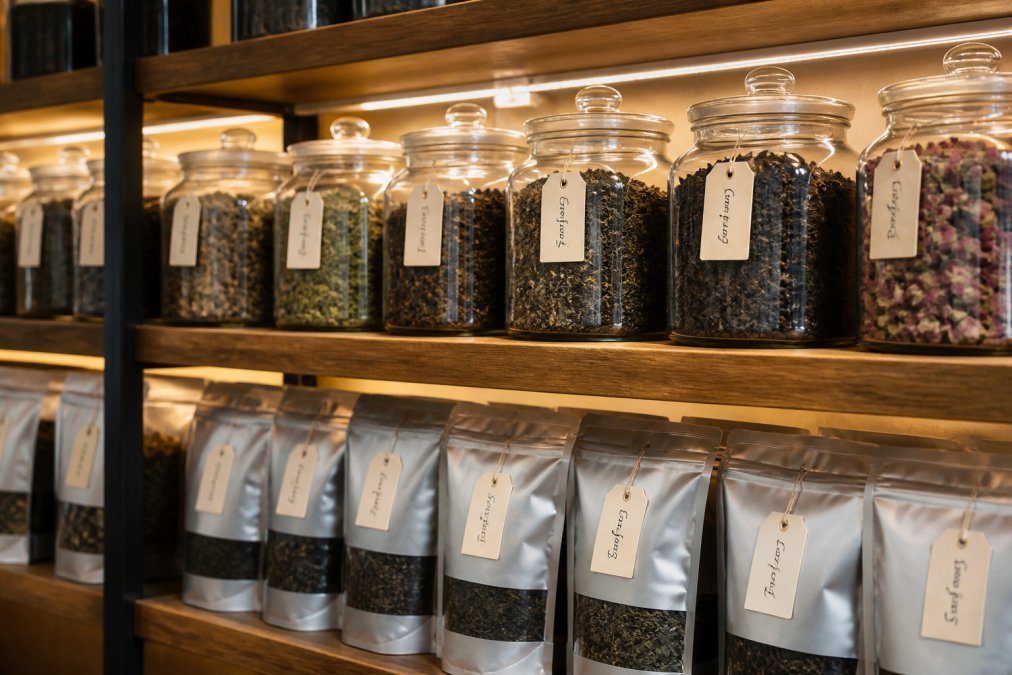
Airtight containers are non-negotiable. Foil-lined bags with resealable closures or opaque tins with tight-fitting lids protect against moisture and light. Keep storage away from heat sources and direct sunlight. Oxidized teas like black tea and pu-erh maintain quality for 18 to 24 months under ideal conditions (peer-reviewed research). Green teas and white teas are more delicate and best used within 12 months of harvest.
For food service operators, order quantities you'll turn within three to four months, store in a temperature-controlled environment away from the kitchen line, and label containers with the receipt date.
Tea Type | Optimal Brew Temp | Steep Time | Shelf Life (Stored Properly) |
|---|---|---|---|
Black tea | 212°F (full boil) | 3-5 minutes | 18-24 months |
Green tea | 160-175°F | 1-3 minutes | 6-12 months |
Oolong | 185-205°F | 2-5 minutes | 12-18 months |
White tea | 170-180°F | 2-4 minutes | 12 months |
Herbal / Tisanes | 205-212°F | 5-7 minutes | 12-24 months |
Matcha | 160-170°F | Whisk, no steep | 6-12 months (sealed) |
Pu-erh | 205-212°F | 3-5 minutes | 2+ years |
Building a tea program that holds up over time starts with sourcing decisions made before the first bag arrives. The suppliers on this list represent strong options across different operator needs, but the fundamentals remain constant: verified organic certification, transparent sourcing, format flexibility, and storage discipline.
Sourcing loose leaf tea wholesale from a supplier with genuine estate relationships and USDA certification removes guesswork from quality control. Octavia Tea's wholesale program combines 120+ certified organic blends, low minimums, and marketing support designed for retailers, cafes, and spas. Get started with Octavia Tea and build a tea program your customers come back for.
Frequently Asked Questions
Where can I buy loose leaf tea wholesale?
Several B2B suppliers offer loose leaf tea wholesale accounts, including Octavia Tea, Adagio Teas, Art of Tea, Harney & Sons, and Teatulia. Most require a wholesale application before granting access to bulk pricing. Octavia Tea, for example, offers over 120 USDA certified organic loose leaf teas with low minimums, making it accessible for cafes, spas, and boutique retailers. Contact each supplier directly through their wholesale page to request pricing and account approval.
What are the requirements to open a wholesale tea account?
Most loose leaf tea wholesale suppliers ask for proof of a legitimate business, such as a resale certificate or EIN. Some require a minimum first order — Art of Tea sets this at $75, while others like Adagio Teas require a minimum of one kilogram of tea. Octavia Tea offers low minimums for wholesale accounts. Approval timelines vary; Harney & Sons notes the process can take up to a week. Having your business documents ready speeds up the application.
Do I need a license to sell loose leaf tea?
Selling loose leaf tea generally requires a basic business license and, depending on your state, a food handler's permit or cottage food registration. If you plan to make label claims about health benefits, FDA labeling rules apply. Selling USDA certified organic tea under that label requires your business to comply with the National Organic Program (NOP) regulations. Check with your state's department of agriculture and the FDA for current requirements specific to your business model.
How do I evaluate the quality of a wholesale tea supplier?
Start by requesting samples and cupping them against your current offerings. Look for USDA organic certification, fair trade sourcing, and clear supply chain transparency. Check whether teas are blended in small batches and stored in temperature-controlled facilities — both directly affect shelf stability and flavor. Ask about tasting notes and whether the supplier provides educational resources. Octavia Tea, for instance, blends in small batches to preserve freshness.
What is the typical minimum order quantity for wholesale tea?
Minimum order quantities vary widely across loose leaf tea wholesale suppliers. Art of Tea sets a $75 minimum order, while Adagio Teas requires one kilogram of tea or a case of teaware. Octavia Tea advertises low minimums for wholesale accounts, which suits smaller cafes and boutique shops that cannot commit to large volumes upfront. Always confirm current minimums directly with each supplier, as these figures can change based on product category or promotional periods.


Octavia Tea Sign In
Create New Account