























Rooibos Tea vs Green Tea Antioxidants: A 2026 Comparison

Table of Contents
- Rooibos Tea vs Green Tea Antioxidants: The Short Answer
- What Each Tea Actually Is
- The Compounds Behind the Cup: Aspalathin vs EGCG
- Green Rooibos vs Green Tea: Same Word, Different Plant
- Is Rooibos Tea Caffeine-Free? What That Means for Daily Drinking
- Rooibos Tea Benefits and Side Effects Worth Knowing
- How Processing and Brewing Change Antioxidant Extraction
- Finding the Best Green Tea for Antioxidants (and the Rooibos to Pair With It)
- How to Choose: A Practical Framework by Priority
- Frequently Asked Questions
Last Updated: October 18, 2026
Rooibos Tea vs Green Tea Antioxidants: The Short Answer
Green tea carries more total antioxidant activity per cup than rooibos, driven by its catechins, especially EGCG. Rooibos brings a different compound, aspalathin, and contains no caffeine.
The short answer, then: if your priority is the catechin load studied in most green tea research, choose green tea. If you want a caffeine-free cup with a distinct polyphenol profile you can drink late into the evening, choose rooibos. Neither is "better" in the abstract.
What Each Tea Actually Is
Rooibos is an herbal tea made from the dried leaves and stems of Aspalathus linearis, a shrub native to South Africa's Cederberg region. It contains no leaves from Camellia sinensis, so it is not a true tea at all.
Green tea is made from the leaves of Camellia sinensis, the same plant that produces black and oolong tea.
That botanical split explains almost everything that follows. One plant evolved a rare flavonoid; the other evolved a catechin suite that has been studied for decades.
The Compounds Behind the Cup: Aspalathin vs EGCG
Rooibos owes its reputation to aspalathin, a rare flavonoid found in meaningful amounts in Aspalathus linearis and rarely elsewhere in nature. Red rooibos also contains orientin, isoorientin, and quercetin.
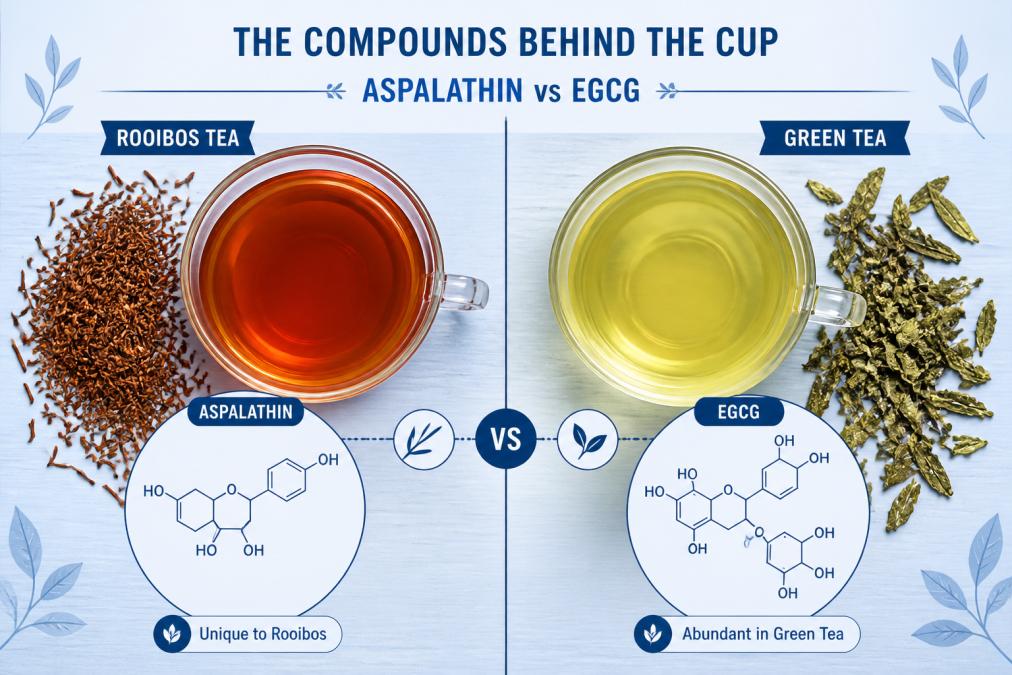
Green tea's headline compound is EGCG (epigallocatechin gallate), the most abundant and most studied catechin in Camellia sinensis. Green tea also supplies EGC, ECG, and other catechins.
Here is the part most comparisons skip. Laboratory antioxidant assays measure how a compound scavenges free radicals in a dish, not what happens inside a human body. Absorption, metabolism, and dose all change the picture.
A like-for-like look at the two profiles
A fair comparison separates three things: which compounds are present, at what relative abundance, and how well each is absorbed. On the first point, the two plants are genuinely different. Green tea's antioxidant story is a catechin suite dominated by EGCG, with EGC and ECG as supporting players.
On relative abundance, the honest answer is that published concentrations vary widely by cultivar, harvest, leaf grade, and processing. Green tea catechins, and EGCG in particular, are the more heavily quantified of the two because decades of research have standardized extraction and measurement methods for Camellia sinensis.
What the evidence actually shows
The evidence hierarchy matters more than any single assay. Most green tea catechin research begins in cell and animal models, where EGCG reliably shows antioxidant and anti-inflammatory activity. Human trials exist but often use concentrated extracts or capsules at doses well above what a cup delivers, and results on hard clinical endpoints are mixed.
The practical takeaway is that "antioxidant activity" in a lab dish is not the same claim as "proven health benefit" in a person. Both teas contain compounds that researchers find interesting; neither has been shown in ordinary brewed form to prevent or treat disease.
Green Rooibos vs Green Tea: Same Word, Different Plant
So green rooibos vs green tea is a comparison between two entirely different plants that happen to share a processing style. Green rooibos is not a substitute for green tea, and it will not taste like one.
If you want the aspalathin-forward version of rooibos, green rooibos is the one to seek out. If you want catechins, no rooibos will deliver them.
Is Rooibos Tea Caffeine-Free? What That Means for Daily Drinking
Yes. Rooibos tea is caffeine-free because it contains no Camellia sinensis leaf. Green tea typically contains caffeine, though levels vary by leaf, grade, and steep time (pubmed.ncbi.nlm.nih.gov).
That single fact changes how each tea fits into a day. A caffeine-free cup works at 9 p.m. without cost to sleep. Green tea, consumed in the afternoon, may keep sensitive drinkers awake. For anyone limiting caffeine for medical reasons, rooibos removes the arithmetic entirely.
Rooibos Tea Benefits and Side Effects Worth Knowing
Rooibos tea benefits and side effects deserve a clear-eyed look, because the marketing around this plant outruns the evidence.
On the benefits side, rooibos is a pleasant, hydrating, caffeine-free beverage with a polyphenol profile that researchers continue to study for antioxidant and anti-inflammatory activity. We present these as reasons to enjoy it, not as treatment claims.
On the side effects side, rooibos is generally well tolerated. The main cautions: it contains no caffeine, so it will not substitute for alertness; and anyone managing a health condition or taking medication should talk to a clinician before adding any herbal tea in quantity.
How Processing and Brewing Change Antioxidant Extraction
Processing decides how much of a compound survives to the cup. For green tea, the early heating step (steaming or pan-firing) deactivates the enzymes that would otherwise oxidize catechins into theaflavins and thearubigins. Skip that step and you get black tea, not green.
Brewing then decides how much you actually extract. Water temperature, steep time, and leaf-to-water ratio all matter. Green tea generally prefers cooler water so the catechins extract without the bitterness that comes with scalding; rooibos is forgiving and takes a full boil without turning harsh.
The mechanism: why brewing variables move the numbers
Extraction is a solubility process. Hot water pulls water-soluble polyphenols out of the leaf, and the rate depends on three levers: temperature, contact time, and the surface area of leaf exposed to water.
That last point is the one most comparisons ignore. A strong cup and a weak cup can come from the same tea; the difference is how much leaf went into how much water. When you read that one tea has "more antioxidants" than another, ask whether the comparison held serving size constant.
Green tea: cooler, shorter, and watch the leaf
Green tea catechins, EGCG included, extract readily but degrade with prolonged heat (pubmed.ncbi.nlm.nih.gov). A common pattern among practitioners is water below a rolling boil and a steep measured in a minute or two rather than five, with whole-leaf tea favored over finely crushed bagged leaf because intact leaf releases compounds more gradually and is less prone to a harsh, over-extracted cup. Loose leaf also lets you control quantity directly, which is the variable that most changes the per-cup total.
Rooibos: forgiving, but not identical across types
Rooibos tolerates a full boil and a longer steep without turning bitter, which makes it easy to extract consistently. Red and green rooibos differ here: the unfermented green type holds more aspalathin, but its lighter leaf may need a slightly longer steep to reach a comparable strength. Because rooibos is often sold as cut leaf or in bags, the surface-area effect is pronounced, a fine-cut rooibos will color and flavor the water faster than a coarser cut, and the same steep time can produce noticeably different cups.
A fair-brew checklist
If you want to compare what actually reaches your cup, hold these constant between the two teas:
- Leaf quantity: weigh or measure the same amount of dry leaf for each.
- Water volume: use the same cup size and the same amount of water.
- Temperature: match the tea to its ideal range rather than forcing one temperature on both.
- Steep time: record it, and keep it consistent within each tea type.
- Leaf form: note whether you are comparing whole leaf to whole leaf, or bag to bag.
| Variable | Green Tea | Rooibos |
|---|---|---|
| Water temperature | Cooler, below boiling | Full boil is fine |
| Steep time | Short, to limit bitterness | Longer, to draw out color |
| Caffeine | Present | None |
| Key compound | EGCG and catechins | Aspalathin and polyphenols |
| Best for | Morning focus | Evening, caffeine-free |
Finding the Best Green Tea for Antioxidants (and the Rooibos to Pair With It)
The best green tea for antioxidants is fresh, whole-leaf green tea brewed at a moderate temperature, because leaf quality and handling preserve the catechins that processing protected.
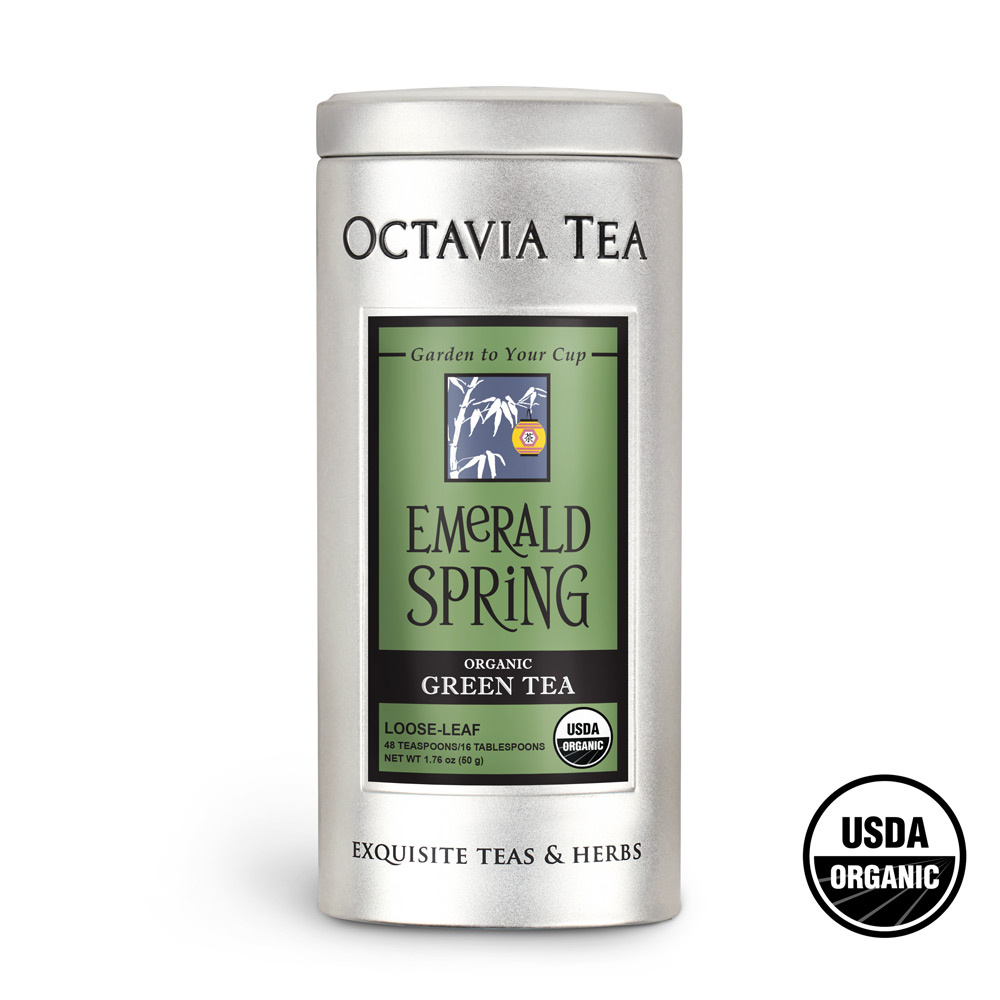
For a catechin-forward cup, our Emerald Spring ($3.50) is a clean, grassy everyday green, and Dragonwell ($3.50) brings a buttery, roasted character with the mental-alertness lift green tea is known for.
On the rooibos side, our African Rose ($4.00) pairs antioxidant-rich rooibos with citrus, linden, and rose for a soothing, caffeine-free cup that works after dinner.
How to Choose: A Practical Framework by Priority
Skip the abstract debate and pick by what you actually want from the cup.
- If you want the most-studied catechin profile: green tea, brewed cooler and shorter.
- If you want caffeine-free: rooibos, red or green.
- If you want aspalathin specifically: green rooibos, unoxidized.
- If you drink tea late: rooibos, every time.
- If you want both: keep a green for mornings and a rooibos for evenings.
Frequently Asked Questions
Which has more antioxidants, rooibos tea or green tea?
There is no single winner, because the two teas carry different antioxidant compounds. Green tea is built on catechins, especially EGCG, while rooibos is defined by aspalathin, a flavonoid found in the South African plant. Lab measurements of total antioxidant activity vary widely with leaf grade, processing and brewing, so treat any blanket 'more antioxidants' claim with caution. What matters more is which compounds you want in your daily routine and whether caffeine fits it. Green tea brings caffeine and catechins; rooibos brings aspalathin and no caffeine at all.
Is rooibos tea caffeine-free?
Yes. Rooibos comes from Aspalathus linearis, a South African plant that is not related to Camellia sinensis, so it contains no caffeine. That makes it a workable choice for an evening cup, for people limiting caffeine, or for anyone who wants a tea they can drink late without a sleep trade-off. Green tea, by contrast, is made from Camellia sinensis leaves and does contain caffeine. If you are switching between the two across a day, rooibos is the simpler pick after lunch.
Is green rooibos the same as green tea?
No, and the names mislead. Green rooibos is unfermented rooibos, so the leaves keep more of their green color and a lighter, grassier flavor than red rooibos. Green tea is a completely different plant, Camellia sinensis, processed to stop oxidation. Both are called 'green' because of how they are handled, not because they are related. Green rooibos is caffeine-free; green tea is not. If you want the rooibos compounds without the deep red cup, green rooibos is the version to look for.
Can you drink rooibos and green tea every day?
For most adults, yes. Both are ordinary daily drinks, and the practical limit is usually caffeine rather than the tea itself. Green tea adds caffeine across the day, so if you are sensitive, keep the later cups to rooibos. Rooibos is caffeine-free and suits an evening routine. If you take medication or have a health condition, check with your doctor before making either a large part of your day.
What type of green tea has the most antioxidants?
Matcha-style green tea, where the whole leaf is ground into powder and consumed, typically delivers more catechins per cup than steeped leaf tea because you drink the leaf itself. Among steeped greens, fresh loose-leaf teas stored away from light and heat hold their compounds better than old or bagged tea. Water temperature and steep time also matter: very hot water for a long time extracts more, but can turn the cup bitter. Buy fresh, store it sealed, and brew to taste.
The real challenge is not choosing between two good plants, it is finding leaf fresh enough to make either worth brewing. Octavia Tea sources over 120 organic loose leaf teas direct from estate gardens, hand-blends with natural flavor essences and pure essential oils, and holds USDA organic certification. Start with a green for your mornings and an African Rose for your evenings, and let the ritual do the rest. Add to Bag and taste the difference fresh leaf makes.


Octavia Tea Sign In
Create New Account