























5 Best Teas for Pairing with Dark Chocolate (2026)

Table of Contents
- Why Dark Chocolate and Tea Make a Perfect Pair
- 1. Chocolate Earl Grey: Bergamot Citrus Meets Bright Cacao
- 2. Vintage Pu-erh: Earthy Undertones for Aged, High-Percentage Cacao
- 3. Chocolate Mint: A Caffeine-Free Rooibos for Evening Indulgence
- 4. Lapsang Souchong: Smoky Contrast for Bold Dark Chocolate
- 5. Chocolate Chai: Warm Spices and Cocoa Shells for a Dessert Pairing
- Tea and Chocolate Pairing Chart: Match Cacao Percentage to the Right Cup
- How to Taste Tea and Chocolate Together: A Step-by-Step Method
- Frequently Asked Questions
Last Updated: September 13, 2026
Why Dark Chocolate and Tea Make a Perfect Pair
Dark chocolate and tea share more than a dessert course. Both are fermented, roasted plant products built on bitterness and aromatic complexity, and that shared structure is why they pair so reliably. This guide from Octavia Tea breaks down the five best teas for pairing with dark chocolate, matched to specific cacao percentages.
The logic is straightforward once you see it. Cocoa beans and tea leaves both develop their character through oxidation and roasting, and both finish with tannins that grip the palate (PubMed). When you match a tea's astringency to a bar's intensity, the two sharpen each other instead of competing.
Below, we'll show you exactly how to match a cup to a bar, plus a step-by-step tasting method you can run at home tonight.
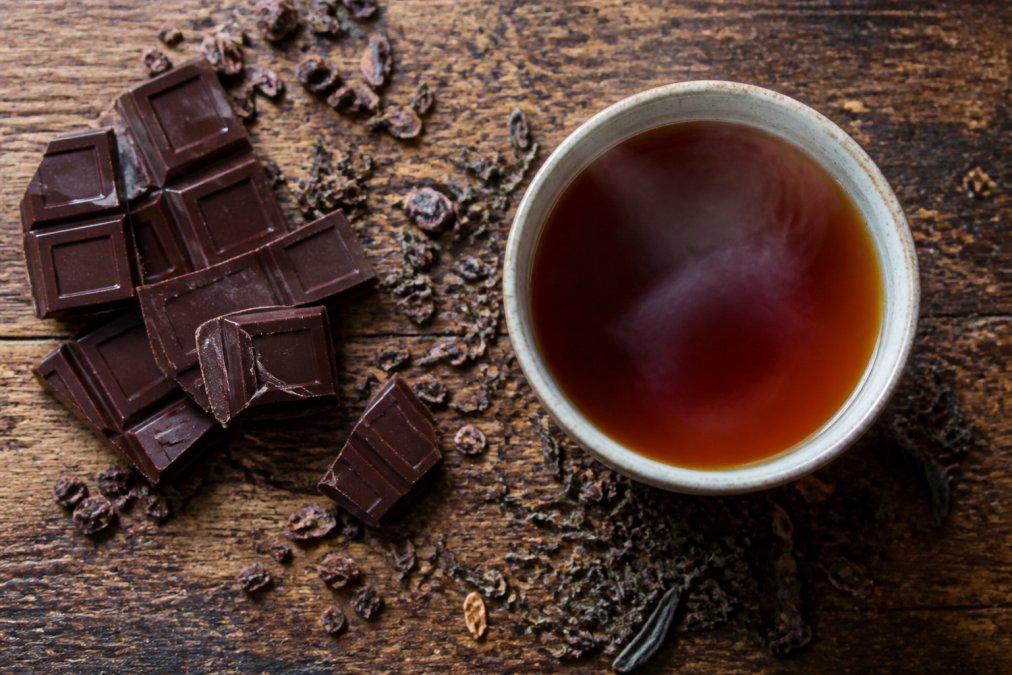
The Science of Flavor Pairing: Tannins, Cocoa, and Aromatic Compounds
Flavor pairing is the practice of matching two foods whose aromatic compounds and structural elements reinforce each other rather than clash. Tannins, the polyphenols responsible for astringency and bitterness, are the deciding variable in tea and chocolate matching.
Here's what most guides miss: astringency is not a flaw to avoid, it's the tool you pair with. High-percentage dark chocolate carries heavy tannin load and low sweetness. A delicate white tea disappears against it. A brisk, tannic black tea meets it head-on and the bitterness reads as depth rather than harshness.
Caffeine matters here too. Black teas and pu-erh carry meaningful caffeine, while rooibos and honeybush are naturally caffeine-free, which changes when you can serve them (PubMed). More on that balance below.
1. Chocolate Earl Grey: Bergamot Citrus Meets Bright Cacao
Start with the most approachable pairing on this list. Bergamot's citrus oils cut through cocoa butter's coating mouthfeel, so the chocolate tastes brighter and less heavy on the finish.
A 60-70% bar works best here. The bergamot lifts the fruit-forward notes in mid-percentage cacao without the tea's own tannins overwhelming them. Octavia Tea's Chocolate Earl Grey layers Italian bergamot over black tea with a silky chocolate note, so the bridge between cup and bar already exists.

What most reviews miss: brew it at a lower temperature than you would a plain breakfast blend. Water just off the boil pulls the bergamot's aromatic compounds without dragging out excess astringency.
2. Vintage Pu-erh: Earthy Undertones for Aged, High-Percentage Cacao
Pu-erh is the pairing for anyone who thinks they dislike sweet pairings. Its earthy, fermented character mirrors the deep, almost savory notes in 80% and above cacao.
This is a dark tea from China's Yunnan Province that undergoes microbial fermentation, which ripens the leaf and builds a bold, earthy profile (peer-reviewed research). The shared fermentation process between pu-erh and cocoa is the whole point: both carry umami and forest-floor notes that a bright black tea would fight.
Octavia Tea's Vintage Pu-erh brings aromas of wet stone, moss, and creamy leather. Against an 85% bar, those notes read as complementary rather than strange. Serve it in small cups, since the flavor intensity is high.
3. Chocolate Mint: A Caffeine-Free Rooibos for Evening Indulgence
Here's the gap most pairing charts ignore: caffeine content and when you actually drink the cup. A 9 p.m. chocolate craving does not need a brisk black tea behind it.
Rooibos is naturally caffeine-free, so a chocolate-mint rooibos lets you pair dark chocolate after dinner without wrecking your sleep. Peppermint's cooling sensation also resets the palate between bites, which is why mint and chocolate have been a default combination for so long.
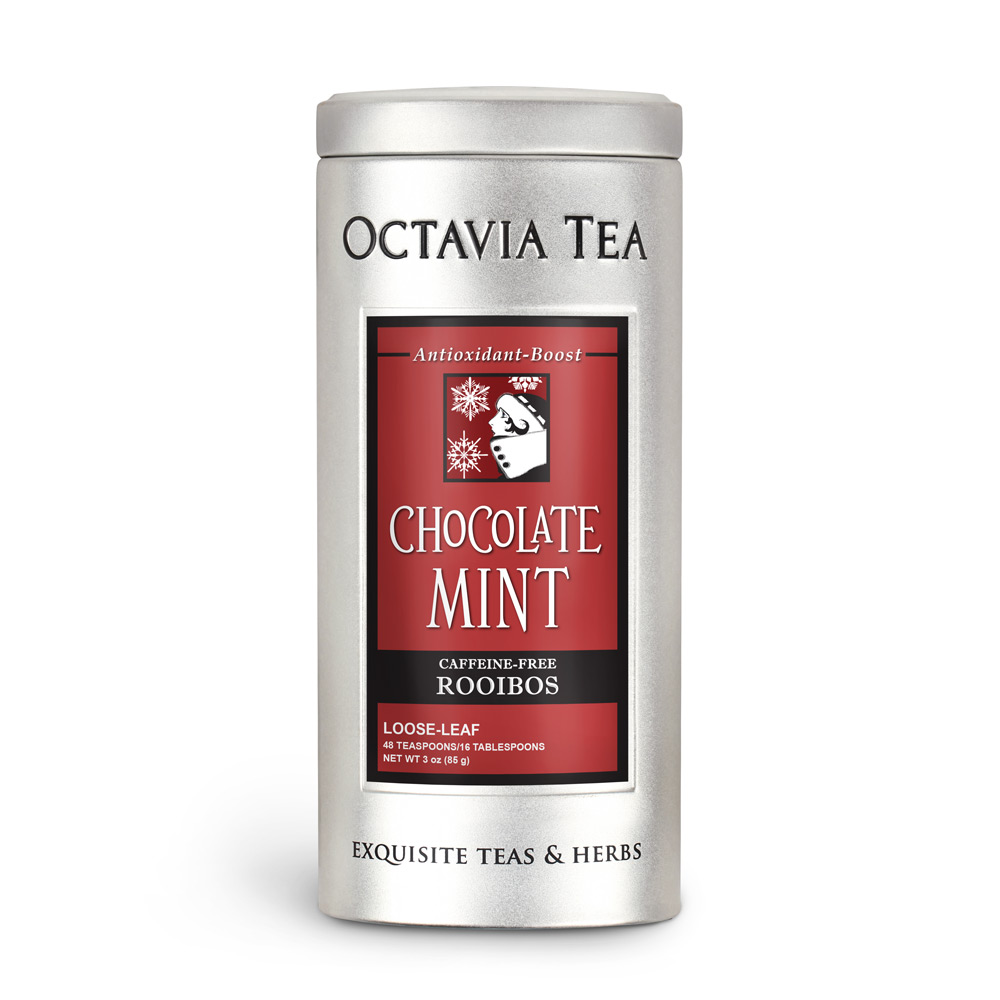
Octavia Tea's Chocolate Mint blends rooibos with vanilla, creamy chocolate notes, and peppermint leaves, at under two calories a cup. Pair it with a 55-65% bar, where the mint won't get lost.
4. Lapsang Souchong: Smoky Contrast for Bold Dark Chocolate
Contrast beats complementarity here. Lapsang Souchong is a Chinese black tea dried over burning pinewood, so the leaf absorbs a crisp, assertive campfire smoke that reads like single-malt scotch.
Against a 75-85% bar, that smoke does something a smoother tea cannot: it makes the chocolate taste sweeter by comparison, without adding sugar. The pairing works on the same principle as smoked salt on caramel.
This is the most polarizing tea on the list, and I'd rather say so than pretend otherwise. If you dislike peated whisky or smoked foods, skip to the chai below. If you love them, this is the pairing you'll come back to.
5. Chocolate Chai: Warm Spices and Cocoa Shells for a Dessert Pairing
Chai and dark chocolate share a spice vocabulary, which is why this pairing feels inevitable once you try it. Cinnamon, clove, and cardamom echo the warm notes cocoa develops during roasting.
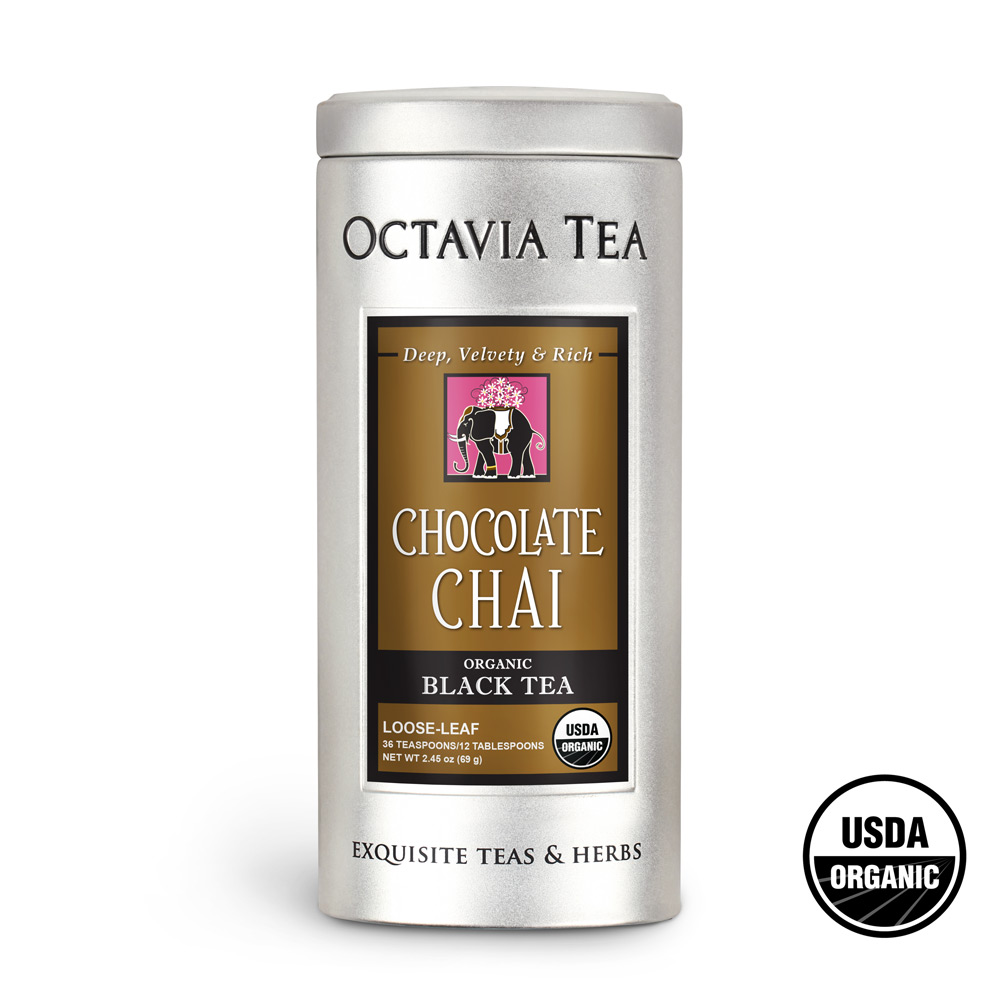
Octavia Tea's Chocolate Chai combines antioxidant-rich black tea, exotic spices, vanilla, and cocoa shells. The cocoa shells are the quiet advantage: they reinforce the chocolate rather than introducing a new flavor, so the cup and the bar taste like one dessert instead of two.
This is also the most forgiving pairing for milk and sweetener. A splash of milk softens the tannins, which makes it the right choice if you're serving a 70% bar to guests who find high-percentage chocolate bitter.
Tea and Chocolate Pairing Chart: Match Cacao Percentage to the Right Cup
Use this tea and chocolate pairing chart as your starting point, then adjust to taste. The percentage drives everything: as cacao rises, sweetness falls and tannin load climbs, so the tea needs more structure to match it. The caffeine column matters as much as the flavor column, because dark chocolate carries its own stimulants, theobromine plus a smaller amount of caffeine, and stacking a high-caffeine tea on top changes when you can comfortably serve the pairing.
Cacao Percentage | Recommended Tea | Why It Works | Caffeine Level | Best Time to Serve |
|---|---|---|---|---|
55-65% | Chocolate Mint (rooibos) | Mint resets the palate; low tannin suits sweeter bars | None | Evening, after 8 p.m. |
60-70% | Bergamot citrus lifts fruit notes in mid-range cacao | Moderate | Afternoon | |
70-75% | Warm spices echo cocoa's roasted notes; milk softens tannins | Moderate | Afternoon or early evening | |
75-85% | Lapsang Souchong | Smoke makes the chocolate taste sweeter by contrast | Moderate | Afternoon |
80-100% | Vintage Pu-erh | Shared fermentation gives earthy, umami depth | Moderate-high | Morning or early afternoon |
Caffeine Timing: The Variable Most Pairing Charts Skip
A 1-ounce serving of dark chocolate in the 70-85% range typically delivers a modest caffeine dose alongside theobromine, a milder stimulant that peaks later and lingers longer. Most practitioners find the combination is gentle on its own but becomes a sleep problem when you stack it with a brisk black tea or pu-erh late in the day. The practical rule: if you are pairing after dinner, choose a naturally caffeine-free base like rooibos or honeybush, and save the black teas and pu-erh for daylight hours.
That single adjustment resolves the most common complaint about chocolate-and-tea pairings, that they feel too stimulating to enjoy as a wind-down ritual.
Terroir Matching: Connect the Cacao Origin to the Tea Origin
Beyond percentage, you can pair by place. Cacao and tea both express terroir, soil, altitude, and climate leave a signature in the bean and the leaf, and matching origins by shared character produces pairings that feel intentional rather than accidental.
- Madagascar cacao (bright, fruity, often citrus-tinged) pairs naturally with a high-altitude Darjeeling, whose muscatel and floral notes echo the same brightness.
- Ecuadorian cacao (floral, nutty, sometimes jasmine-like) pairs with a floral oolong or a delicate first-flush Darjeeling.
- Ghanaian or Ivory Coast cacao (deep, earthy, chocolate-forward) pairs with an earthy pu-erh or a robust Assam.
- Peruvian cacao (red-fruit and spice notes) pairs with a spiced chai or a smoky Lapsang Souchong.
Start with the percentage chart to get the structure right, then use the origin match to refine the aromatic top notes. When both line up, the cup and the bar taste like they came from the same place.
How to Taste Tea and Chocolate Together: A Step-by-Step Method
Learning how to taste tea and chocolate together comes down to sequencing and palate management: taste the chocolate first, then the tea, then both again. The order matters because cocoa butter coats the palate with a fatty film, and the tea's tannins and aromatics are what cut through it. Get the sequence wrong and you taste two separate things instead of one pairing.
Run this method with any pairing above. It takes about 15 minutes and works for a solo tasting or a small group.
- Set up three pieces per person. Same bar, same size, so you're comparing the pairing, not the portion. Keep the pieces at cool room temperature, cold chocolate releases almost no aroma.
- Taste the chocolate alone first. Let it melt on your tongue rather than chewing. Note sweetness, bitterness, and how long the aftertaste lingers. This is your baseline.
- Sip the tea alone. Assess astringency and aroma before the two meet, so you can tell later which flavors came from the tea and which from the chocolate.
- Take chocolate, then tea. This is the actual pairing. Notice whether the tea sharpens or flattens the chocolate, and whether the finish is longer or shorter than either was alone.
- Wait 30 seconds, then repeat. The second pass reveals the aftertaste, where good pairings separate from great ones. A pairing that improves on the second sip is working; one that fades is not.
- Adjust brew strength if needed. If the tea disappears against the bar, brew it stronger or steep longer. If it overwhelms the chocolate, shorten the steep or use more leaf at a lower temperature for a gentler extraction.
What to Look For at Each Stage
A structured tasting is really four measurements, and naming them keeps you honest:
- Aroma before tasting. Cup your hand over the tea and breathe in; then smell the chocolate. If the two aromas share a note, fruit, smoke, earth, floral, that is your bridge.
- Texture. Dark chocolate's cocoa butter gives a coating mouthfeel. A tannic tea strips it; a low-tannin tea leaves it in place. Decide which effect you prefer.
- Balance. Neither the tea nor the chocolate should dominate. If one erases the other, the pairing is mismatched, not the ingredients.
- Finish. Count how many seconds the combined flavor lasts. Longer, cleaner finishes signal a stronger pairing.
Contrasting vs. Complementary: Pick Your Goal First
Before you taste, decide which effect you want, because it changes which tea you reach for. A complementary pairing matches like with like, an earthy pu-erh with an earthy high-percentage bar, and produces a seamless, unified flavor. A contrasting pairing sets opposites against each other, smoky Lapsang Souchong against sweet mid-range cacao, and produces a brighter, more dynamic effect where each element makes the other taste more like itself. Neither is better; they are different tools. Complementary pairings suit a quiet tasting; contrasting pairings suit a group where you want the differences to be obvious.
Common Mistakes That Ruin a Tasting
- Serving the tea scalding hot. Above roughly 160°F, heat numbs the palate and you'll miss the aromatic compounds that make the pairing work. Let both the chocolate and the tea come to room-temperature-adjacent warmth before tasting.
- Chewing the chocolate. Chewing rushes the melt and buries the aromatics. Let it dissolve.
- Tasting too many pairings at once. Palate fatigue sets in after three or four. Reset with a sip of plain water and a bite of plain bread between flights.
- Ignoring the caffeine clock. A great pairing served at the wrong hour is a bad experience. Check the caffeine column in the chart above before you pour.
Don't serve the tea scalding hot. Above roughly 160°F, heat numbs the palate and you'll miss the aromatic compounds that make the pairing work. Let both the chocolate and the tea come to room-temperature-adjacent warmth before tasting.
Match tannin to cacao percentage, match caffeine to the hour, and taste in sequence, chocolate first, tea second, both together third. That three-part rhythm is the whole method.
Frequently Asked Questions
Does black tea go well with dark chocolate?
Yes. Black tea's tannins and brisk astringency cut through dark chocolate's richness, while shared roasted and malty notes create harmony. A bergamot-forward blend like Chocolate Earl Grey works especially well because citrus acidity lifts cocoa's bitterness. For 70% cacao, a full-bodied black tea balances intensity without overpowering the chocolate's fruit or floral notes.
What kind of tea pairs best with 70% dark chocolate?
At 70% cacao, the chocolate still carries noticeable sweetness and fruit acidity, so a tea with complementary brightness works best. Chocolate Earl Grey's bergamot echoes citrus notes, while an earthy Pu-erh matches deeper cocoa flavors. Avoid very light teas that get lost. Medium-bodied blacks, roasted oolongs, and aged dark teas hold their own against 70% cacao.
Can you drink green tea with chocolate?
You can, but green tea's grassy, vegetal character often clashes with dark chocolate's roasted bitterness. If you want to try it, choose a matcha or a lightly oxidized oolong instead, which offers more body and natural sweetness. For most dark chocolate, black tea, Pu-erh, or spiced blends deliver a more balanced flavor profile than green tea.
Why does tea pair well with dark chocolate?
Tea and dark chocolate share aromatic compounds formed during roasting and oxidation, including notes of malt, dried fruit, and earth. Tea's tannins also cleanse the palate between bites, preventing cocoa butter from coating your mouth and muting flavor. This combination of shared aromatics and palate cleansing makes the pairing feel intentional rather than accidental.
How do you host a tea and chocolate tasting?
Set out three to five dark chocolates at different cacao percentages, from 60% to 85%, and brew one tea per chocolate. Use small cups and taste tea first, then chocolate, then sip again to see how flavors shift. Provide water and plain crackers between rounds. Keep portions small so guests can compare without filling up.


Octavia Tea Sign In
Create New Account