























Best Teaware for White Tea: Pots, Gaiwans and Filters

Last Updated: November 5, 2026
Quick Summary
The best teaware for white tea depends on how many cups you brew and which leaf grade you use. Glass teapots show off pale liquor and unfurling buds, while porcelain and clay hold heat more steadily. Single-cup brewing baskets and gaiwans round out the options for delicate white tea.
- A 16 oz glass teapot holds about two cups and suits one person, priced at $25.00.
- Clay and thick ceramic pots hold heat longer, which helps keep steeping temperature stable.
- The Brewing Basket (Finum) at $17.99 fits in any cup and keeps fine leaves out.
- A large pot with a small leaf load often produces a pale, flavorless cup, so size down for one person.
- Preheat your vessel with hot water before adding leaves so the first steep does not run cool.
Table of Contents
- Why Teaware Matters for Delicate White Tea
- Glass Teapots for White Tea: Visual Appeal and Neutral Flavor
- Porcelain and Clay Teapots for White Tea: Mineral Character and Heat Retention
- Using a Gaiwan for White Tea: Control and Quick Infusions
- Infusers, Baskets and Filters for Single Cups
- Matching White Tea Brewing Temperature to Your Vessel
- Choosing the Right Teaware for Your Next Pot of White Tea
- Frequently Asked Questions
Why Teaware Matters for Delicate White Tea
White tea is one of the lightest, most delicate teas you can brew, and the vessel you choose affects how much of that character reaches your cup. Octavia Tea sources its teas from estate gardens, so it makes sense to brew them in equipment that protects their subtle flavor. Silver needle and white peony leaves are fragile and mild, and a poor vessel can flatten them or add bitterness.
The right teaware does three jobs well: it holds water at a steady temperature, it lets leaves expand fully, and it keeps the brew from tasting of anything other than tea. Glass, porcelain, and clay each handle these jobs differently. Choosing among them depends on how you like to brew, how many cups you make, and how much you enjoy watching the leaves open.
Glass Teapots for White Tea: Visual Appeal and Neutral Flavor
Glass is the most transparent choice, and for white tea that matters. Pale, golden liquor and unfurling buds are easy to see through clear walls, so you can judge strength by color as well as taste. Glass adds no flavor of its own, which keeps the tea's natural character front and center.
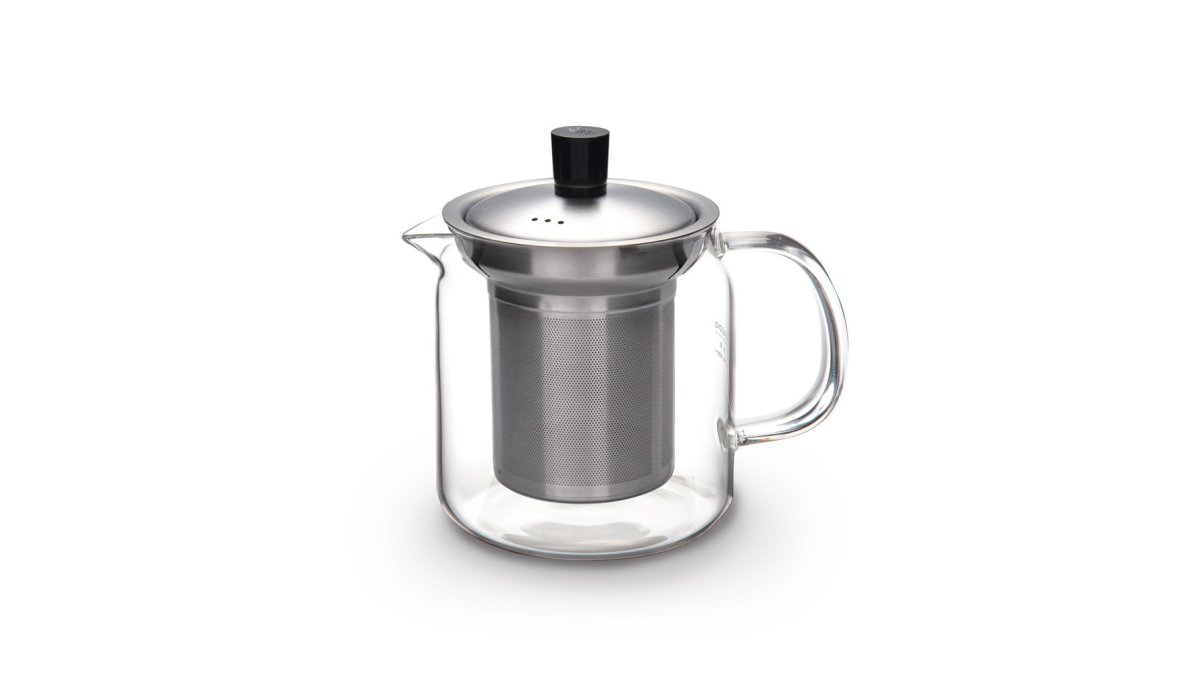
Octavia Tea offers several glass options that fit different needs. Each includes a sturdy stainless steel infuser basket.
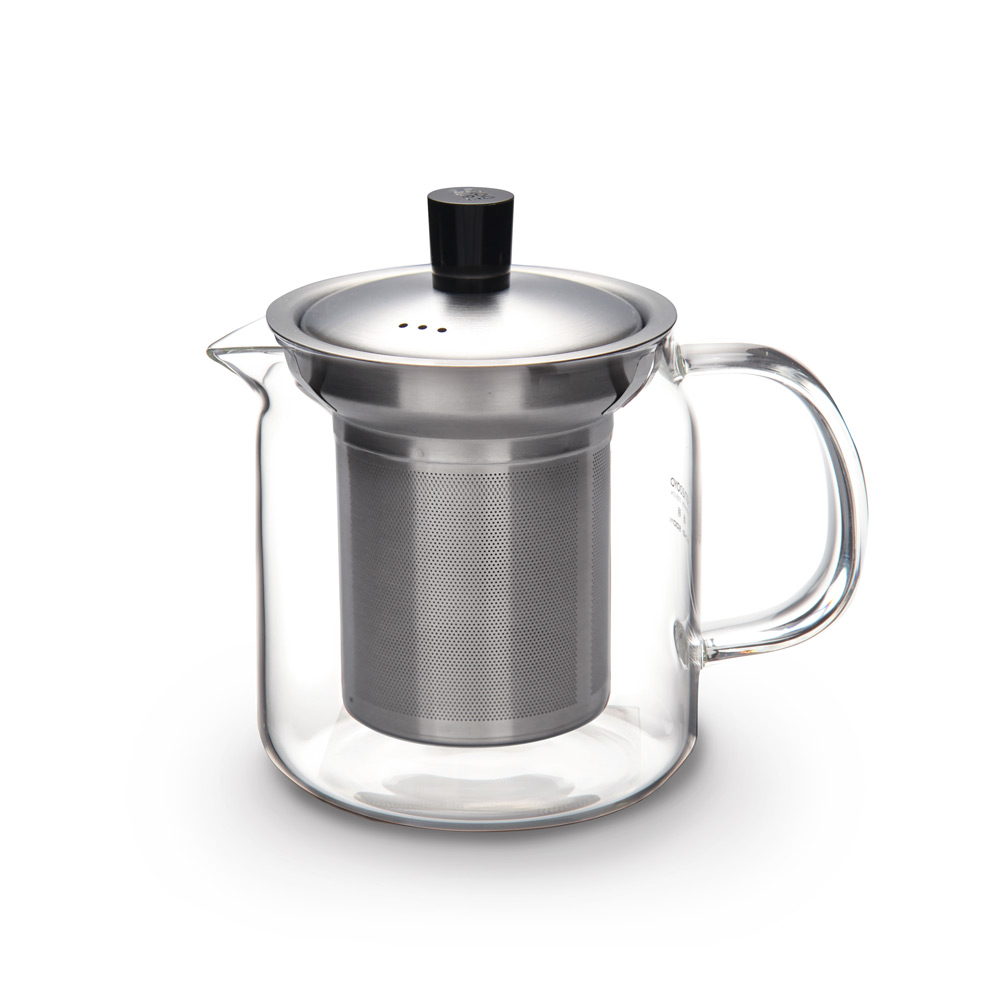
Glass Teapot (tea-for-one, 16 oz)
The Glass Teapot (tea-for-one - 16 oz) holds about 16 ounces, or two cups, and is ideal for one person. The infuser is made from a solid sheet of metal rather than flexible wire mesh. At $25.00, it is one of the solo-size options in the glass range.
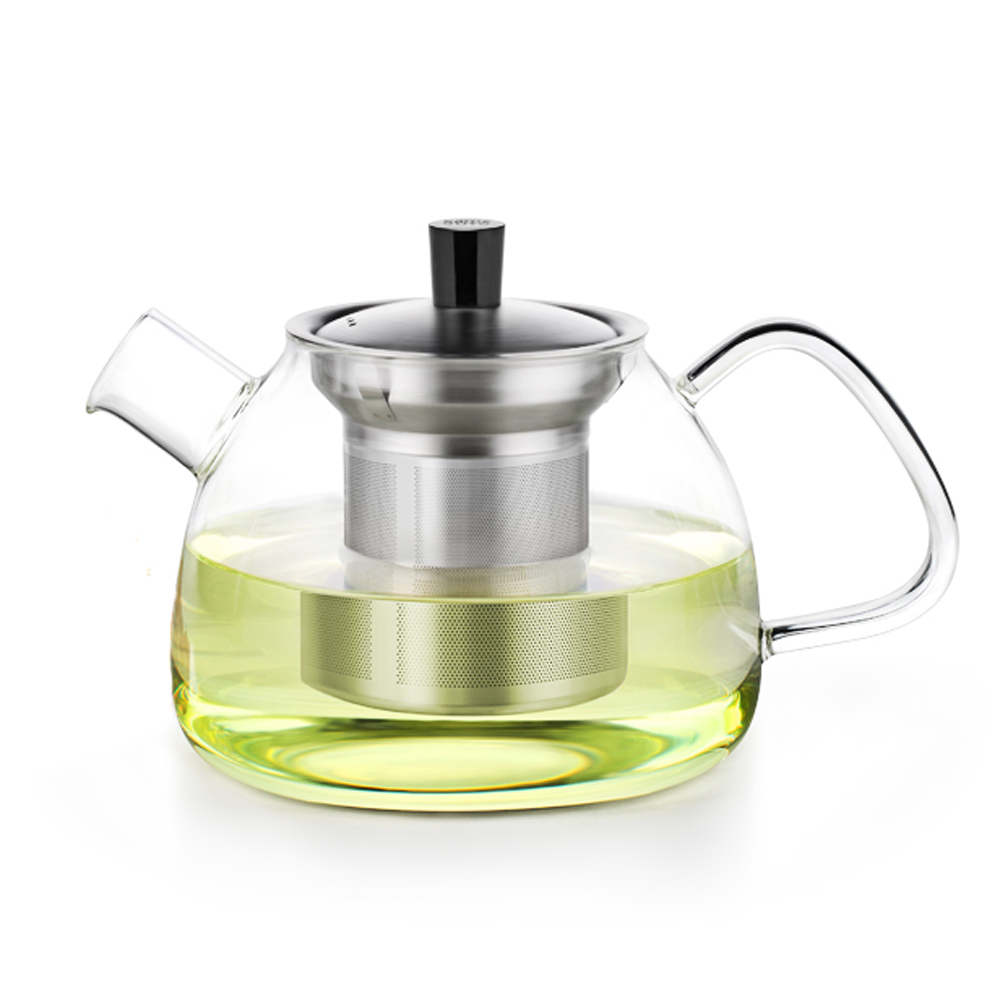
Glass Teapot (classic, 30 oz) and Tall Iced Model (40 oz)
For sharing, the classic 30 oz glass teapot is the better fit at $35.00. The tall 40 oz glass teapot works well for iced white tea or for a larger group. Both are dishwasher safe.
Porcelain and Clay Teapots for White Tea: Mineral Character and Heat Retention
Porcelain and clay hold heat differently than glass. They warm up slowly and stay warm longer, which helps keep steeping temperature stable. For white tea, where water that is too hot can scorch delicate buds, a steady temperature gives you more control.
Clay also brings a character of its own. Many tea drinkers believe unglazed clay adds a subtle minerality to the brew, though the effect is a matter of taste.
Tokoname Teapot (Red Earth) for Fine Leaves
The Tokoname Teapot (red earth) comes from Tokoname, Japan, a center of ceramic production since the 12th century. It is priced at $45.00. The teapot was created specifically for Japanese teas, which have thin, needle-like leaves, and it is well suited to fine-leaf teas.
Clay Teapot and West London Ceramic Teapot
A clay teapot is priced at $45.00. For a lower-cost ceramic option, the West London teapot is affordable and stylish, with a built-in stainless steel infuser and a 21 oz capacity, priced at $22.00. It is dishwasher safe.
Using a Gaiwan for White Tea: Control and Quick Infusions
A gaiwan is a lidded bowl used in traditional Chinese tea preparation, and it gives you direct control over water, leaves, and steeping time. Because you can lift the lid to check the leaves, it is easy to adjust a short steep.
Octavia Tea does not currently list a gaiwan in its catalog, so this section describes the approach in general terms. When you choose a gaiwan, look for a fine glaze that will not absorb flavor and a lid that fits snugly. Many white tea drinkers prefer short, repeated infusions in a gaiwan because the leaves open gradually and the flavor develops across steeps.
Infusers, Baskets and Filters for Single Cups
If you brew one cup at a time, a single-cup infuser may be all you need. The Brewing Basket (Finum) at $17.99 fits in any cup, mug, or small teapot. Its tightly woven stainless steel micro-mesh keeps even the smallest tea leaves out of your cup, and its depth allows room for the leaves to expand. It is dishwasher safe and includes a drip tray.
For a disposable option, Finum Tea Filters (large) at $7.50 for a box of 100 offer the convenience of a tea bag with loose-leaf room to unfurl. They are made from abaca pulp, cellulose and sealing fiber, and they are glue-free and chlorine bleach-free. They are great for tea on the go.
Matching White Tea Brewing Temperature to Your Vessel
Water temperature matters more for white tea than for most teas, but the vessel you brew in changes the temperature the leaves actually see, not just the number on your kettle. Delicate buds can taste grassy or bitter when the water is too hot, and a weak, flat cup can result from water that is too cool. The fix is not a single magic number; it is matching your starting temperature and your vessel's heat behavior to the grade of leaf in the pot.
A thick-walled clay or ceramic pot absorbs heat from the water on contact, then releases it slowly, so the leaves and water hold a steadier temperature during steeping. A thin-walled glass vessel has little mass to absorb heat, so the water loses temperature quickly through the walls and the surface. Porcelain sits in between: thin enough to respond fast, dense enough to hold warmth better than glass.
Grade changes the target. Silver needle is all buds, mild and slow to extract, so it tolerates, and often benefits from, water at the warmer end of the white tea range, with a vessel that holds heat so the buds keep releasing flavor. These differences in how white tea grades respond to heat shape the cup as much as the leaves themselves, while white tea health benefits offer another point of comparison with green tea.
Aged white tea is where vessel choice diverges most, and it is the part most guides skip. Fresh white tea rewards a vessel that lets heat escape so the delicate aromatics stay intact. Aged white tea has a flavor profile that differs from fresh tea, and many brewers prefer a heat-retaining vessel for it. If you brew both fresh and aged white tea, the practical answer is two vessels: glass or thin porcelain for fresh buds, clay or thick-walled ceramic for aged leaf.
Watch out: preheating matters as much as the kettle setting. If you pour hot water into a cold clay pot, the pot pulls heat from the first pour and your first steep runs cool. Rinse the vessel with hot water before the leaves go in, and the temperature you set is closer to the temperature the tea gets.
Whichever vessel you use, pour water over the leaves, steep for the time recommended on the package, and pour out the liquid so the tea does not keep brewing. If a cup tastes bitter, the usual cause is water that was too hot for the grade, not a steep that ran long, try a cooler start before you shorten the time.
Choosing the Right Teaware for Your Next Pot of White Tea
The best vessel depends on three variables: how many cups you brew at once, which grade of white tea you are brewing, and whether you want to watch the leaves. Most guides stop at the first variable. The second is where the real decision lives, because vessel volume and leaf grade together set how much leaf you need and how the steep behaves.
Start with volume, because it drives everything else. A 16 oz glass teapot is a two-cup vessel; a 30 oz pot is a four-cup vessel; a 40 oz pot is for iced tea or a crowd. A single-cup brewing basket holds roughly one cup. The leaf quantity that works in one size does not scale linearly to another, because a larger water volume with the same leaf load gives a thinner cup, and a smaller volume with the same leaf load over-extracts.
Then match grade to vessel. Silver needle, all buds and slow to extract, does well in a vessel that holds heat and gives the buds room, a thin-walled porcelain pot or a clay pot with a fine screen. White peony, buds plus leaves, extracts faster and benefits from a vessel you can open and check, which is why gaiwan-style brewing suits it. Shou mei and gong mei, broader leaf, are the most forgiving and work in almost anything, including a large glass pot for iced tea. Aged white tea leans toward heat-retaining clay or thick ceramic for the reasons covered above.
For beginners, the lowest-friction path is a single-cup brewing basket in a mug you already own: it holds leaf, lets you lift it out to stop the steep, and costs little to try. The next step up is a small glass teapot with a stainless infuser basket, which adds visibility without adding a new brewing technique. A gaiwan is the steepest learning curve and the most control; it rewards practice but is not where most people should start.
A quick decision guide:
| Your situation | Vessel to start with | Why |
|---|---|---|
| One cup, want simplicity | Single-cup brewing basket | Lift-out stops the steep; works in any mug |
| Solo pot, want to watch the leaves | 16 oz glass teapot | Two cups, visible liquor, neutral flavor |
| Sharing fresh white tea | 30 oz glass teapot | Four cups, dishwasher safe |
| Iced white tea or a group | 40 oz glass teapot | Volume for dilution and ice |
| Silver needle, want heat retention | Thin-walled porcelain or clay pot | Steady temperature for slow-extracting buds |
| Aged shou mei or gong mei | Clay or thick ceramic pot | Sustained heat opens dense aged leaf |
| Learning traditional technique | Gaiwan | Lid control, short repeated infusions |
Watch out: a large pot with a small leaf load is the most common beginner mistake, it produces a pale, flavorless cup that gets blamed on the tea. If you buy a 30 oz pot but usually brew for one, either brew a full pot or size down.
Octavia Tea carries over 120 organic loose-leaf teas sourced from estate gardens. Browse the teaware collection to find the right fit for your next pot.
Frequently Asked Questions
Is a glass teapot good for white tea?
Yes. A glass teapot lets you watch the leaves open and see the tea's pale color as it steeps, which is part of the appeal with white tea. Glass adds no unwanted tastes and is dishwasher safe. The Octavia Tea Glass Teapot for One holds about 16 ounces and includes a stainless steel infuser basket. Check the product page for current sizes and pricing before you buy.
What kind of teapot is best for white tea?
The best choice depends on how you drink it. Glass suits anyone who enjoys watching the brew and wants a neutral vessel. The Tokoname Teapot was created specifically for Japanese teas with thin, needle-like leaves. The West London Teapot is an affordable, stylish ceramic option. Pick the size that matches how many cups you usually pour.
Can you brew white tea in a gaiwan?
Yes. A gaiwan, a lidded bowl used in gongfu-style brewing, gives you precise control over leaf quantity, water temperature and steep time. Octavia Tea's catalog does not currently list a gaiwan, so if you want to try the method, use a small teapot or infuser and keep steeps brief.
Should you use a dedicated teapot for white tea?
A dedicated teapot is helpful if you drink several tea types, because residue from strongly flavored teas can carry over. The Brewing Basket (Finum) fits in any cup, mug or small teapot and has a tightly woven stainless steel micro-mesh. Clean all infusers after each use to keep white tea tasting clean.


Octavia Tea Sign In
Create New Account