























Dark Roast Hojicha: Taste, Caffeine & How to Brew

Table of Contents
- What Makes Dark Roast Hojicha Different
- Flavor Profile and Sensory Notes of Dark Roast Hojicha
- Caffeine Content in Hojicha vs. Matcha and Coffee
- How to Brew Loose Leaf Hojicha for the Best Cup
- A Simple Hojicha Latte Recipe to Try at Home
- Health Benefits and Storage Tips for Roasted Green Tea
- Conclusion: Add Dark Roast Hojicha to Your Routine
- Frequently Asked Questions
Last Updated: September 6, 2026
What Makes Dark Roast Hojicha Different
Dark roast hojicha is a Japanese green tea roasted over high heat until the leaves turn deep brown, creating a flavor closer to coffee or roasted barley than to a typical vegetal green tea. The roasting process stops oxidation and caramelizes natural sugars, removing nearly all bitterness. At Octavia Tea, we source our Hojicha Dark Roast from estate gardens, where pan-firing gives the tea its signature smoky, toasty character.
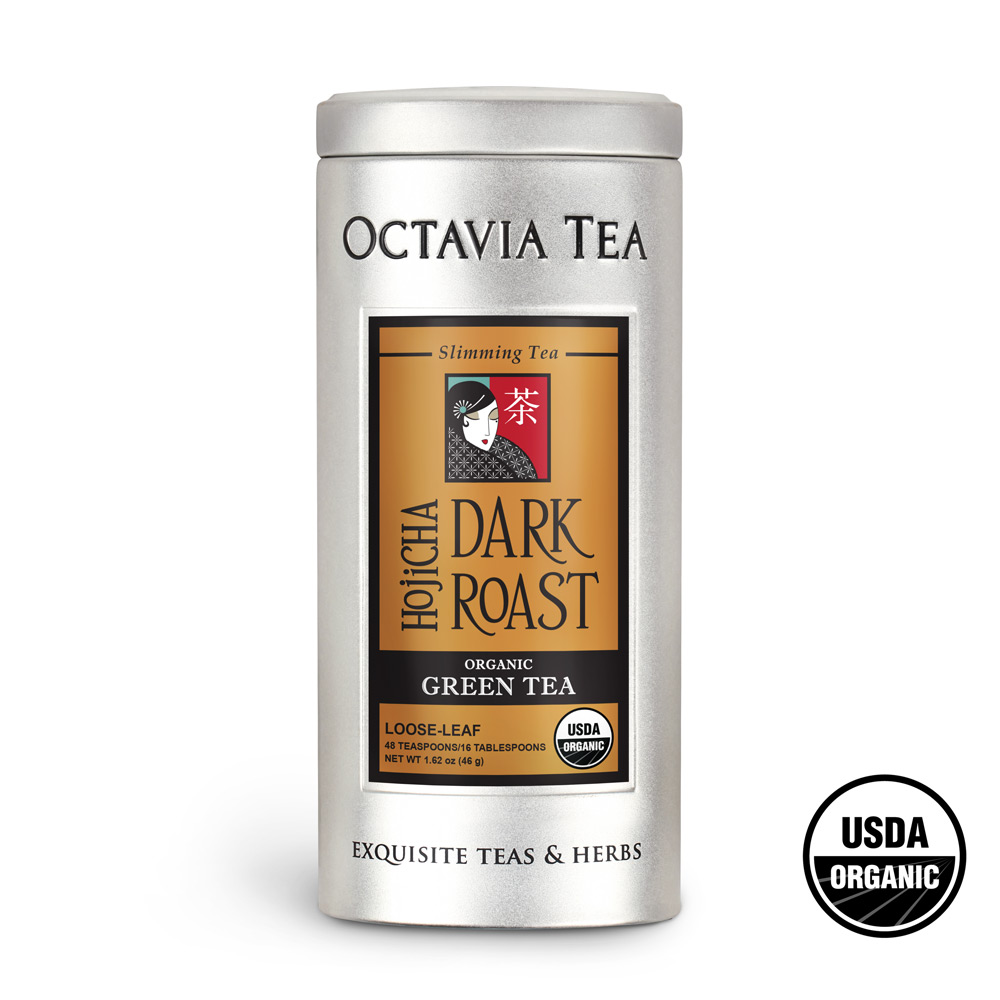
The distinction is immediately visible: the leaves are rich, dark brown rather than the bright green of sencha or vibrant powder of matcha. While most green teas are steamed and dried, dark roast hojicha goes through an additional roasting step that changes its chemistry, reducing astringency-causing compounds while amplifying nutty, caramelized notes.
Flavor Profile and Sensory Notes of Dark Roast Hojicha
The dominant flavors are smoky, toasty, and nutty, with burnt-caramel sweetness and a smooth finish. You will notice undertones of vanilla and roasted barley, with low tannins that mean no puckering dryness. The aroma is rich and almost charcoal-like, yet the mouthfeel remains light and clean, making it one of the most approachable green teas for people who find the category too grassy or bitter.
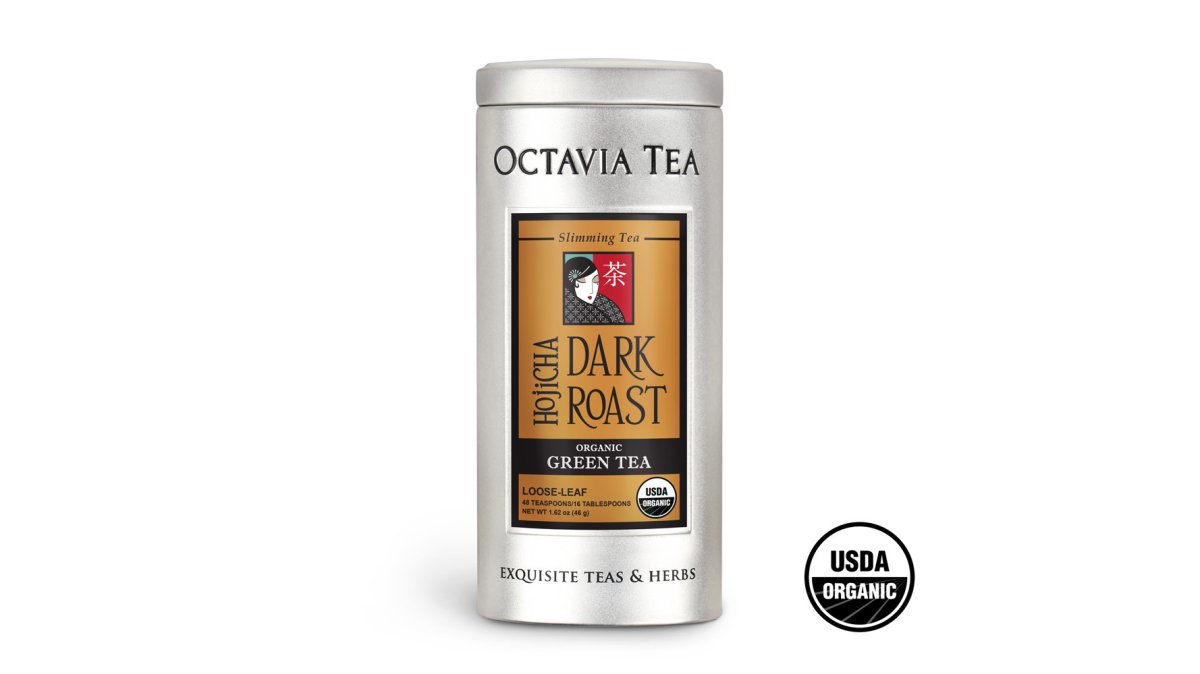
Roast depth affects flavor: a light roast keeps more green tea leaf character, while a dark roast pushes sweetness and body forward. The result is genuine umami depth without fishy or seaweed notes. Because roasting removes most vegetal character, dark roast hojicha pairs beautifully with milk and sweeteners, which is why it has become the base for so many cafe lattes.
Caffeine Content in Hojicha vs. Matcha and Coffee
Dark roast hojicha is a naturally low-caffeine tea, making it a sensible afternoon or evening choice for stimulant-sensitive people. The roasting process does not eliminate caffeine entirely, but hojicha is made from mature leaves and stems, which contain less caffeine than the young leaves used for matcha. A typical cup contains a fraction of the caffeine in coffee, and notably less than matcha, which is made by consuming the entire powdered leaf (PubMed).
You can drink dark roast hojicha later in the day without sacrificing sleep quality, something difficult to do with coffee or matcha. Many people use it as a late-afternoon transition beverage, replacing a second or third cup of coffee with a warm, toasty cup that satisfies the ritual without the jitters.
How to Brew Loose Leaf Hojicha for the Best Cup
Most guides stop at "use 175°F water for 30 seconds," but that leaves out the variables that determine whether your cup tastes like toasted caramel or bitter ash. The difference comes down to water chemistry and extraction physics, two factors that matter for dark roast hojicha because roasting makes the leaves brittle and highly soluble.
The Science of Water Temperature and Extraction
Dark roast hojicha's cell walls are fractured by high-heat roasting, so soluble compounds, sugars, amino acids, and roasted aromatic oils, are released almost immediately upon contact with water. A longer steep doesn't "get more flavor" the way it does with sencha or oolong; instead, it pulls out tannins and harsh, acrid notes. The goal is to extract the sweet, caramelized fraction quickly and stop before the bitter fraction dissolves.
Here is the precise extraction curve you are targeting:
Brewing Variable | Recommended Setting | The Mechanism Behind It |
|---|---|---|
Water temperature | 175°F (80°C) | At this temperature, the caramelized sugars and roasted oils dissolve readily, but the polyphenols that cause astringency remain locked in the leaf structure. Above 185°F, those polyphenols release rapidly and the cup turns harsh. |
Water hardness | Soft to moderately hard (50-150 ppm) | Calcium and magnesium ions in hard water bind to the roasted compounds and mute the smoky notes. If your tap water leaves scale on your kettle, use filtered water. Distilled water is too flat, you need some mineral content to carry the flavor. |
Leaf-to-water ratio | 1 tablespoon (about 5 grams) per 8 ounces | The roasted leaves are lightweight and voluminous. A tablespoon looks like a lot, but it weighs less than you think. If you have a scale, 5 grams is the sweet spot. More than 6 grams produces an overpowering smokiness that masks the underlying sweetness. |
First steep time | 30-45 seconds | The first 15 seconds extract the bright, toasty top notes. By 45 seconds, you have pulled the caramelized sugars. Past 60 seconds, you are dissolving the bitter tannins. |
Second steep time | 15-20 seconds | The leaves have already released most of their soluble material. A shorter steep is all that is needed to coax out the remaining nutty sweetness. |
Third steep (optional) | 10-15 seconds | The third cup is lighter and more mineral-like. It is a different experience, more like roasted barley tea, but it is still pleasant if you do not over-extract. |
The pH Factor Most People Ignore
Your water's pH plays a role in brewing. Tap water in many parts of the United States is slightly alkaline (pH 7.5-8.5), which can make roasted notes taste flat and dusty. If your hojicha tastes dull despite correct temperature and timing, adjusting the pH can brighten caramelized sugars without adding noticeable acidity.
The Cold Brew Exception
Cold brewing dark roast hojicha eliminates the bitterness problem entirely. Use the same 5 grams per 8 ounces ratio, but steep in room-temperature water in the refrigerator for 6 to 8 hours. The cold water extracts sweet, roasted compounds slowly while leaving tannins locked in the leaf. The result is a smooth, almost chocolatey brew with zero astringency and a fraction of the caffeine of a hot steep, because caffeine dissolves more slowly in cold water. loose leaf brewing guide.
Why the Second Steep Is Often the Best Cup
A common pattern among experienced drinkers is that the second infusion tastes sweeter and rounder than the first. The initial steep releases volatile roasted aromatics, the smoky, charcoal-like top notes, while the second, shorter steep pulls out deeper caramelized sugars and umami compounds not fully dissolved the first time. Plan for at least two infusions.
A Simple Hojicha Latte Recipe to Try at Home
A hojicha latte is straightforward: brew a strong concentrate, add warm milk, and sweeten to taste. Steep two tablespoons of loose leaf hojicha in four ounces of water at 175°F for 45 seconds. Strain into a mug. Heat eight ounces of milk, dairy or plant-based, until steaming but not boiling, then froth with a whisk or milk frother. Pour the milk over the concentrate and add a teaspoon of honey, maple syrup, or sugar if you like sweetness.
The key to a great hojicha latte is the whisking. Unlike matcha, where you whisk powder into a paste, hojicha is brewed as loose leaf tea and then combined with milk, producing a cleaner cup with no gritty sediment. The roasted, smoky character holds up beautifully against the richness of milk, creating a comforting version of a coffee latte. For an iced version, pour the brewed concentrate over ice and top with cold milk. This works with any milk alternative, though oat and almond milk complement the toasty notes best.
Health Benefits and Storage Tips for Roasted Green Tea
Dark roast hojicha occupies a unique position: it is a green tea transformed by heat, and that transformation changes not just the flavor but also how the compounds interact with your body. Understanding the chemistry helps you make informed decisions about when to drink it and what to expect.
Caffeine Metrics: The Numbers Behind the "Low Caffeine" Claim
Most articles say hojicha is "low caffeine" without giving you usable numbers. Here is the practical breakdown based on standard USDA and FDA reference data for brewed teas:
Beverage | Caffeine per 8 oz serving | Notes |
|---|---|---|
Dark roast hojicha (loose leaf, 175°F, 45 sec steep) | 15-25 mg | The roasting process does not destroy caffeine, but hojicha is made from mature leaves and stems, which naturally contain less caffeine than young leaf tips. The short steep time also limits extraction. |
Matcha (1 tsp powder, whisked) | 60-70 mg | You consume the entire leaf, so all the caffeine is delivered. |
Sencha (loose leaf green tea) | 30-40 mg | Younger leaves, longer steep, higher extraction. |
Drip coffee (8 oz) | 90-120 mg | The benchmark for comparison. |
Decaf coffee (8 oz) | 2-5 mg | The only common beverage with less caffeine than hojicha. |
This means you can drink two or three cups of dark roast hojicha in the evening and still consume less caffeine than a single cup of coffee. The FDA cites 400 mg per day as a safe upper limit for healthy adults, but individual sensitivity varies widely (the FDA).
The Roasting Effect on Catechins and Stomach Comfort
The primary catechins in green tea, epigallocatechin gallate (EGCG) and its relatives, are heat-sensitive (peer-reviewed research). The high-temperature roasting process degrades a significant portion of these compounds. Roasting reduces the catechin load, which can make hojicha easier on the digestive system. The trade-off is losing some potent antioxidant activity. What remains are heat-stable compounds, roasted melanoidins formed during the Maillard reaction, which have their own antioxidant properties and contribute to the tea's dark color and caramelized flavor.
Storage: The Physics of Stale Roasted Tea
Dark roast hojicha is more porous than unroasted green tea because roasting drives off moisture and creates microscopic fractures in the leaf structure. This is excellent for rapid flavor extraction during brewing, but it makes the leaves exceptionally vulnerable to environmental degradation. The three enemies are oxygen, moisture, and volatile odor compounds.
Storage Factor | The Problem | The Solution |
|---|---|---|
Oxygen | Oxidizes the roasted oils, turning the sweet, caramelized notes rancid and flat. | Use an airtight container with a gasket seal. A glass jar with a rubber seal is ideal. Avoid containers that do not close completely. |
Moisture | The porous leaves absorb ambient humidity, which causes clumping and accelerates flavor loss. | Store away from the stove, dishwasher, or any source of steam. If you live in a humid climate, consider adding a food-safe silica gel packet to the container. |
Odors | Roasted leaves act like activated charcoal, absorbing nearby smells. Stored next to coffee beans or spices, your hojicha will taste like them within days. | Keep hojicha in a dedicated container, not in the pantry next to strongly scented items. A cool, dark cupboard away from the stove is the best location. |
A well-stored dark roast hojicha will retain its smoky, toasty character for up to a year from the roast date, but the most vibrant flavor window is the first three to six months. Stale hojicha can develop a dusty, cardboard-like flavor. Always use a completely dry scoop to remove leaves, introducing moisture to the container is the fastest way to ruin the entire batch.
Conclusion: Add Dark Roast Hojicha to Your Routine
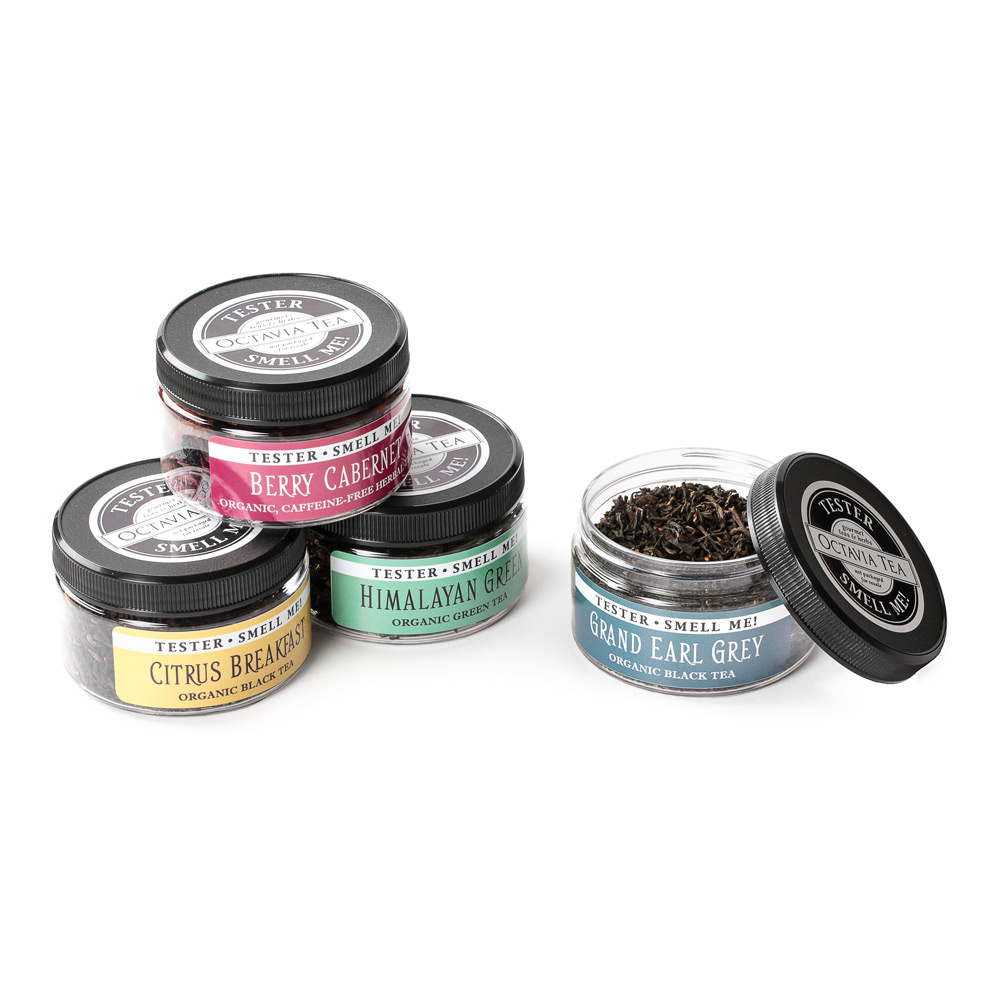
Dark roast hojicha is the rare tea that bridges the gap between coffee drinkers and green tea purists, offering a rich, smoky cup with minimal caffeine and a smooth finish. Whether you brew it as a simple loose leaf tea, turn it into a creamy latte, or serve it iced, this roasted green tea deserves a permanent place in your cabinet. If you are ready to try it, our Hojicha Dark Roast is USDA certified organic, sourced directly from estate gardens, and priced affordably at $3.50. For cafes and shops, the Tester Jar (Hojicha Dark Roast) lets customers smell and see the leaves before committing to a full purchase.
Frequently Asked Questions
Is darker hojicha better than light roast?
It depends on your taste preference. Dark roast hojicha is roasted longer, which reduces bitterness and creates deeper notes of charcoal, cocoa, and roasted barley. Light roast keeps more of the original green tea character with a grassier, sweeter aroma. If you prefer a smooth, low-caffeine cup with a robust, toasty flavor, the dark roast is the better choice. Try both to see which profile you enjoy more.
How does the caffeine content in dark roast hojicha compare to matcha?
Dark roast hojicha contains significantly less caffeine than matcha. Matcha is made from shade-grown young leaves and consumed whole, so a single serving can contain 60-70 mg of caffeine. Hojicha is made from mature leaves and stems that are roasted at high heat. This process reduces the caffeine content, making dark roast hojicha a great choice for the evening or for those sensitive to caffeine.
What does dark roast hojicha taste like?
Dark roast hojicha offers a smooth, toasty flavor that is naturally sweet and free of the astringency found in many green teas. The high-temperature roasting process produces a satisfying aroma and taste with notes of burnt caramel, cocoa, and roasted barley. Some describe it as having a smoky, nutty quality similar to coffee but without the acidity. The finish is clean, smooth, and slightly earthy, making it a very comforting beverage.
Can I use dark roast hojicha to make a latte?
Yes, dark roast hojicha is excellent for lattes. Its robust, toasty flavor stands up well to milk, creating a drink that tastes like a toasted treat. Use a strong brew of hojicha, about double the normal leaf amount, and combine it with steamed or frothed milk. Add a touch of sweetener like maple syrup or honey to balance the roasty notes. The result is a comforting, low-caffeine alternative to coffee or matcha lattes.


Octavia Tea Sign In
Create New Account