























7 Steps to Sell Herbal Tea at Farmers Markets

Last Updated: November 4, 2026
Quick Summary
To sell herbal tea at farmers markets, first find out which regulatory category your product falls into, since packaged dried tea and brewed tea are usually governed by different rules. Check your state's cottage food law and confirm requirements with the county health department. Get the answer in writing before you apply for a vendor spot.
- Dried, sealed, shelf-stable tea often falls under cottage food rules or packaged-food registration.
- Offering samples or brewed tea can trigger separate food-service permit requirements.
- A market manager's verbal okay is not a permit; get requirements in writing from the inspecting agency.
- Apply for vendor spots early, since popular markets fill their stalls quickly.
- Track sales by product, weather, and foot traffic to guide next season's stock.
Table of Contents
- Checking Whether You Need a License to Sell Herbal Tea
- Applying for a Farmers Market Vendor Spot
- Labeling Herbal Tea Products Correctly
- Sourcing and Packaging Your Herbal Tea Blends
- Setting Up a Booth That Draws Customers
- Offering Samples and Brewed Tea Safely
- Pricing and Tracking Your First Market Season
- Frequently Asked Questions
Checking Whether You Need a License to Sell Herbal Tea
Before you sell at a farmers market, work out which regulatory category your product falls into, because that single answer determines your permits, your kitchen, and your labels. Dried herbal tea sold in sealed packages and brewed tea served by the cup are treated differently by nearly every state and county health authority, and many vendors get tripped up by assuming one approval covers both.
The mechanism is straightforward: state departments of agriculture typically regulate packaged food products sold at retail, while state and local health departments regulate food service, which is where brewed tea and open sampling usually land. Your county may add its own layer on top. That is why the same tea business can be legal at one market and noncompliant at another a few towns over. Start by identifying your state's cottage food law and its food code, then confirm with the county health department that issues food permits where the market operates.
Use this decision path to narrow your situation before you call anyone:
- Packaged, shelf-stable dried tea only. If your blend is dried, sealed, and requires no refrigeration, it often falls under cottage food rules or a packaged-food registration rather than a full food-processing license. Confirm whether your state's cottage food list includes dried herbs and tea.
- Packaged tea plus open samples. Offering smell jars or dry samples can pull you into sampling rules even when the product itself is exempt. Ask specifically whether dry sampling requires a permit.
- Brewed tea served at the booth. This is usually food service. Expect questions about potable water, handwashing, and temperature control, and expect that a home kitchen may not qualify.
- Blending at home versus a commercial kitchen. Some states allow home blending of dried herbs under cottage food; others require a licensed kitchen the moment you combine ingredients. Ask which applies to you.
Keep a short list of questions for the agency:
- Do I need a food license or a permit for dried, packaged tea?
- Can I blend tea at home, or do I need a commercial kitchen?
- Do I need a separate permit to offer samples or brewed tea?
- Which labeling rules apply to my products?
- Does the county add requirements beyond the state rule?
Watch out: a market manager's verbal okay is not a permit. Get the requirement in writing from the agency that actually inspects, and keep that email or letter with your vendor paperwork.
Reviewing Cottage Food Laws for Tea in Your State
Cottage food laws for tea differ from state to state, and the wording matters more than the summary you find on a blog. Read the exact text of your state's cottage food rule and look for whether "food" is defined to include dried herbal products, whether blending is permitted, and whether direct-to-consumer sales at farmers markets are an approved venue. Write the answers in your own notes with the date and the name of the person you spoke with, so you can point to them when a market manager or inspector asks.
State cottage food law directory
Applying for a Farmers Market Vendor Spot
Most markets run a vendor application each season. Apply early, because popular markets fill their stall spots quickly. Ask the market manager what they need, such as proof of insurance, your product list, and your permits.
A strong application shows the manager exactly what you sell. List your teas, explain whether you sell packaged or brewed tea, and attach your permit paperwork. Markets often want to avoid overlapping vendors, so a clear product list can help you get a spot. A clear product list also helps you plan complementary offerings, since batch baking for markets can make it easier to pair fresh food with your teas.
Labeling Herbal Tea Products Correctly
Every package should carry a clear ingredient list, your business name, and net weight. Check your state's labeling rules before printing, because some states also require a lot number or a "made in" statement.
Avoid health claims on your labels. Herbal teas are often marketed for wellness, but unsupported claims can draw regulatory attention. Describe flavor, aroma, and ingredients instead, and let the ingredient list speak for itself.
Sourcing and Packaging Your Herbal Tea Blends
Start with reliable ingredients. Octavia Tea sources its teas directly from estate gardens and hand-blends them with natural flavor essences and pure essential oils, with no artificial ingredients. Whatever supplier you choose, ask for ingredient specifications and documentation before you buy in bulk.
Packaging protects flavor. Use airtight containers, store blends away from heat and light, and label each batch with a date. Small sample jars can help customers smell the blends before they buy, and Octavia Tea's tester jars are one option for that purpose.
Intro to Herbal Tea (sampler) →
Setting Up a Booth That Draws Customers
A clear, uncluttered booth makes it easy for shoppers to stop. Use a table with a tablecloth, arrange tins by flavor family, and place tester jars where people can smell them. You can also stock tea infusers so customers can try a blend on the spot. Keep a small sign that names each blend.
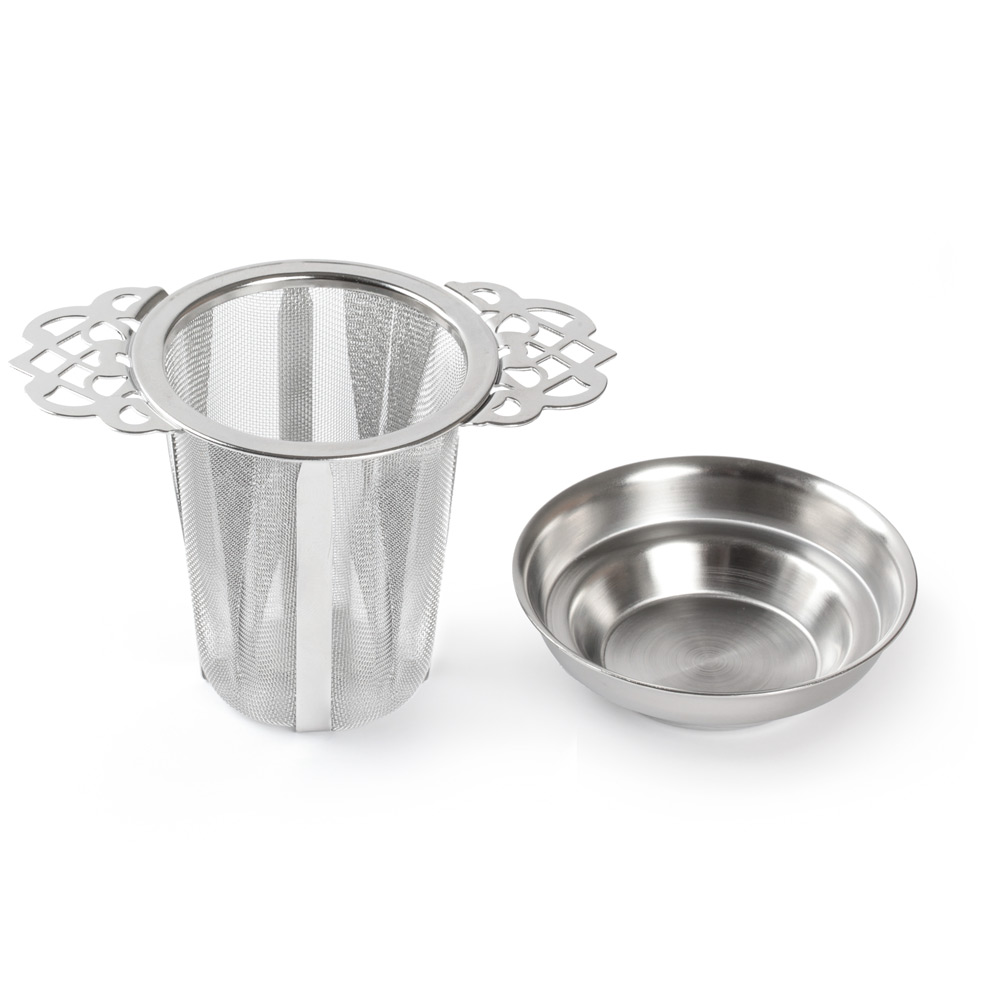
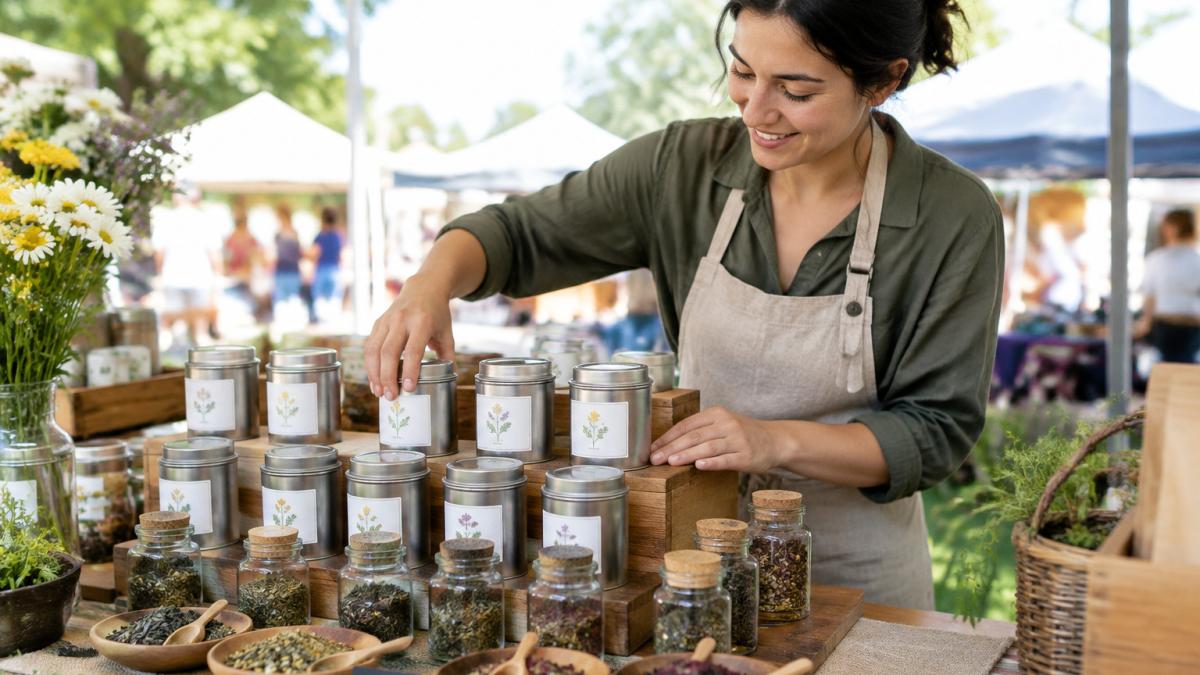
Plan for weather. Bring weights for your tent, a cover for your stock, and shade for your samples. Good display habits, like keeping products off the ground and out of direct sun, also protect your inventory.
Offering Samples and Brewed Tea Safely
Sampling and brewing bring extra rules, and they are the part of market selling most likely to draw an inspector's attention. Many health departments treat brewed tea as a food service activity, so ask whether you need a permit, a hand-washing station, or approved water before you pour your first cup.
The mechanism behind most sampling rules is contamination control: anything that touches tea, water, or a customer's cup has to stay clean, and anything that could grow bacteria has to stay out of the temperature danger zone. That is why handwashing, potable water, and covered service show up in nearly every food code. Plan your booth so clean and dirty tasks never share a surface.
A practical sampling procedure:
- Water. Use potable water from an approved source. If you brew at the booth, bring water you can document rather than drawing from a market tap unless the manager confirms it is approved.
- Hands. Set up a handwashing station with potable water, soap, and paper towels, and wash before handling cups or utensils and after handling money or waste.
- Temperature. Hold brewed tea hot or cold outside the danger zone, keep it covered, and discard anything that has sat out too long rather than topping it off.
- Utensils and cups. Use single-use cups and clean utensils, and never let a serving spoon rest on a surface that has touched the ground or trash.
- Waste and cross-contact. Keep a lined waste bin away from your stock, and separate any blend containing a common allergen from shared scoops and surfaces so cross-contact does not undercut your labels.
Keep sampling simple. Pre-portion dried tea into labeled cups, use clean utensils, and keep brewed tea covered and at a safe temperature. A sampler set, such as the Intro to Herbal Tea (sampler), lets customers try several blends without brewing a full pot at the booth.
Watch out: sampling is often the trigger that turns an exempt packaged-tea vendor into a permitted food-service operation. Confirm the sampling rules before you set out cups, not after a complaint.
Pricing and Tracking Your First Market Season
Set prices that cover your ingredients, packaging, market fees, and time. Octavia Tea's own catalog lists its sampler set at $23.00 and its Calming Chamomile at $3.50, so you can compare your pricing against a known benchmark. For a side-by-side look at premium blend alternatives and price per serving, see that comparison.
Track every market day. Record sales by product, weather, and foot traffic. After a season, review which blends sold best and which needed more samples. Those notes will guide your stock and booth setup for the next year.
The article gives a few concrete price points you can use as a benchmark when setting your own prices.
| Item | Value | Note |
|---|---|---|
| Sampler set | $23.00 | Octavia Tea's own listed price |
| Calming Chamomile | $3.50 | Octavia Tea's own listed price |
| Pricing inputs | Ingredients, packaging, market fees, time | Costs to cover when setting prices |
Frequently Asked Questions
Do you need a license to sell herbal tea at a farmers market?
Requirements vary by state and by market. Many states treat packaged, shelf-stable tea differently from brewed tea served as samples, and some markets require their own vendor application and proof of insurance. Start by contacting your state department of agriculture or health department and the market manager. Ask specifically whether packaged herbal tea and brewed samples each need a permit, and get the answer in writing before you pay for a booth.
What are the cottage food laws for selling tea?
Cottage food laws let small producers make certain low-risk foods in a home kitchen for sale, but they vary widely. Some states allow dried herbal tea blends under these rules while excluding brewed tea or items that need refrigeration. Other states limit annual sales or require a labeled notice that the product was made in a home kitchen. Check your state's cottage food statute and your local health department before you sell.
How do I label herbal tea products for retail sale?
Packaged herbal tea generally needs a product name, net weight, a full ingredient list in descending order by weight, and your business name and address. Many markets also expect a statement about allergens. Avoid health or medical claims on the label unless you can support them, since regulators treat those claims differently from descriptions of flavor and ingredients. Confirm your exact label requirements with your state regulator.
What equipment is needed to set up a tea booth?
Most vendors need a canopy or tent, weights to secure it, a folding table with a cloth, display containers such as tins or tester jars, and a small sign with your brand name and prices. For sampling, add a heat-safe kettle or thermal dispenser, cups, a handwashing setup, and a sanitizer supply. Pack for weather, since wind and sun can damage both the booth and the product. Bring change, a card reader if you accept cards, and printed ingredient cards for buyers.


Octavia Tea Sign In
Create New Account