























How to Build a Retail Brand With Private Label Tea

Last Updated: November 13, 2026
Quick Summary
Private label tea lets a retailer sell tea under its own brand name, made by a supplier to the retailer's specifications. It builds shopper recognition and repeat purchases, gives the retailer control over blends, packaging and pricing, and avoids the cost of developing tea production in-house.
- Each tin or bag carries your store's name, reinforcing recognition with every purchase.
- You choose the blend, packaging and shelf price, keeping the margin instead of matching a national brand.
- The supplier already owns blending equipment and sourcing, so you avoid production capital outlay.
- Model landed cost, gross margin and break-even volume before committing to a first order.
- Test a sample of each blend and run a checklist on every shipment to keep flavor consistent.
Table of Contents
- What Private Label Tea Is and How It Works
- How Private Label Tea Builds Retailer Brand Recognition and Loyalty
- Control Over Blends, Packaging, and Pricing
- Lower Startup Costs and Avoiding In-House Tea Development
- Finding a Private Label Tea Supplier and Checking Sourcing
- Designing Private Label Tea Packaging That Stands Out on Shelf
- Private Label Tea vs. Reselling Established Brands: Trade-Offs for Retailers
- Setting Quality Control Checks Before Your First Order
- Frequently Asked Questions
What Private Label Tea Is and How It Works
Private label tea is tea that a retailer sells under its own brand name, made by a supplier to the retailer's specifications.
In practice, the process starts with a shortlist of blends.
How Private Label Tea Builds Retailer Brand Recognition and Loyalty
A retailer-owned tea gives shoppers a reason to come back. Each tin or bag carries the store's name, so every purchase reinforces recognition. Customers who enjoy a blend often return for it, and that repeat buying is what turns a one-time visitor into a regular.
Private label also gives a shop something to talk about. A distinctive blend can become a signature item that other stores cannot stock. That exclusivity helps a retailer stand out in a crowded market, especially when the blend fits the shop's local customers and their tastes.
Control Over Blends, Packaging, and Pricing
Private label tea puts the retailer in charge of three decisions. The first is the blend itself: the retailer can choose ingredients, flavor strength and caffeine level to match its customers. The second is packaging, from tin style and label design to bag size. The third is pricing, since the retailer sets the shelf price and keeps the margin rather than competing against a national brand's price.
This control also means the retailer owns the product story. Octavia Tea's blends are hand-blended with natural flavor essences and pure essential oils, and a retailer can build its own message around that approach.
Lower Startup Costs and Avoiding In-House Tea Development
The savings come from three mechanisms. First, the supplier already owns the blending equipment, the quality lab and the sourcing relationships, so the retailer avoids capital outlay for production. Second, the supplier buys tea and packaging at volume, which means the retailer's per-unit cost reflects shared purchasing power rather than a one-off small order. Third, the retailer skips the trial-and-error cycle of developing recipes from scratch, because the supplier can adjust an existing blend rather than build one from zero.
To judge whether a private label line makes financial sense, work through the unit economics rather than the sticker price of a single order. The relevant figures are landed cost, gross margin and break-even volume:
- Landed cost is the supplier's per-unit price plus freight, duties and any packaging customization. Ask the supplier to quote the delivered cost, not just the ex-works price, so the number you model matches what you will actually pay.
- Gross margin is the shelf price minus landed cost, divided by the shelf price. A retailer sets the shelf price, so the margin is a choice, but it has to sit within what local customers will pay for a store-brand tea.
- Break-even volume is the fixed setup cost (label design, plate or print setup, initial sample rounds) divided by the per-unit gross margin. That tells you how many units you must sell before the program pays for itself.
A worked pattern many retailers use: pick a target shelf price, subtract the quoted landed cost to get gross margin per unit, then divide the one-time setup spend by that margin. If the result is a volume you can realistically sell in a season, the program is viable; if not, reduce packaging customization or start with fewer SKUs. Watch out: minimum order quantities can push landed cost down per unit while raising total cash outlay, so model both the per-unit margin and the total check you will write before the first order.
Working with a supplier also reduces the risk of a blend that sells poorly. Many retailers start with a small set of products and expand once they see which ones move. Pricing depends on quantity, blend choice and packaging, so retailers should check Octavia Tea's website or request a current quote.
The article's cost points come down to a few figures a retailer can check before committing to a private label line.
| Cost factor | What it covers | What to ask or model |
|---|---|---|
| Landed cost | Supplier price plus freight, duties, packaging customization | Ask for a delivered quote, not ex-works |
| Gross margin | Shelf price minus landed cost, divided by shelf price | Set within what local customers will pay |
| Break-even volume | Fixed setup cost divided by per-unit gross margin | Check whether it is sellable in a season |
| Minimum orders | Lower per-unit cost but higher total cash outlay | Model both per-unit margin and total check |
Finding a Private Label Tea Supplier and Checking Sourcing
Choosing a supplier is the most important decision in a private label program. To see how to vet wholesale herbal tea suppliers and check sourcing standards, read supplier vetting guide. Look for a partner that sources directly from estate gardens and can show how its teas are grown and processed. Ask whether the supplier holds USDA organic certification.
Due diligence goes beyond a certification logo. Request the supplier's organic certificate and confirm the products you plan to sell are covered by it, because a certificate covers specific operations and products, not every item a company handles.
Batch consistency matters because customers expect the second tin to taste like the first. Build a comparison against an approved reference sample into your receiving process rather than assuming consistency will happen.
Labeling and compliance deserve the same scrutiny. Before you print packaging, confirm who is responsible for the ingredient declaration, allergen statements and any claims on the label. In the United States, packaged tea sold at retail falls under Food and Drug Administration labeling rules, and the supplier should be able to tell you what documentation it provides for your label review. Ask whether the supplier carries product liability insurance.
Ask about minimum order quantities and restock times as well. Octavia Tea offers low minimums for wholesale accounts. For broader guidance on evaluating suppliers, the USDA National Organic Program explains what organic certification covers.
Designing Private Label Tea Packaging That Stands Out on Shelf
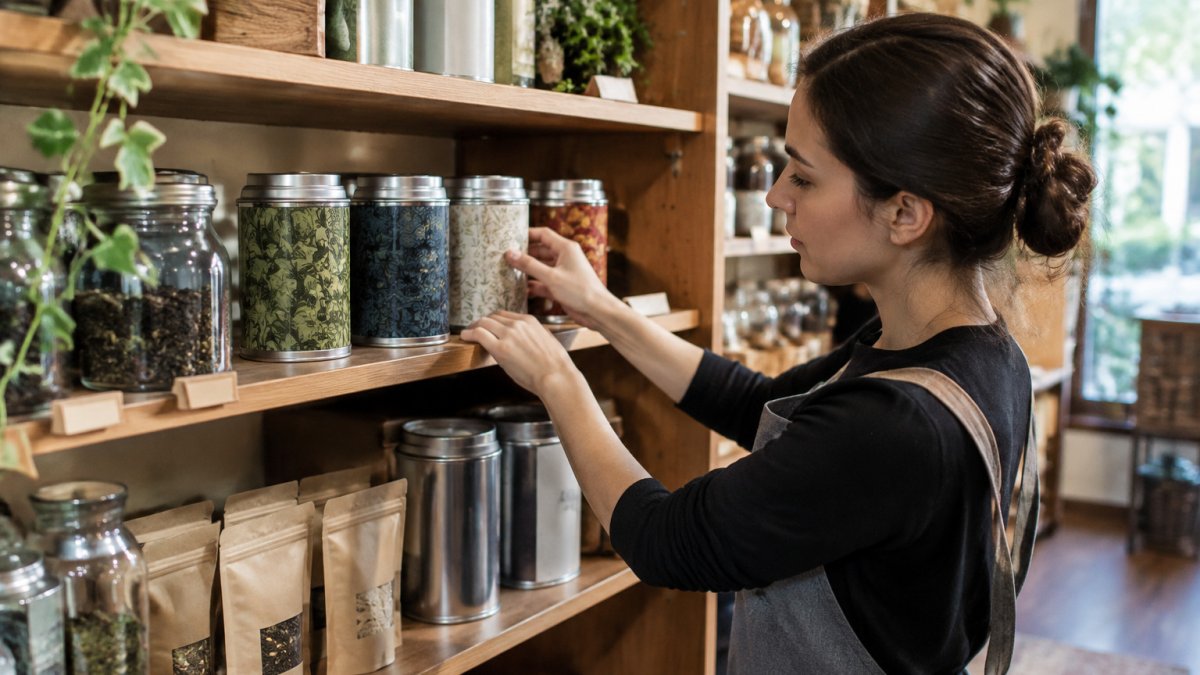
Packaging is often the first thing a shopper notices. A tea in a well-designed tin on a shelf catches attention and communicates quality before the customer reads the label. Consider how the tin looks next to other products in your store, and whether the color and finish fit your shop's overall style.
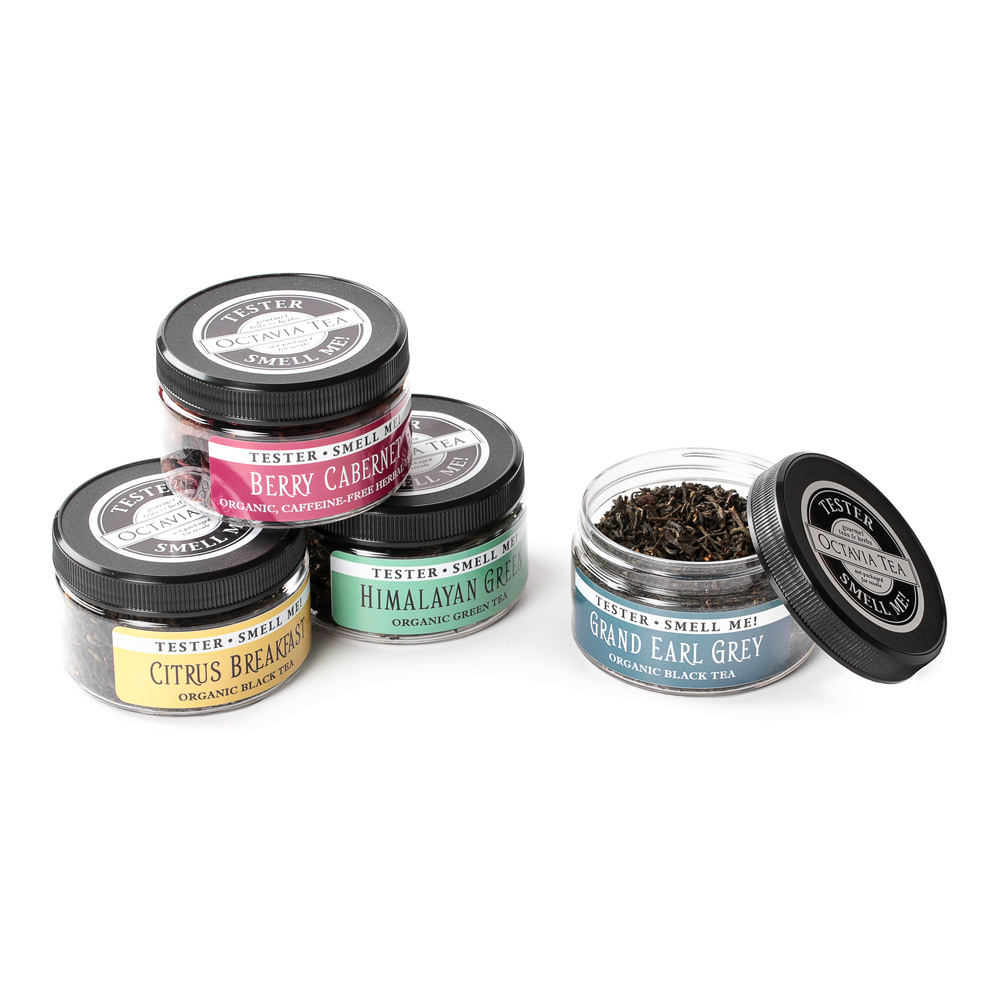
Sample sizes help you choose the right look. Seeing how a finished tin-packaged blend looks on a real product page, such as the Winter Spice Cake (tin), can help you picture your own private label design. Tester jars are also useful in-store. A Tester Jar (Berry Cabernet) lets customers see, smell and sample the tea before buying, which often leads to a purchase.
Private Label Tea vs. Reselling Established Brands: Trade-Offs for Retailers
Reselling an established brand is simpler. The brand already has customer recognition, and you avoid the work of building a product line. The trade-off is that you share the margin and the shelf with the brand's own marketing and pricing decisions.
Private label gives you full control, but it asks more of you. You own the product story, the pricing and the customer relationship, which means you also carry the responsibility for launching and promoting the line. Many retailers find a mix works best: established brands to bring in traffic, and a private label blend to build loyalty and margin.
Setting Quality Control Checks Before Your First Order
Before placing a full order, test the tea yourself. Request a sample of each blend you plan to sell, brew it to your standard, and compare it against the flavor profile you approved. A Mulled Wine sample is one example of how a sample-size option lets you check taste and quality before committing to a full run.
Set a simple checklist for every shipment. Confirm the blend matches the approved sample, check the packaging for damage and labeling accuracy, and record the lot details. Consistent checks protect your brand, because customers who enjoy one order expect the next to taste the same.
For guidance on starting a herbal tea business from scratch, complete guide to starting a herbal tea business covers legal requirements and planning steps worth reviewing before you launch.
sourcing guidance for wholesale herbal teas
Building a private label tea line gives your shop a product that customers cannot buy anywhere else. Octavia Tea can help you choose blends, design packaging and place a first order with low minimums. Request a quote to start shaping your own tea brand.
Frequently Asked Questions
What advantages do private label products offer to retailers?
Private label products let a retailer own the brand, the blend, and the packaging, which can build recognition and repeat purchases over time. Because the retailer controls the offer, it can differentiate from national brands sold nearby and keep more of the margin. The trade-off is that the retailer takes on supplier selection, inventory planning, and labeling compliance, so these responsibilities should be planned before the first order is placed.
How can retailers choose a private label tea supplier?
Start by asking a private label tea supplier about its sourcing relationships, production capacity, and minimum order quantities. Request samples and check that blends are consistent from batch to batch. Ask how the supplier handles labeling and food safety documentation, and whether it can support custom blends. Compare several suppliers on lead times and total cost before committing, and check the product page or supplier documents for current terms rather than relying on estimates.
What should retailers consider before launching a private label tea line?
Consider the target customer, how many SKUs the store can realistically sell, and how much inventory it can hold without tying up cash. Plan packaging and labeling early, because label review and print lead times often set the launch date. Decide how quality will be checked on arrival and who approves each batch. A small launch with a limited assortment is easier to evaluate and adjust than a large one.
Can retailers customize private label tea blends and packaging?
Many private label tea programs allow some customization, such as choosing from existing blends, adjusting a recipe, or selecting tin, bag, or label designs. The available options depend on the supplier, the minimum order quantity, and how much development time the retailer can accept. Ask for the supplier's current options in writing, and confirm lead times for both blend changes and packaging before finalizing a design.


Octavia Tea Sign In
Create New Account